
The microblogging platform Twitter is updating its Privacy Policy, making it able to use the information it collects about users' off-Twitter web browsing and use that information for ads targeting.
It you visit a web page and see a tweet button or an embedded post from Twitter, Twitter is able to recognize that you as a Twitter user, is visiting that site. The company can use the data it collects to target you with ads. In its May 17th, 2017 announcement, Twitter said that it's going to holds into that information for 30 days (opposed to the previous 10-day maximum).
Twitter is also removing its support for Do Not Track. This way, Twitter is joining Hulu, and other major platforms like Google and Facebook that no longer support Do Not Track.
"While we had hoped that our support for Do Not Track would spur industry adoption, an industry-standard approach to Do Not Track did not materialize," said Twitter.
Do Not Track is an unofficial standard supported by most browsers and respected by several websites. This technology allows users to opt-out from being tracked by third-party services on websites they do not directly visit. For example, users turning on the Do Not Track allows them ask a website to not load tracking code from analytics services, social networks, and online advertising companies.
Twitter dropping Do Not Track support is ironic because the company was one of its main supporter when Do Not Track launched.
If that is not enough, Twitter also updated its policy regarding how it shares personal, aggregated, and device-level data. For example, it may share users' name, email, or other personal information, but if the advertiser that buys this data wants to use it, they need to ask for user permission.
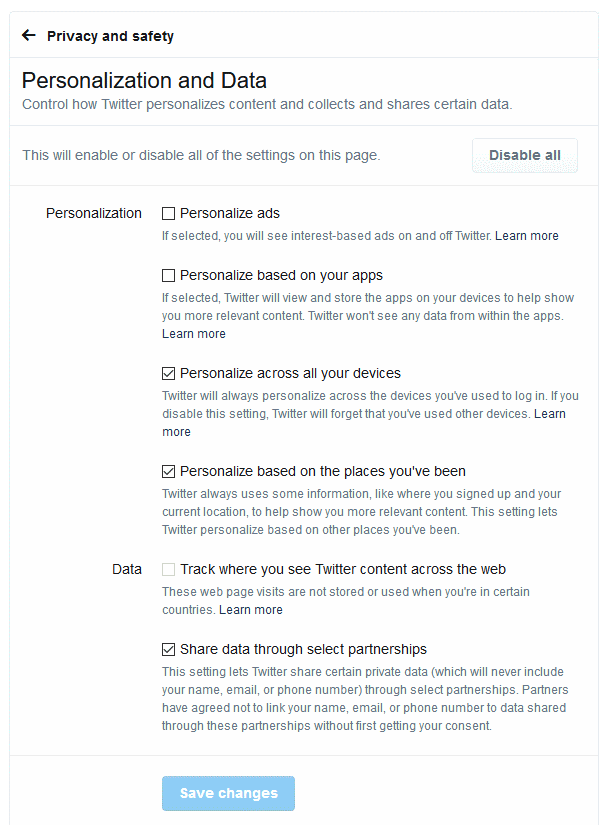
While this might come as a privacy concern to some people, Twitter is giving users control over them.
Users can pull up Twitter's settings menu, select 'Privacy and Safety,' then 'Personalization and data,' and then toggle off 'Personalize ads.' The menu also includes the option to disable Twitter from being able to see you when visiting a website that features a tweet button or an embedded tweet.
In the section, Twitter allows users to deselect individual interest categories and request a list of the companies that use Twitter's Tailored Audiences option to target them with ads based on information like their email address, Twitter handle or whether they visited the advertiser’s site or used its mobile app.
To privacy concerned users, this update may not appeal them. But at the very least, this is the answer to Twitter's struggle in attracting direct-response advertisers and to reverse its declining advertising revenue. The update is to make sure than Twitter can show sufficient ads to the right people.




















































































































































































































































































