WhatsApp is moving one step closer to a passwordless future.
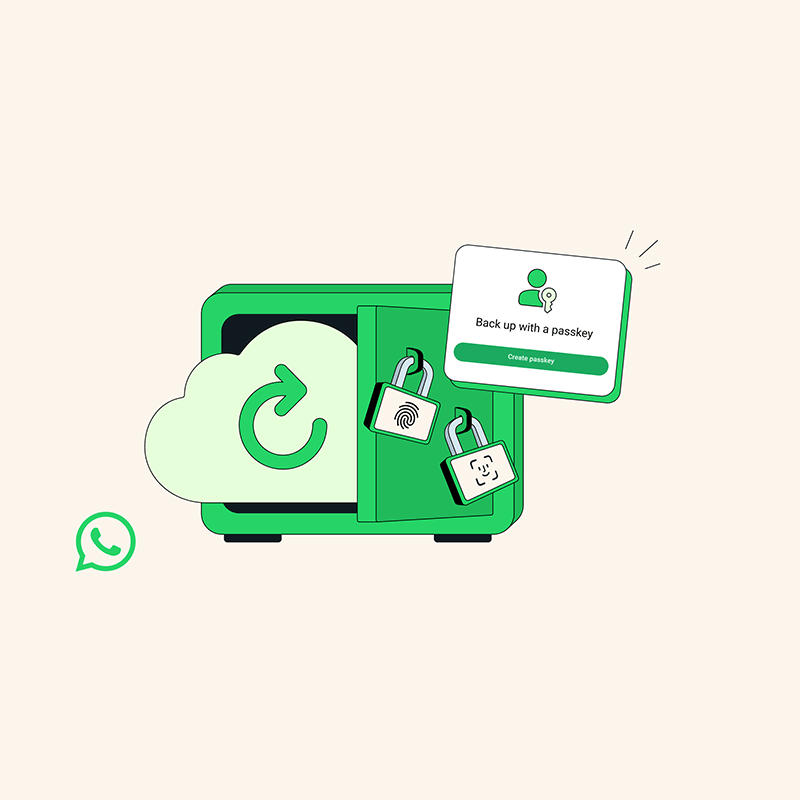
The Meta-owned messaging platform has begun rolling out passkey-encrypted chat backups on iOS and Android. This feature introduces a new layer of convenience and security that allows users to encrypt their backup data using their fingerprint, face, or screen lock code.
For years, WhatsApp has prided itself on being a leader in private communication.
It became the first major messaging app to introduce end-to-end encrypted backups back in 2021, ensuring that even stored message histories on iCloud or Google Drive were fully protected from prying eyes. But there was always a small catch: enabling that protection meant remembering either a password or a 64-character encryption key.
It was secure, yes. However, it was cumbersome.
Now, with passkey encryption, WhatsApp has found a way to make that same level of privacy effortless.
an easier way to encrypt your WhatsApp chat backups is rolling out now with passkeys
use your fingerprint, face, or screen lock code to add extra security to your chat backups: Settings > Chats > Chat backup > End-to-end encrypted backup— WhatsApp (@WhatsApp) October 30, 2025
Passkeys work by replacing traditional passwords with device-based authentication methods such as biometrics or PIN codes.
What this means, instead of remembering a complex phrase or storing a long string of numbers, users simply authenticate with the same system they already use to unlock their phone.
Behind the scenes, the device creates a unique cryptographic key pair: one private (stored securely on users device) and one public (shared with WhatsApp’s servers). Since the private key never leaves your device, hackers and phishing scams have nothing to steal, making this approach far safer than conventional credentials.
WhatsApp says the feature will begin rolling out gradually over the coming weeks and months.
Once it arrives, users can enable it by heading to Settings, Chats, Chat backup, End-to-end encrypted backup, to then selecting the new passkey option.
From there, encrypting and restoring your backups becomes as simple as tapping a fingerprint sensor or glancing at the phone.
"Many of us carry years of precious memories in our WhatsApp chats – photos, heartfelt voice notes, and important conversations,” WhatsApp said in its announcement.
“That’s why protecting them if you ever lose your phone or need to transfer to a new device is so important."
According to Meta in the announcement:
The introduction of passkeys for backups follows WhatsApp’s earlier rollout of passkey-based account logins in 2023, which allowed users to sign in to their accounts without entering a password. It’s part of a broader industry trend to phase out password dependence entirely in favor of cryptographic authentication that’s both more secure and easier to use.
For WhatsApp, it also strengthens an ecosystem where end-to-end encryption isn’t just a buzzword, but a baseline.
Messages, calls, contact lists, and now backups all share the same invisible shield of privacy. And because WhatsApp doesn’t store backup passwords or keys on its servers, not even Meta can access users' chat history. This very thing is a design that continues to set the platform apart from competitors.
The passkey update feels like the natural next step: a blend of technical sophistication and human simplicity.
It keeps WhatsApp’s billions of users safe without asking them to be security experts. Instead of worrying about where you saved a backup key, all it takes now is a glance, a fingerprint, or a tap, and your memories stay yours, locked away behind a technology that finally understands convenience.






















































































































































































































































































