Online video platforms have always had to balance creator growth with the need to keep their monetization programs sustainable. As platforms expand and viewing habits shift, the rules governing who gets paid inevitably change.
YouTube recently laid out the next chapter of that adaptation in an official post on its blog.
Starting February 1, 2027 the Partner Program will see three notable updates.
Premium Lite expands to every country where YouTube Premium is already offered, creating an additional subscription revenue pool that creators can share in.
For Shorts, a rolling performance bar appears: channels will need 10 million qualified Shorts views in the preceding 90 days to keep earning from the Shorts ads and subscription pool.
Falling below that number does not remove a channel from the program or touch long form earnings.
The revenue simply pauses and turns back on automatically once the threshold is crossed again.
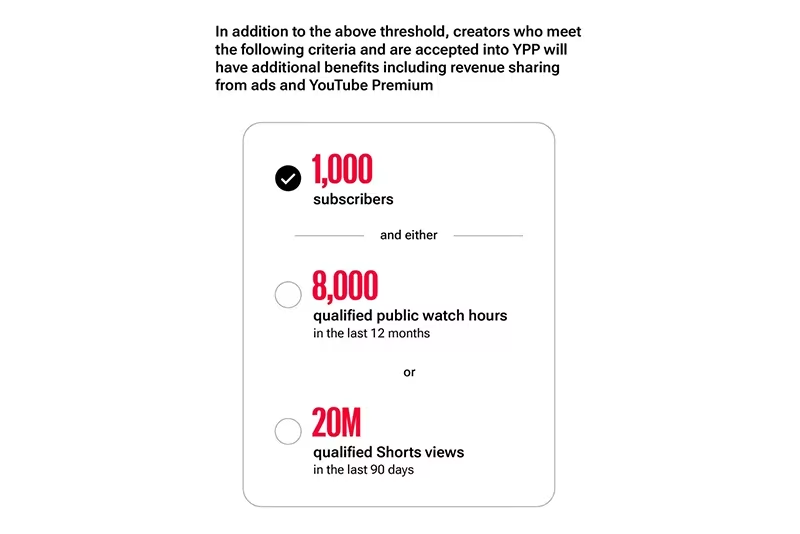
New applicants seeking ads and Premium revenue will face higher entry bars of 8,000 qualified watch hours in the last 365 days or 20 million qualified Shorts views in the last 90 days, while existing members keep their current status. Fan funding and shopping eligibility stay the same.
YouTube states that total payments to creators are expected to rise in 2027 compared with 2026 and that the changes let the company invest more in targeted incentive programs for growth and engagement.
The old entry path of 4,000 watch hours or 10 million Shorts views is being doubled for newcomers only. The Shorts earning requirement is new as an ongoing monthly condition rather than a one time gate.
Revenue share percentages between long form and Shorts remain unchanged, and channels already inside the program are explicitly protected from the higher entry rules.
Creator response on social platforms has been swift and largely critical.
Many smaller and mid sized accounts describe the higher thresholds as a devastating blow that will make it far harder for new voices in niche topics to reach monetization.
Some long form creators who had been posting occasional Shorts say the rolling view requirement removes any incentive to continue, since consistent high volume is now needed just to keep that revenue stream open.
Others point out that average channels in gaming, education, or specialized hobbies rarely hit 10 or 20 million Shorts views in three months and worry the change will push people toward the very low effort formats the platform has been trying to discourage.
Others frame the update as a necessary filter given the platform’s enormous scale and the flood of mass produced content, arguing that rewarding sustained engagement over pure volume protects the value of the program for those already delivering strong watch time.
Competing platforms have even used the moment to invite frustrated creators elsewhere.
Taken together the announcement reflects a platform that has grown far beyond its earlier days and is choosing to raise the bar for full revenue sharing while promising new support tools for those who clear it.
The company presents the changes as a response to massive platform growth and a clear preference for rewarding active creators who drive genuine engagement.
YouTube points to more than 200 billion daily Shorts views and over a billion hours of daily watch time on television screens as the scale that now requires higher bars.
The timing sits close to YouTube's broader effort against low effort material (which may or may not include AI slops that have been populating YouTube feeds ever since generative AI tools enables video creations easily).
It's worth noting that back in July 2026, the platform clarified its inauthentic content rules and named three patterns that can cost a channel monetization access: generic or repetitive template based videos of the kind often produced in high volume by automated systems, emotionally manipulative or off putting clips, and AI personas offering advice on sensitive subjects such as health or finance.
Higher performance thresholds make it naturally more difficult for pure volume based farms, whether powered by AI or not, to stay eligible for Shorts revenue or to join the program in the first place. Creators who invest consistent effort and originality remain far less affected.

















































































































































































































































































