What once resembled nightmarish creations with distorted, mutated features has now transformed into synthetic videos so lifelike they blur the line between fiction and reality.
In recent years, AI-generated content has exploded across the internet, and this fact raises genuine concern for creators and influencers. With its powerful AI models fueling much of that content, Google has a significant role to play in moderating the outcome.
As part of this effort, its platform YouTube has begun rolling out a new "likeness detection" system designed to protect creators by flagging deepfakes that misuse their image or voice.
The new tool works similarly to YouTube’s existing copyright-detection system.
But instead of identifying music or video clips, it’s trained to scan for a person’s face (and, in some cases, voice) across uploads. Eligible creators are notified, given access to a “Likeness” tab in YouTube Studio under the Content Detection menu, and then asked to complete onboarding: verification via government ID and a selfie video, so the system can build a “template” of their likeness.
Once set up, the system runs in the background.
When possible matches are found, videos in which the creator’s face might appear (standard footage, altered footage, or AI-generated), the creator sees a list with titles, channels, view counts and options: "Take no action," "Request content removal" (under the privacy misuse policy) or "Submit a copyright claim."
While we’re incredibly excited about how AI will empower human creativity, we're equally focused on protecting @youtubecreators against the misuse of their likeness—building on our decades-long expertise in developing powerful copyright management tools.
— Neal Mohan (@nealmohan) October 21, 2025
YouTube originally announced this feature back in 2024, and began testing it in December through a pilot program with talent represented by Creative Artists Agency (CAA).
"Through this collaboration, several of the world’s most influential figures will have access to early-stage technology designed to identify and manage AI-generated content that features their likeness, including their face, on YouTube at scale," said YouTube at the time.
The tool isn’t perfect. The system is now only focuses on visual likeliness, and that voice clones are still slipping though.
Early users may find false positives. But for an experimental feature, this is certainly a good start.
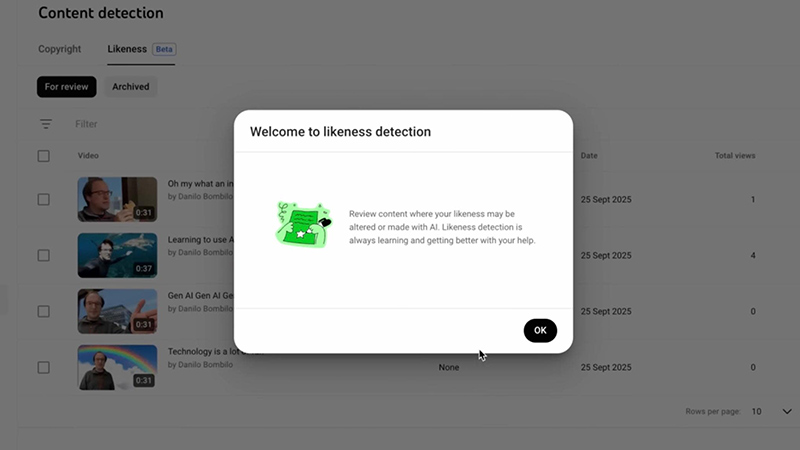
From a broader perspective, the introduction of the tool signals Google’s acknowledgment of a growing threat: synthetic media that impersonates people.
The rollout has already begun; select creators have been notified, with broader access open to all in the YouTube Partner Program over the coming months.
YouTube’s Creator Insider channel itself has released a detailed walkthrough explaining how the likeness detection system works, ensuring creators can familiarize themselves with it before they find themselves targeted by deepfakes.
The platform clearly wants users to be prepared, not panicked.
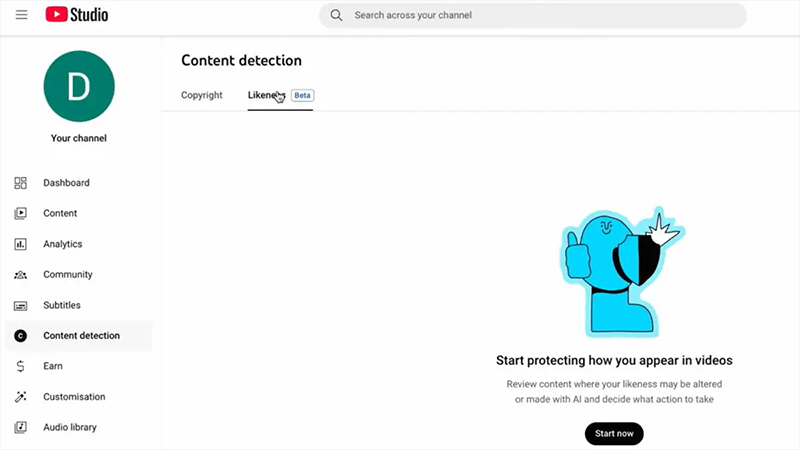
And for those who prefer to step back, YouTube has made the process just as flexible as opting in.
Creators can disable the protection feature at any time, and the system will stop scanning for impersonation videos within 24 hours, a deliberate design choice to give users full control over their digital identity.
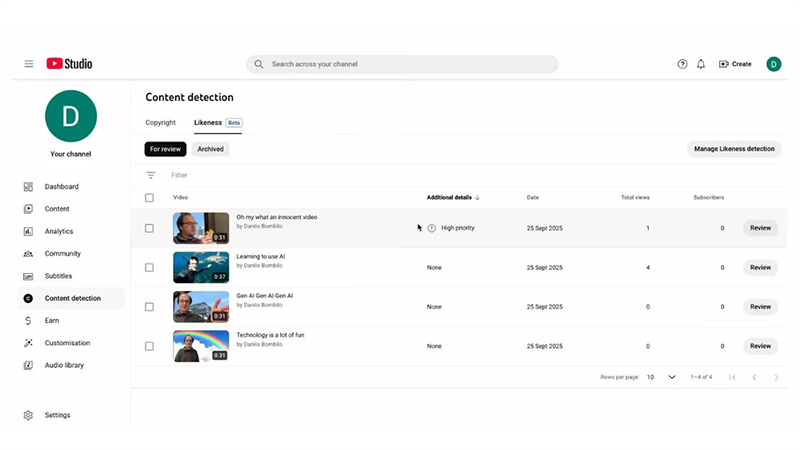
In the digital world where creating increasingly realistic deepfakes only require a photo and clever prompts, AI content is no longer just a curiosity: it’s a real risk.
Some of these videos aim to misinform, harass, or hijack a creator’s brand by showing them doing or saying things they never did.
The fear is deeply held: if someone’s digital likeness is turned against them, the reputational and commercial consequences can be significant.
Rather than simply banning all AI-generated videos, a move unlikely given Google’s own investment in AI, the company is instead opting for detection and control.
YouTube’s own statements emphasize this, and said that creators should retain control over how their image is used, and that AI should enhance creativity, not replace it.

For creators, the path forward is two-fold: embrace AI’s creative potential, but also deploy safeguards against misuse.
Creators, of those thinking of becoming one, signing up for likeness detection is worth considering. Even if they never find an unauthorized match, this tool gives them awareness, control and a defensive posture.
But for privacy-concerned individuals, they're again facing the irony of the digital age: they have to surrender their face to protect it.
To use YouTube’s likeness detection, creators must submit a government ID and a short selfie video. said says it's to prevent fraud and train face templates for detection, but the move also hands the company yet another trove of facial data.
If copyright protection doesn’t need an ID, why does privacy?




















































































































































































































































































