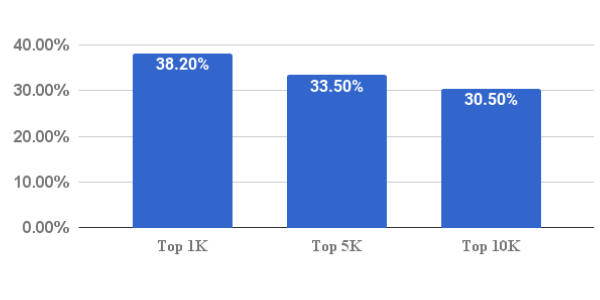
Researchers from the University of Iowa and UC Riverside discovered that 30.5 percent of the world's top 10,000 websites according to Alexa, have at least implemented some strategies to combat ad blockers.
Most of them use methods that users' won't likely notice.
More popular websites, like those that sit at the top 1,000, the percentage increases to 38.2 percent.
To combat the ad blockers some of their visitors may have, websites have used scripts to introduce 'bait' content that is aimed to trigger ad blockers. Like for instance, not loading any div marked with “banner_ad” but loading images with “banner” in the description. This was able to trick some of the ad blockers.
After that, the website will relaunch the ads in a way that the ad blockers won't be able to catch.
Others have fooled ad blockers by modifying the codes of their JavaScript, while the rest opt for the traditional method of asking visitors to whitelist their website from ad blockers.
Websites in blocking ad blockers because those software can put a dent on their advertising-based business model on the web.
To come into the conclusion, the researchers had visited thousands of sites multiple times, with and without ad-blocking software. Then, they compared the final rendered code of the page for blocking browsers versus non-blocking browsers, to see which pages have a change on their content, even if they didn’t notify the user.