There is a particular kind of footage that travels farther than any official statement. It begins as a local live stream and ends as the document everyone else is forced to watch.
A phone held up in a market, a candidate mid-sentence, flags and stalls in the background, then a sound people first mistook for fireworks.
Within hours that recording, together with older clips of the same woman smiling and campaigning, had left Caraz and entered feeds from Lima to Mexico and Spain, then farther still.
The story of Susy Aponte Polo did not first arrive as a police communiqué.
It arrived as video that would not stay local.
Aponte Polo was assassinated, and the internet did what it so often does with violence caught in public: it turned a local death into a global piece of evidence.
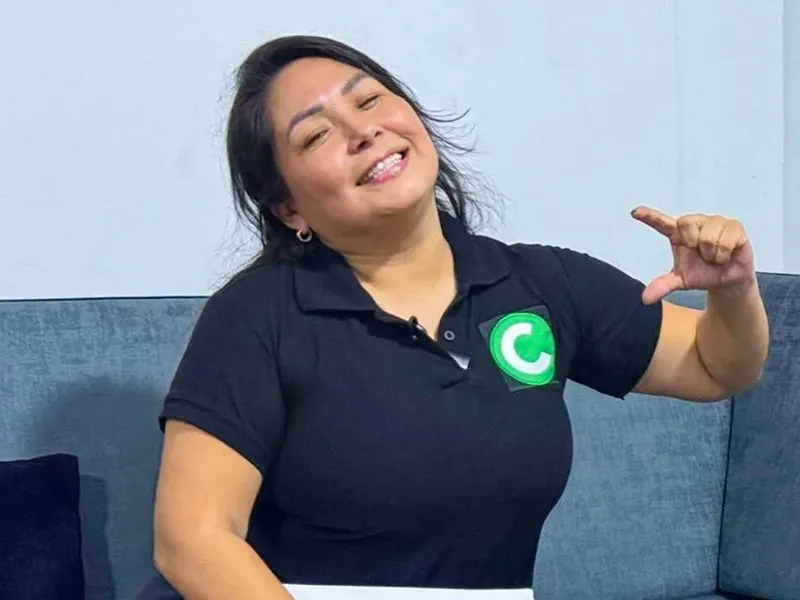
Susy Aponte Polo, known across Áncash as "La China Polo," was born in Lima on 18 November 1982.
For years she ran China Polo Dominical on YouTube, Facebook and TikTok, a Sunday show built on documents, prison phone calls, street confrontations and accusations against police officers, prosecutors, mayors and alleged criminal networks tied to illegal mining and public contracts.
Viewers already knew her style because she filmed it constantly.
She made enemies the same way she made an audience.
China Polo Dominical show did not stay abstract.
It named officers, prosecutors, mayors, illegal-mining networks and the public contracts that sat beside them. She returned to Pataz and the gold economy, to extortion and hired killings in the north, and to groups she tied to Los Pulpos and later to La Jauría.
She said senior officers were not only failing to stop those networks. She said some of them moved with them.
The list tightened in the days before Caraz.
On 10 September, she said three prisons had called to warn her that General Víctor Revoredo Farfán, then head of Dirincri, had ordered an attempt on her life. She said she had already filed complaints.
On camera she told him she was not afraid, and that the fear on the other side was that she would keep publishing.
Other clips from that week named Óscar Arriola and said each new video was “the terror” of the people she was exposing. Hours before the shooting she promised a Sunday program on a rival in Huaraz, water in Áncash, and irregularities stretching toward Ferreñafe and Chiclayo.
None of that is a finished motive. It is the map of who had reason to want that particular mouth closed.
That is why the campaign footage that circulated after 19 September felt so familiar.
In those earlier clips she walks through markets, points at the camera, laughs with supporters, wears the green of Socios por Áncash and talks as if the lens were a neighbor.
She was 43, a candidate for regional governor of Áncash, and four days earlier, she had stood in the debate organized by the National Jury of Elections.
Those images were still moving when the other recording appeared: the live interview by journalist Víctor Castillo of Rima Rima Noticias, shot around 12:40 on Avenida Ramón Castilla, near Caja Huancayo and the Caraz market.
In that stream she is still speaking about national parties, corruption and a call to women when the shots come and she falls.
The sound was first taken for fireworks.
Then several people dropped to the ground.
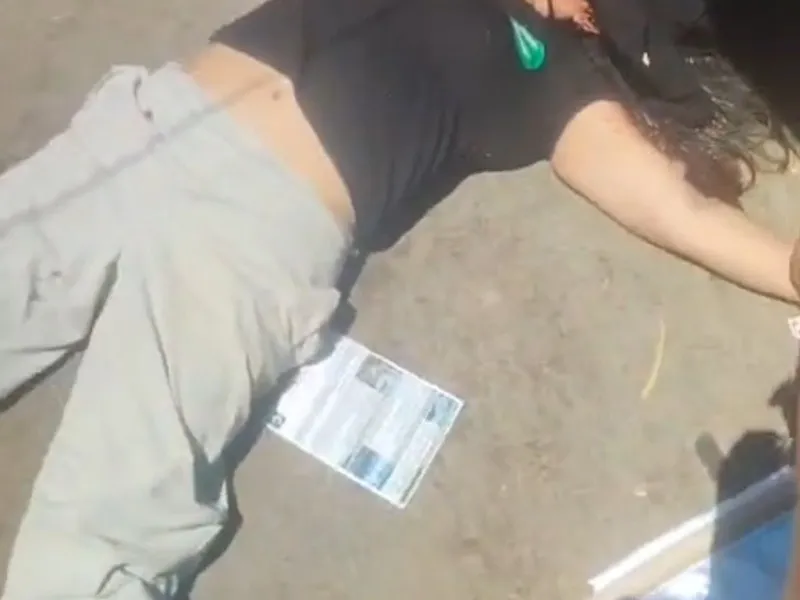
Later amateur videos showed her motionless, with a pool of blood coming from her head. The clip is brief, raw and unfinished, which is exactly why it kept being copied. The contrast did the rest of the work.
Some early local accounts said she was shot from behind, "por la espalda", while walking through the market with supporters.
A later, more detailed account says the alleged shooter had blended into the campaign group and fired when she turned toward the camera. Castillo was speaking with her at that moment. That version places the gunman close by, slightly to the side or rear as she faced forward.
The interviewer said he did not see the shooter because his attention was on her when she fell.
Some reports suggest the bullet entered her right eye and exited through the back of her head. The investigation is still underway.
People who had never heard of her program now watched the smiling campaign video and the live stream in the same sitting. News alerts became loops of her last public words, then loops of the denunciations from days earlier, then the unmade Sunday episode.
After the shooting those older clips returned as if they were a prologue the live stream had completed.
Investigators moved on camera as well.
Police presented security video of a man fleeing with a weapon through the streets of Caraz.
They named Luis Iván Obispo Díaz, a Venezuelan national, as the alleged shooter, detained after a motorcycle officer and neighbors intercepted him.
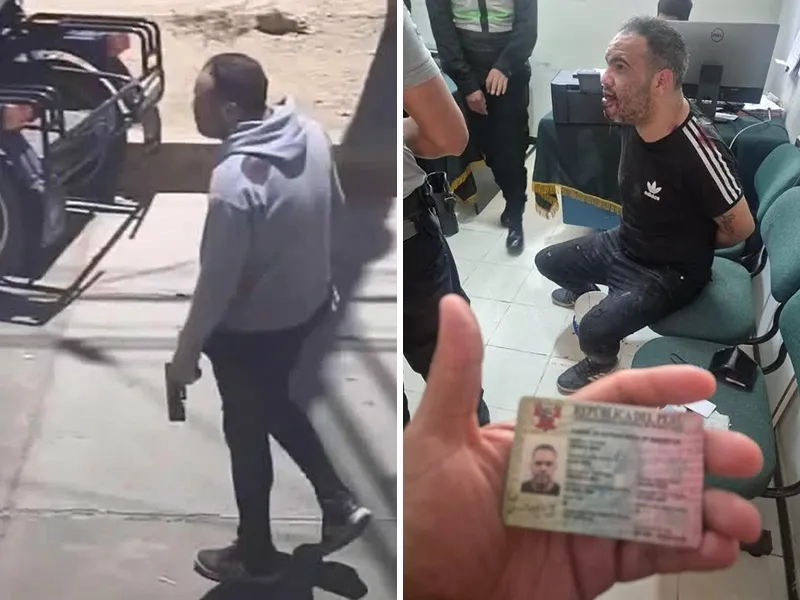
He was wounded, including a facial injury, and found with a Glock that a Lima policeman had reported stolen from a house in Villa El Salvador in November 2023.
Ballistic work later tied that pistol to five earlier crimes in 2025 and 2026: robberies, injuries and homicides.
A second man, Ronald José Toro Artila, was arrested in Surco, Lima, accused of arranging lodging and transport. Courts ordered fifteen days of preliminary detention, a period that ends on election day, 4 October.
Prosecutors reclassified the case from an initial feminicide line to suspected sicariato.
The national police chief said she had been followed for at least a week, and that the inquiry would eventually reach intermediaries and whoever ordered the killing. He did not rule out that it could touch senior officers. Five other people were wounded in the market, among them minors.
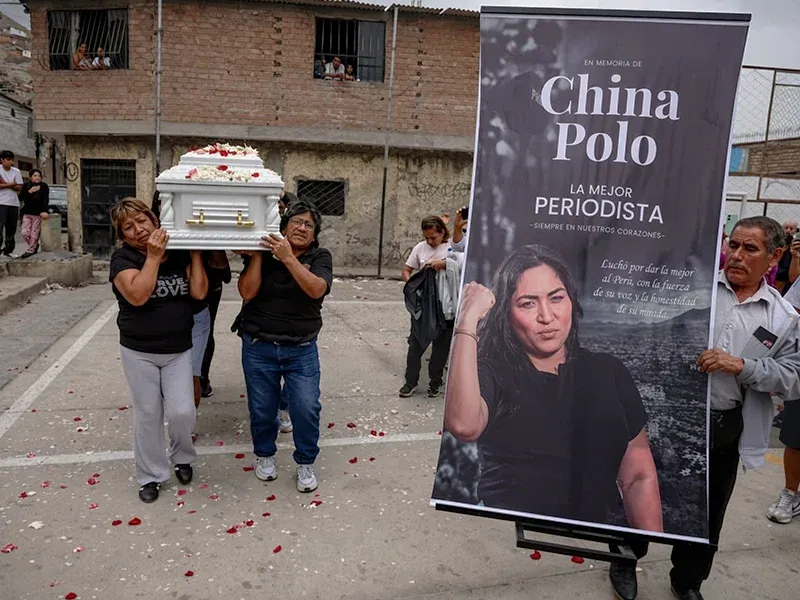
Her wake was held in Comas. Burial was planned for Chimbote.
The same networks that amplified the live stream also amplified her contradictions. She had prior suspended sentences for document offenses. A fiscal file from 2025 accused her of leading a group that sold driver's licenses in Áncash, a charge she rejected as persecution. Those details traveled too, because once a death is filmed the archive opens in every direction.
False clips appeared as well, including an old arrest video of an unrelated officer that users tried to attach to this case. Fact-checkers had to chase the forgeries while the authentic live stream kept spreading.
That is the peculiar power of this kind of virality.
It does not wait for a complete file. It takes the last minutes of a woman who built her public life on camera and turns those minutes into the record that politicians, police and viewers cannot easily set aside.
In a region two weeks from voting, the images remain ahead of the investigation, still moving, still unfinished, still asking who wanted that particular mouth closed in the middle of a market afternoon.
Aponte Polo's funeral was attended by relatives and friends, with publicized photos include people carrying her coffin at the soccer pitch in Lima, on September 21.