The Bank of England has agreed to test blockchain in a partnership with distributed ledger startup Ripple. On one test, it involved Ripple's Interledger protocol, which is designed to facilitate transactions between different distributed ledger systems.
The trial is meant to improve cross-border payment scenarios in which "two different currencies" were "executed simultaneously in two different simulated RTGS (real-time gross settlement) systems," with blockchain having the potential to synchronize the settlement of transactions.
The tests were meant to see whether Ripple could synchronize a multimillion-pound wholesale payment passing from its RTGS to another central bank’s core system.
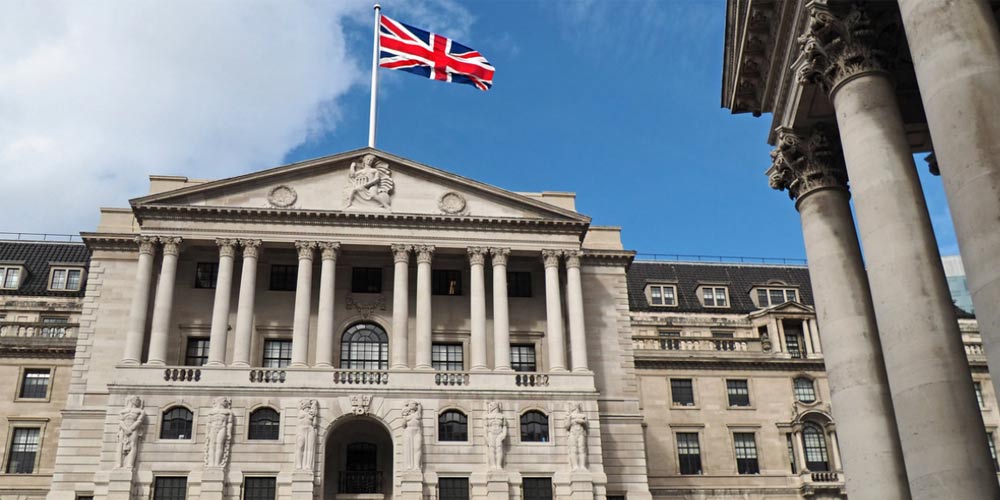
The test by the California-based blockchain specialist Ripple, didn't involve real money, nor any of the bank's core systems, or even use blockchain technology itself. Instead, its only a proof-of-concept, but marks an important moment for the blockchain community.
"This is really about connectivity between central bank systems rather than replacing the central bank systems with the blockchain,”" said Daniel Aranda, head of Europe at Ripple. "It allows money to move between countries near-instantaneously and without settlement risk."
The central bank said that the test involved setting up two simulated RTGS systems on a cloud computing platform, and using the Ripple interledger to simultaneously process “a successful cross-border payment”. “We also demonstrated that an attempted cross-border payment that failed validation on the receiving side would not be honored,” it said.
At the time of the announcement, the 21-year-old RTGS system handles about £500 billion of payments between banks every single day, facilitating a huge range of transactions