Pedophilia isn't welcome in the society, because no matter where people see it, they instinctively recognize it as a violation of innocence, of trust, and of the moral fabric that holds a community together.
It’s not just a legal or cultural boundary; it’s a fundamental human one. No matter how it’s framed or where it appears, society rejects it because it preys on the vulnerable and distorts the natural balance between protection and exploitation.
This is why anything that acts as an enabler of that, or attempts to normalize or encouraging attraction toward minors under any guise, is equally condemned. It doesn’t matter whether it hides behind any excuse, because anything that erodes the boundary of consent and safety for children crosses a moral line that society cannot and should not blur.
And this is why Shein is under fire.
Not just for bad taste or business ethics, but for crossing a line that society refuses to blur.
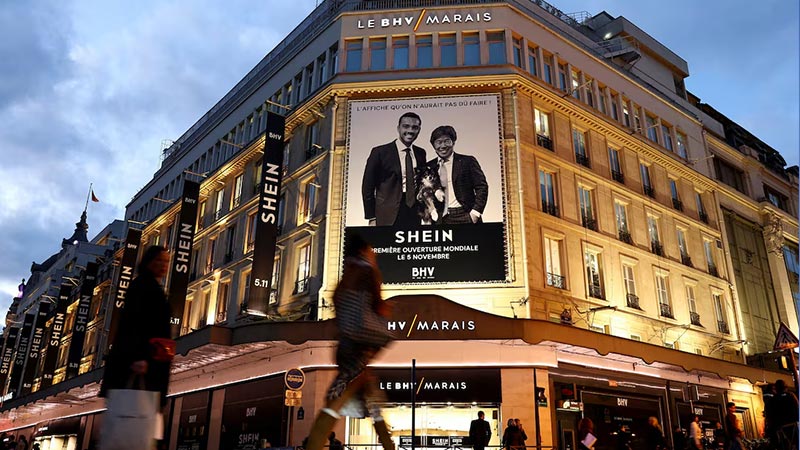
The rivalry between fashion ideals and moral outrage has never been so raw, and nowhere is it more visible than in Paris.
The capital city of France, long regarded as the beating heart of haute couture, is now the stage for a clash between fashion ideals and moral outrage.
The Chinese-founded online fast-fashion giant has spent years conquering digital storefronts around the world with ultra-cheap clothes and dizzying product turnover. But its latest move, opening a physical store in the historic BHV Marais department store, has collided head-on with France’s deep-seated values around ethics, sustainability, and now, even child protection.
The uproar began when France’s consumer watchdog uncovered listings for sex dolls with childlike appearances on Shein’s marketplace, found on its website.
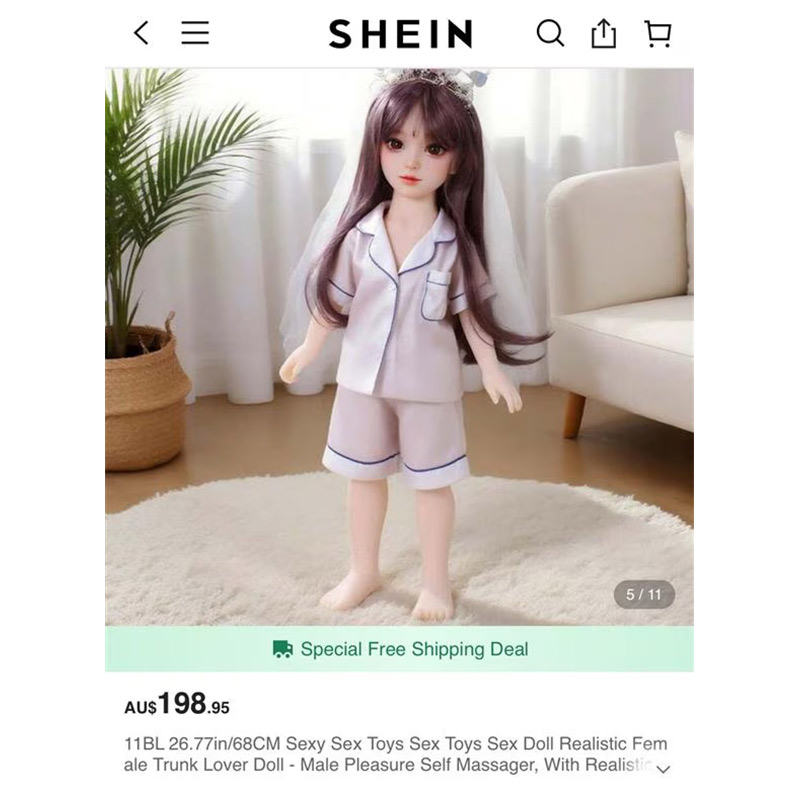
Not just childlike sex dolls, but also weapons, like brass knuckles, which are banned in France, as well as an axe.
The discovery sent shockwaves through French politics and society. Finance Minister Roland Lescure declared the listings “horrific” and threatened to block Shein entirely from the French market if such content ever appeared again.
Within hours, Shein announced that it had permanently banned all sex-doll products worldwide, shut down the accounts of offending sellers, and temporarily suspended its adult product category for review.
But by then, the damage was done, and the outrage had already leapt from the internet to the streets of Paris.
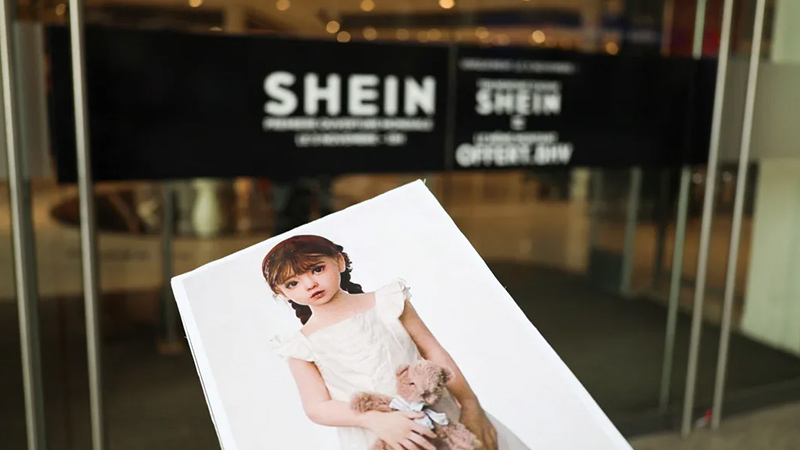
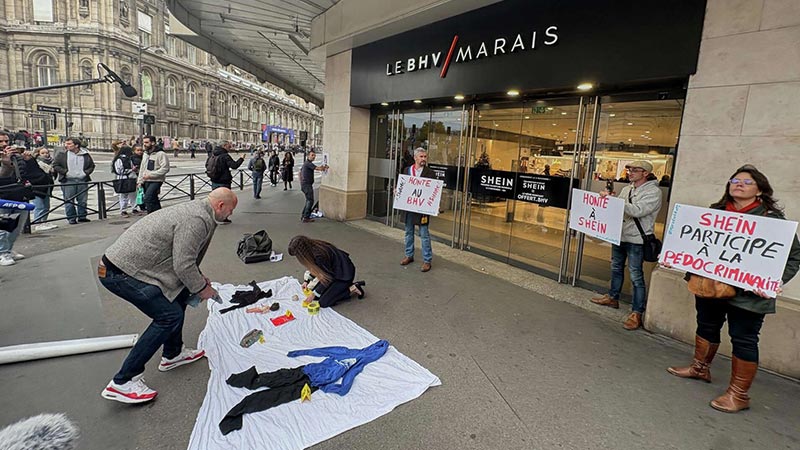

The scandal fed into growing resentment toward the brand, already under fire for its aggressive pricing model that French lawmakers say destroys local retailers and erodes the country’s fashion ecosystem.
Lawmakers like Véronique Louwagie and Serge Papin condemned Shein for benefiting from tax loopholes that allow cheap imports to undercut French businesses.
“Shein impacts the vitality of our regions, destroys jobs, and destroys shops,” Louwagie, Minister Delegate for Trade, Crafts, Small and Medium Enterprises and the Social and Solidarity Economy of France, said bluntly.
"Enough is enough with the pedopornographic dolls, and now the weapons," Commerce and Small Business Minister Serge Papin told the parliament on Wednesday before ordering the suspension of the platform.
Even as the government launched investigations into Shein, alongside Temu, AliExpress, and Wish, for allegedly allowing access to pornographic or violent content by minors, the brand pressed ahead with its Paris opening.
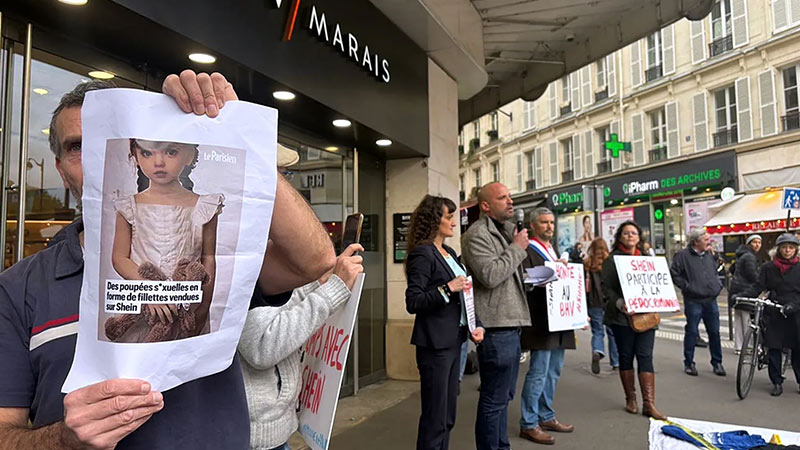
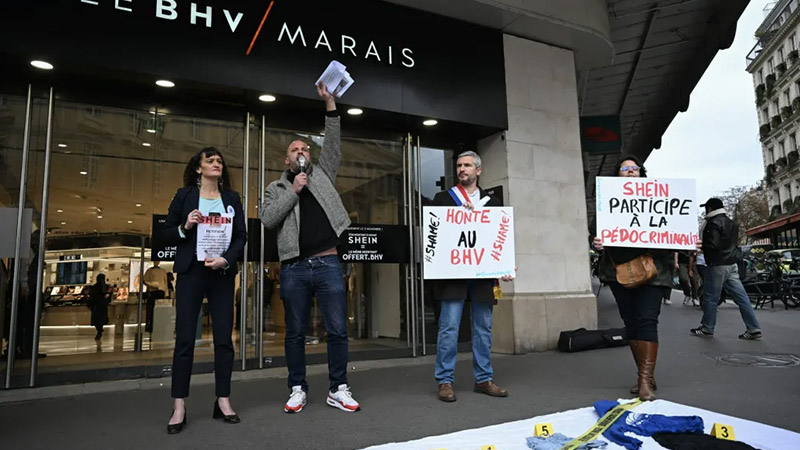
Protesters gathered outside BHV shouting “Shame on you!” while child-protection group Mouv’Enfants held signs warning that such products “encourage pedophilia.”
Paris City Hall declared that Shein’s values were incompatible with those of the city, calling for a full ban on the platform.

But again, Shein has its own consumers.
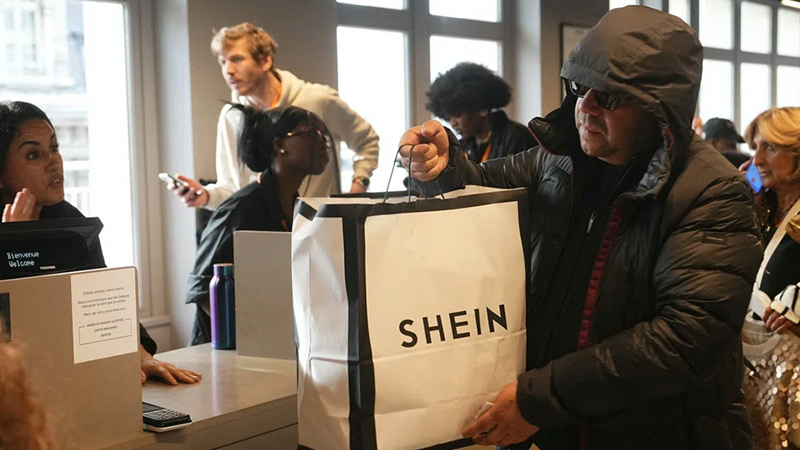
Many people seemed unfazed. Lines formed outside BHV as shoppers queued to see the new store, queueing to see what's on sale.
For some of those that are undeterred, it was about price and access, “We can see what we order, touch the items,” one said , while for others, the scene symbolized everything wrong with modern consumerism: cheap labor, ecological waste, and moral compromise, now exported into the heart of France’s most iconic department store.
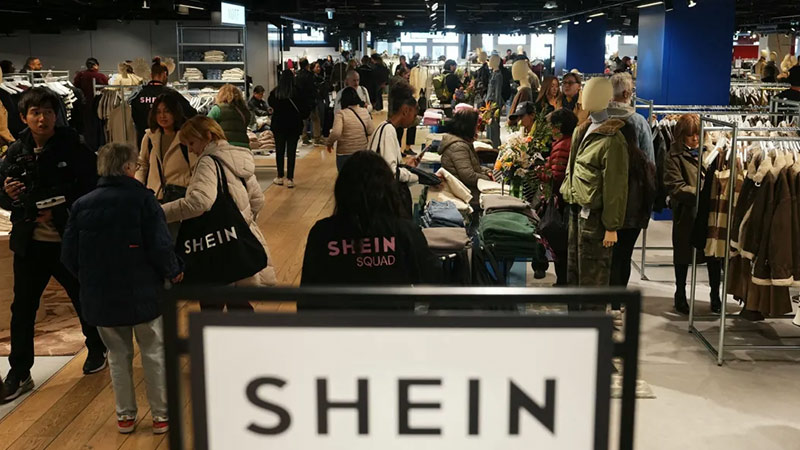
The company behind BHV, Société des Grands Magasins (SGM), defended its decision, saying Shein could help revive struggling retail spaces and attract younger shoppers.
Its chief executive, Karl-Stéphane Cottendin, insisted that physical stores ensured compliance with French standards.
"In a store like this, such situations could never have taken place," he said, referring to the doll scandal.
But the backlash spread fast. More than twenty brands, including Disney and Figaret, pulled their products from BHV in protest.
The public bank Caisse des Dépôts withdrew funding from a real estate deal with SGM, citing its commitment to responsible business practices. The fallout also strained partnerships. Galeries Lafayette, an upmarket French department store chain, has terminated its franchise agreement with SGM, effectively severing ties with the Shein expansion.
For Shein, the Paris debut was meant to symbolize legitimacy: a way to transform from a digital disruptor into a global retail force.
Instead, it became a cautionary tale about how cultural values, consumer ethics, and political pressure can collide.
France, which has fined Shein millions of euros for privacy violations and misleading discounts, is already drafting new legislation to curb fast fashion , including advertising bans and penalties per item sold.
The controversy surrounding Shein is much more than just about clothes.
The backlash has grown into a national reckoning, one that touches on child protection, sustainability, labor ethics, and the soul of modern fashion.
In a country that prides itself on timeless elegance, the arrival of a brand built on endless novelty and questionable oversight feels like a clash between two worlds.
Paris may have given Shein a physical space. After all, businesswise, Shein is a legal entity, and that Paris is open for anyone and anything that wishes to benefit from its global fame. But by offering an object, as a representation of a minor for an adult play thing, is not something anyone or anything quickly agree upon.
In other words, despite commerce knows few borders, seeing a brand profiting from objects that sexualize or endanger the image of a child, it confronts a boundary no city, no culture, can quietly accept.
The issue reflects how far global commerce can stray when profit races ahead of principle, even when they began selling what people condemn on the internet.
Further investigation found something deeper in the business, and can be traced back to years before its Paris controversy.
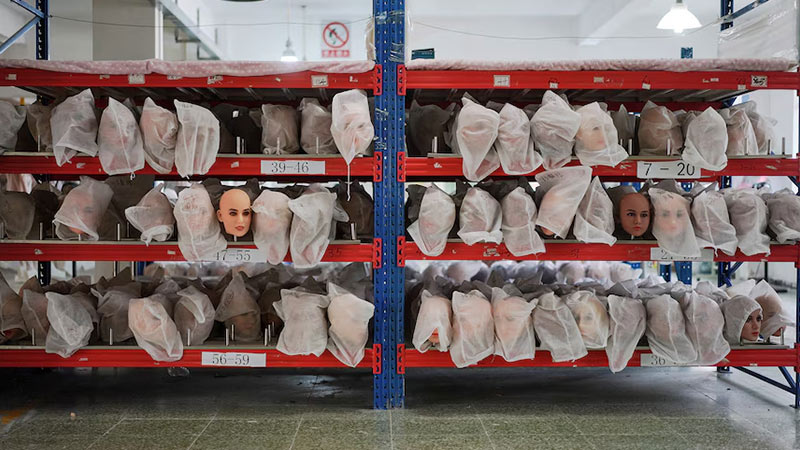
First off, the dolls are made and manufactured in China, Hong Kong and Japan, and that they're exported to different countries in pieces. The heads, limbs, and the torsos are shipped individually in a bid to get around laws forbidding the importation of sex abuse material, and in order to pass customs and inspections.
"[They can] buy [the doll] in parts, buy child heads separately, so then they can claim that it wasn't supposed to be a child sex abuse doll," said Caitlin Roper, an author and a campaign manager for Collective Shout (CS), an activist group that fights against the sexualization of girls in media, advertising and popular culture.
When the dolls are assembled, they take form of life-size dolls, made to look pubescent and prepubescent children. Most of the dolls depict little girls, sometimes as small as 60 centimeters tall and roughly the same weight as a child.
However, they're purposefully created for men's sexual use: they are designed with vaginas, anuses and mouths that fit an adult penis.
"In some extreme cases, a manufacturer said: 'I'll run a tutorial for anyone who is interested, I'll send you out a doll or parts and then I'll teach you how to make the penetrable orifices yourself,'" she added.
In order to fit its consumers' fantasy, the dolls can be customized.
For example, buyers can ask for different skin, hair, and eye color, as well as specific facial features, as well as body shapes, according to WMDoll, one of China's biggest sex doll makers, which produces more than 2,000 dolls a month.
But still, these dolls, equipped with adult features, including make-up or developed breasts, they're still illegal they depict sexualization of minors.
Roper said that the products were often described as "adult toys" despite depicting children holding soft toys.
"A few years ago, we noted terms like 'flat chest', 'loli', 'mini' and 'young girl' were used to promote these products," she said.
"Then we noticed a distinct change: sellers were using terms like 'adult', 'D cup', 'woman' and 'girlfriend' on dolls that were undeniably modelled on prepubescent girls."
CS spend weeks sending some 465 supporter emails, before having the products removed and the search terms "child sex doll" and "girl sex doll" were blocked.
However, just two weeks after that, CS discovered child heads sold by a different Chinese retailer, the fast fashion brand Shein.
The campaign called Shein out online for sexualizing girls but did not receive a response.
In July this year, CS found what appeared to be child sex abuse doll heads on Temu. But this time they were being marketed as mannequins for make-up practice, hairdressing, and to display jewelry and hats.
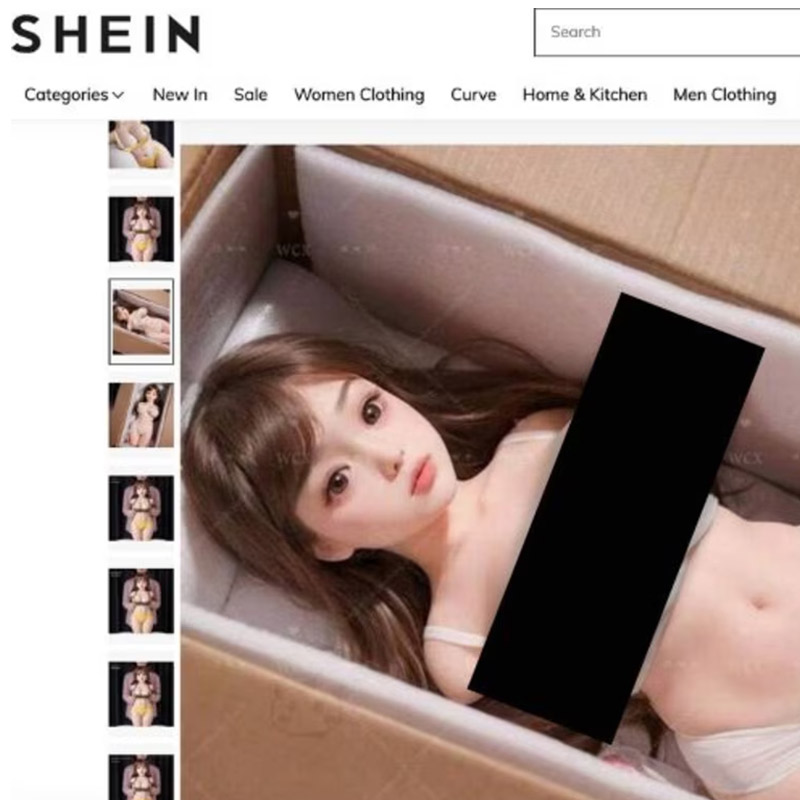
Roper said she found an identical Temu product of the heads on Shein, marketed as sex doll heads.
So CS called the company out on social media again, and the heads disappeared the following week.
But over the last few weeks, Roper has found more child sex abuse dolls on Temu and Shein.
And this time, they are headless.
A similar case happened in Australia.
Back in July, the Australian Border Force (ABF) reported a "disturbing rise in attempts to import child-like sex dolls", seizing 47 in the past year alone. The dolls resemble children with infant clothing, and "a flesh-like apparatus."


