Video games can be so addictive. For many reasons, games allow people to pass time, learn new things, socializing, and have fun from the enjoyment.
But China that has been trying to crack down online video gaming, is starting to restrict everyone in the country under the age of 18, to play more than 3 hours per week. With this rule in effect, the Chinese government is eyeing on its more than 268 million people in the country, who are under that age.
According to the rule, children can only play games on Fridays, Saturdays, Sundays, as well as on national holidays. And they can do that only between 8 p.m. and 9 p.m. on those days.
This is a further tightening following the previous restriction of 1.5 hours per day, and three hours on holidays in 2019.
To make this happen, the Chinese government asks online game companies to require their users to provide real-name verification and log-in systems, and tells them to only allow their young players to play three hours within those small time windows.
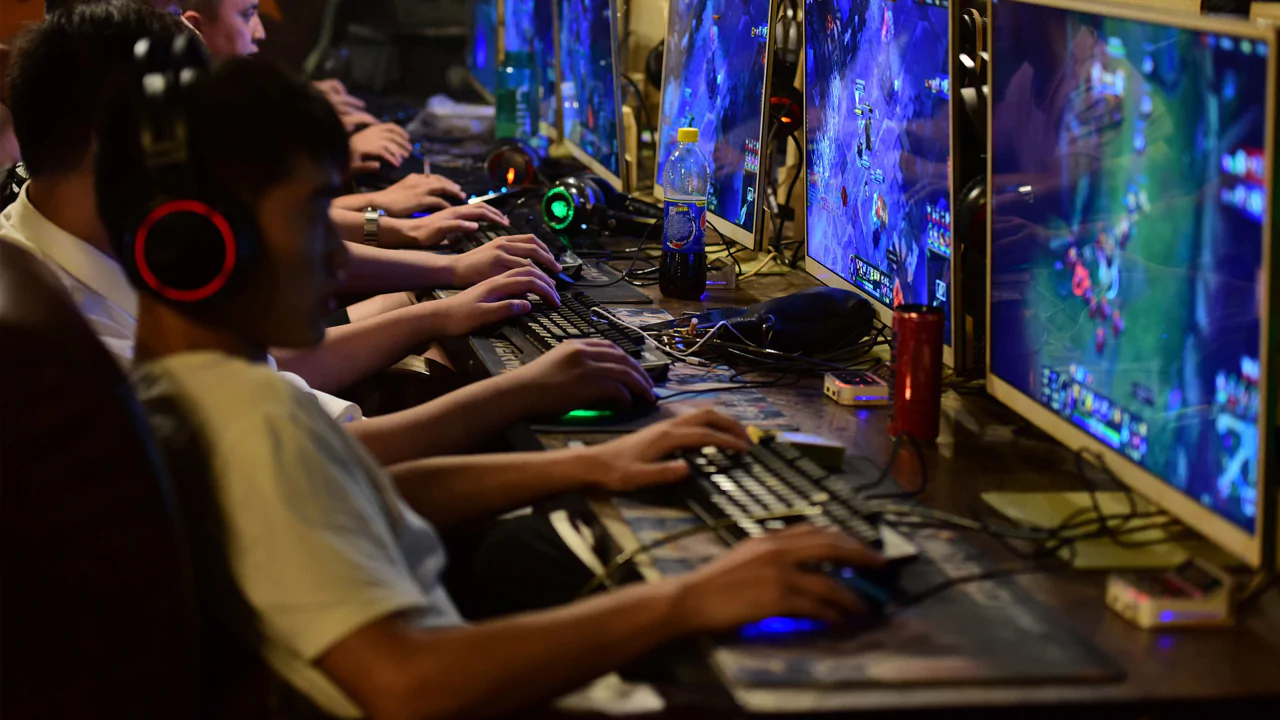
Leading up to the policy, Chinese state media companies, including The People's Daily, have reported that the government was comparing video games to "electronic drugs" and "spiritual opium."
"No industry can be allowed to destroy a generation," wrote China's Economic Information Daily.
According to the media company, more than 6 out of 10 Chinese minors play video games online, while more than 1 in 10 play games on their mobile devices for more than two hours each day during the school week.
Parents' reactions have been mixed.
Many agreed that their children's time are better spent on other activities, like exercising or studying. Others however, criticized the rule as the government trying too hard to overreach into their personal lives.
It should be noted that in China, there are rehabilitation centers for "digital detox."
Many parents have forced their internet-addicted children to visit the rehabilitation centers as their drastic measures against over-consumerism of technology.
The regulation was introduced due to the government's consensus that gaming posed a risk of addiction. It was determined that gaming interfered with a teenager's mental and physical well-being, as well as their studies.
While the rule has gained support and backlash among parents, the biggest come from the children themselves, as well as gaming companies.
As reported by a number of media companies, a lot of young gamers voiced their outrage online, decrying the regulation as unfair and inconsiderate of the modern gaming culture.
Others suggested that the rule has too many loopholes.
For example, this will make adults to create a market where children can buy online accounts from them. Furthermore, children can also use their parents' phones or accounts, just to play games. In the end, the restriction will only make youths to switch to single-player console games, or games that can be played offline.

And as for the economic impact of such rule, has been minor, despite having earned 130 billion yuan ($20 billion) this 2021 alone. However, gaming companies are affected the most.
And in China, companies such as Tencent Holdings, the gaming company behind popular titles like PlayerUnknown’s Battlegrounds and Honor of Kings in China, has seen a drop in performance in the stock market. The company has shed billions of dollars in market capitalization because of this.
This happened as the company is seeing less revenue from children who contribute to its earning, and its gaming business.
But despite the backlash, the consensus seems to favor the rule.
This is because the policy is part of a bigger push by Beijing to control not only personal habits, but to rein-in the overwhelming influence of technology that has suddenly claimed in Chinese society.
With the rule, the government wants to protect children from overconsuming video games.




















































































































































































































































































