Jennifer Lawrence, a name that needs no introduction.
From her breakout role in Winter's Bone to becoming a household name as Katniss Everdeen in The Hunger Games, she has built a reputation for authenticity both on and off screen.
Known for her unfiltered honesty and disarming humor, Lawrence has often stood at the intersection of Hollywood glamour and grounded relatability.
Yet, her comments about how she worked on set with Robert Pattinson raised eyebrows.
She said that she didn’t even care about using an intimacy coordinator while filming Die My Love with the Pattinson. This quickly placed her at the center of a cultural debate she once symbolized: the #MeToo conversation around safety, consent, and creative freedom.
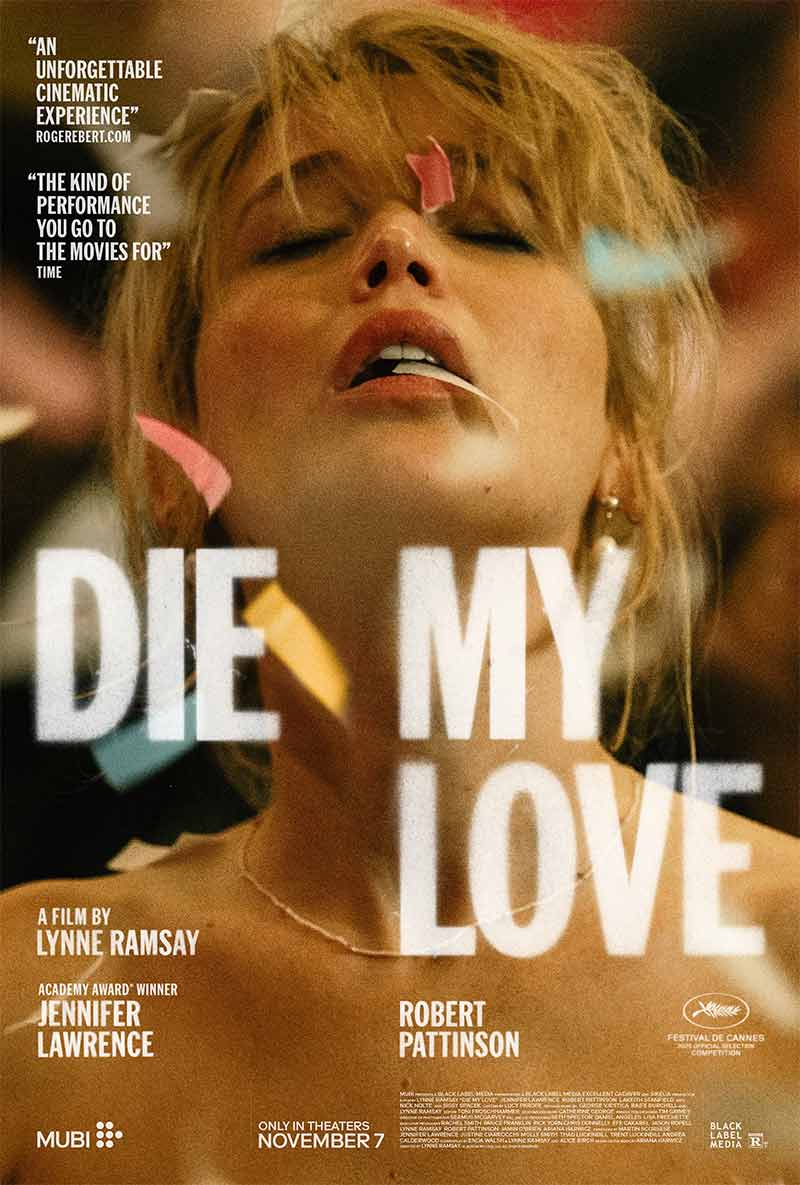
The film, directed by Lynne Ramsay, follows Grace (Lawrence), a woman slipping into postpartum psychosis as she struggles to navigate motherhood alongside her increasingly helpless partner, played by Pattinson.
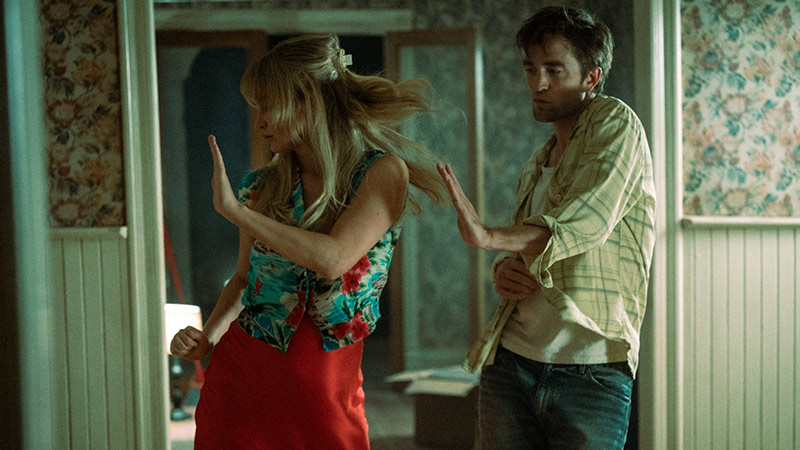
To prepare, the two engaged in dance lessons and movement workshops, with Lawrence saying that, "we did dance lessons together, which was like team building exercises," adding that "in the end, it ended up being more helpful just for choreography of sex scenes and fighting scenes."
Speaking in an interview, Lawrence revealed that she and the Twilight star didn’t rely on an intimacy coordinator during the film’s nude and sex scenes.
"We did not have [an intimacy coordinator], or maybe we did but we didn’t really… I felt really safe with Rob," she said. "He is not pervy and very in love with [partner] Suki [Waterhouse]. We mostly were just talking about our kids and relationships. There was never any weird like, ‘Does he think I like him?’ If there was a little bit of that I would probably have an intimacy coordinator. A lot of male actors get offended if you don’t want to f*** them, and then the punishment starts. He was not like that."
In a separate interview, she also revealed that despite having "basically a whole day of sex scenes on the first day" of shooting together, there was no awkwardness between her and Pattinson.
"It was very easy and there was kind of instant trust," she said.
"I mean, when you’re doing the kind of scenes that we have to be doing, you know, you don’t always get to pick your costars, and you don’t always feel comfortable."
Her remarks have since sparked a wave of criticism online.
Many have accused Lawrence of misunderstanding or minimizing the role of intimacy coordinators, which are professionals brought in to ensure physical and emotional safety during intimate scenes. Their job isn’t only about ensuring the well-being of the actress, but also the actor, and everyone behind the camera while the shot is taken.
"That is not the point of intimacy coordinators," one user on X argued. "It’s so that every person on set (including behind the camera) feels safe and protected." Another added, "Actors stop completely misrepresenting the point of intimacy coordinators."
For his part, Pattinson agreed that the dance lessons he had with Lawrence were humiliating and embarrassing. But those moments wounded up being quite a "good idea" to shoot the sex scenes on the first day.
"You think you can’t get more embarrassed, and then they’re like, 'Now do it naked!'" Pattinson joked, talking about the tiger-mimicking scene.
"If we didn’t like each other, then it becomes increasingly more awkward. Taking direction when you’re naked as well, it’s genuinely quite funny."
Since Pattinson is a man, and the one who is making the statement is a woman, the industry seemed to overlook the imbalance. But if the roles were reversed, it could easily have spiraled into a PR catastrophe.
The irony isn’t lost on those who remember that Jennifer Lawrence was once one of the earliest public faces of the movement for privacy and consent in Hollywood, not because she chose to be, but because she was a victim of one of the biggest digital privacy breaches in entertainment history.
In 2014, her private photos were stolen and leaked online during what came to be known as 'The Fappening,' considered now as the biggest leak of celebrities private photos and videos.
The traumatic incident deeply affected her career and her perception of safety in the industry. She later said it made her feel "violated" and that "it’s not a scandal, it’s a sex crime." The event pushed her into becoming an outspoken advocate for personal consent and digital privacy, which is why her recent dismissal of intimacy coordinators feels, to many, both surprising and complicated.
Ever since, Lawrence became the symbol of the #MeToo movement, inspiring many to speak up.
Read: Jennifer Lawrence 'No Hard Feelings' Nudity, And How Generation Z Wants Movies With Less Sex
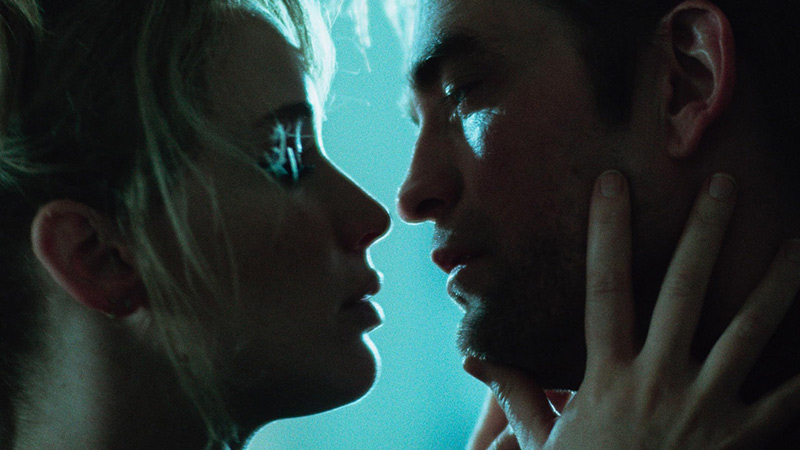
Beyond the controversy, Lawrence also discussed her comfort with nudity, which she considers something that has evolved over time. While filming Die My Love, she was pregnant with her second child, a fact that influenced her mindset toward her body.
"I don’t care about nudity. I’m not sensitive about it," she said. "I wanted Lynne to have total freedom artistically… I think being pregnant took a lot of, like, vanity anxiety away. Before No Hard Feelings, I was dieting and not eating carbs and working out. I was pregnant [for Die My Love]. Like, what was I gonna do? Not eat? I was working 15 hours a day. I was just tired… I remember, like, them sending over a close-up of cellulite and being like, 'Do you want us to touch this up?' And I was like, 'No. That’s an ass.'"
Her words reflect a creative maturity that comes from years in an industry obsessed with control: control of image, control of performance, control of narrative.
Yet, her dismissal of a profession born from the #MeToo reckoning paints a complex picture of a woman once hailed as a symbol of that movement.
Whether she intended to or not, her comments have reignited an ongoing conversation about how far Hollywood has really come since the days that made intimacy coordinators necessary. For Lawrence, it seems the line between trust, safety, and artistic freedom is as delicate, and as personal, as ever.
It's worth noting that her comfort with nudity wasn’t always so effortless.
Reflecting on her first nude role in 2018’s Red Sparrow, Lawrence once said the idea "really scared the hell out of me."
But now, she’s owning her body on her terms, and saying "no" to anyone who tries to edit that authenticity.
Lawrence’s comments also place her among a growing list of prominent actors who have expressed skepticism toward intimacy coordination.
Gwyneth Paltrow, Jennifer Aniston, and Sean Bean, for example, have all voiced similar concerns, claiming that the practice can interrupt creative spontaneity.
Paltrow famously said that while shooting Marty Supreme with Timothée Chalamet, she told the coordinator, "I think we're good. You can step a little bit back." Aniston, recalling her work with Jon Hamm, saying that, "Jon was such a gentleman, always, I mean every move, every cut, 'You OK?' It was also very choreographed… We're seasoned, we can figure this one out."
Still, many in the industry argue that such views reflect privilege rather than professionalism.
Some industry experts called the rejection of intimacy coordination "irresponsible," noting that powerful actors often underestimate how crucial such safeguards are for less-established performers. "Most of those speaking out against intimacy coordinators were sufficiently famous as to command their own power and protection on set," one expert said.
For Lawrence, whose career has always balanced vulnerability and defiance, this moment underscores a familiar tension: the push and pull between authenticity and accountability in a post=#MeToo Hollywood that’s still learning how to protect its stars without silencing their instincts.






















































































































































































































































































