At this time, some smartphones from Apple, LG, Samsung and others already allow owners to recharge their mobile devices wirelessly by just placing them on top of a charging pad.
The Federal Communications Commission (FCC) has approved an improved version of that, from San Jose, California-based Energous.
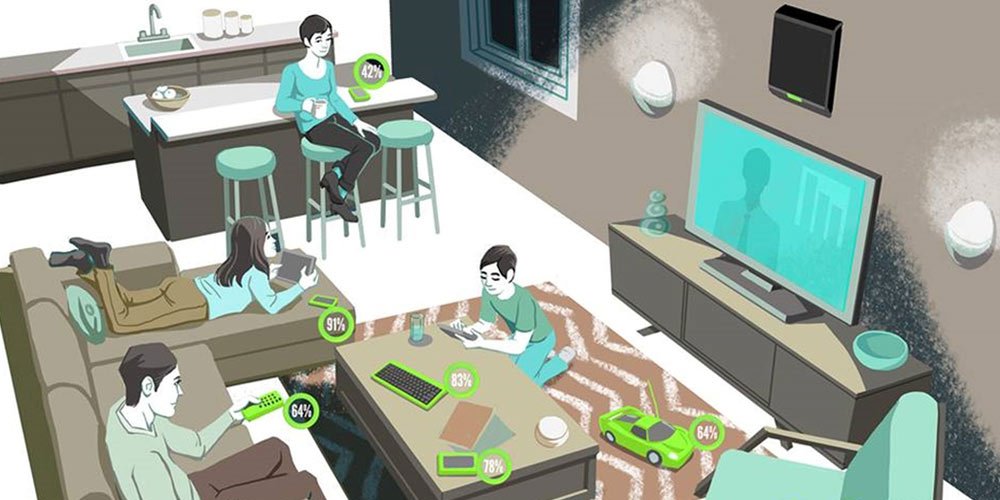
The technology uses radio frequency (RF) energy to recharge multiple devices such as smartphones, tablets, smart watches, headphones, speakers, keyboards and fitness trackers, all at once from a maximum of three feet away.
And if consumers have an Energous transmitter embedded into other devices, such as TV, speakers or others, they could also automatically charge devices in range that have the built-in receivers.
"Untethered, wire-free charging - such as charging a fitness band even while wearing it - is exactly what consumers have been waiting for," said Energous CEO and president Stephen Rizzone in a statement. "We are now in a position to move our consumer electronics, IoT and smart home customers forward at an accelerated pace."
The @FCC has approved the first-ever wireless, "power-at-a-distance" charging technology. @Energous' #WattUp could allow multiple devices to be recharged up to 3 feet away, regardless of manufacturer. https://t.co/6zdj8hxO7R cc @MartyMobile
— Ajit Pai (@AjitPaiFCC) December 27, 2017
The power-at-a-distance wireless charging system uses the company's WattUp Mid Field transmitter.
What it does, is converting electricity into radio frequencies, which then beams that energy to nearby devices outfitted with a corresponding receiver.
This differs from the resonant induction method that wireless charging system uses. For this reason, the transmitter offers an advantage of greater range than those wireless chargers that required their tabs to have physical contact with the devices they need to recharge.
What's more, the WattUp is manufacturer-agnostic. Similar to Wi-FI, users can charge their iPhones even if the transmitter is made by other manufacturers.
"Older wireless charging technologies have received limited adoption over the past 15 years, and are confined to contact-based charging only. The FCC certification of Energous' power-at-a-distance wireless charging transmitter is a major market milestone. It opens up options, outside of just contact-based charging, to Wireless Charging 2.0: an ecosystem where devices can be charged both, via pad and at a distance," continued Rizzone.

























































































































































































































































































