Researchers at RMIT University in Melbourne, Australia have successfully created the first rechargeable proton battery.
Considered to be the world's first, the prototype battery aims to create more affordable and environmentally-friendly power source, with the potential of replacing Lithium.
"Lithium-ion batteries are great but they rely on ultimately scarce and expensive resources," said lead researcher John Andrews. "Hydro is also a good technology but suitable sites are limited and the cost may be very high."
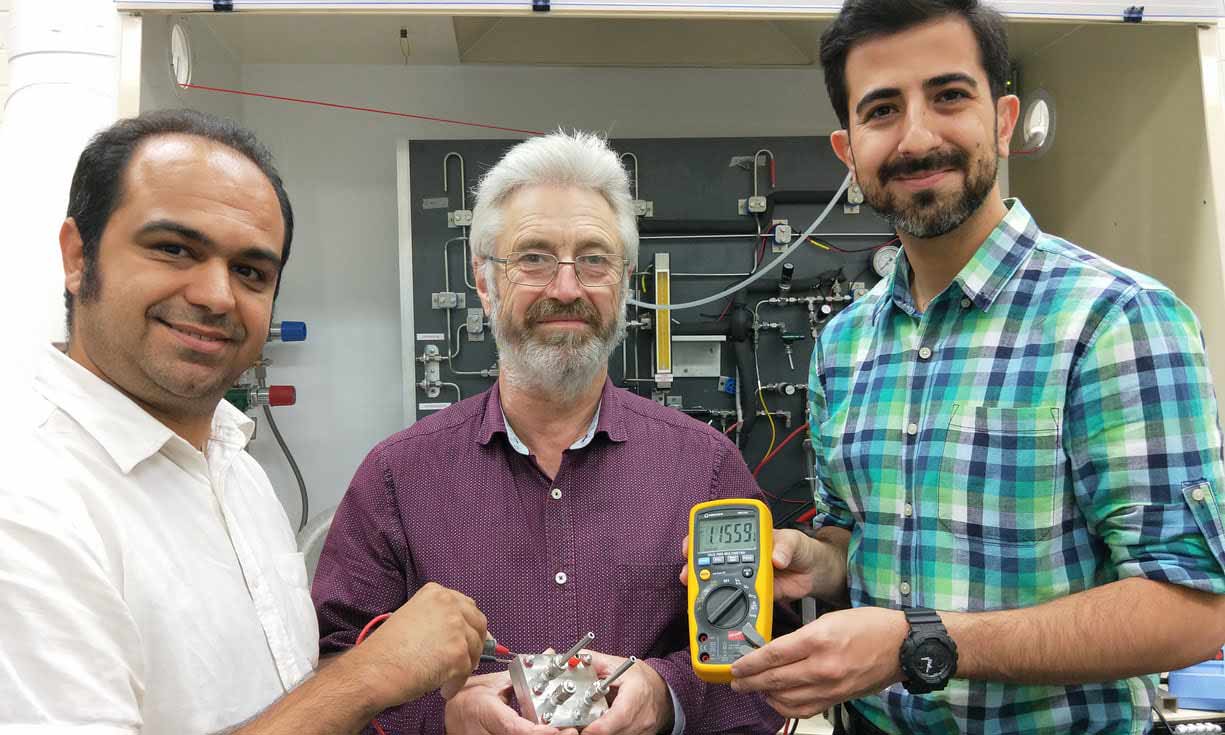
Andrews explained that the world’s energy needs were continuing to increase and he believes that proton batteries have the potential to supplement or even replace lithium batteries due to the cost and the rarity of the materials used in those batteries.
"The proton battery is one among many potential contributors towards meeting this enormous demand for energy storage," said Andrews.
Environmental and economic costs are two important things to consider.
The prototype is essentially a hybrid that uses a chemical battery (carbon electrode) and hydrogen fuel cells.
When charging, water is split to produce protons which are then passed through a cell membrane and bond with the carbon electrodes. And to produce power, those protons pass through the reversible fuel cell again to form water as it mixes with oxygen and then generates power.
The entire energy conversion and storage process is emission free, according to the team.
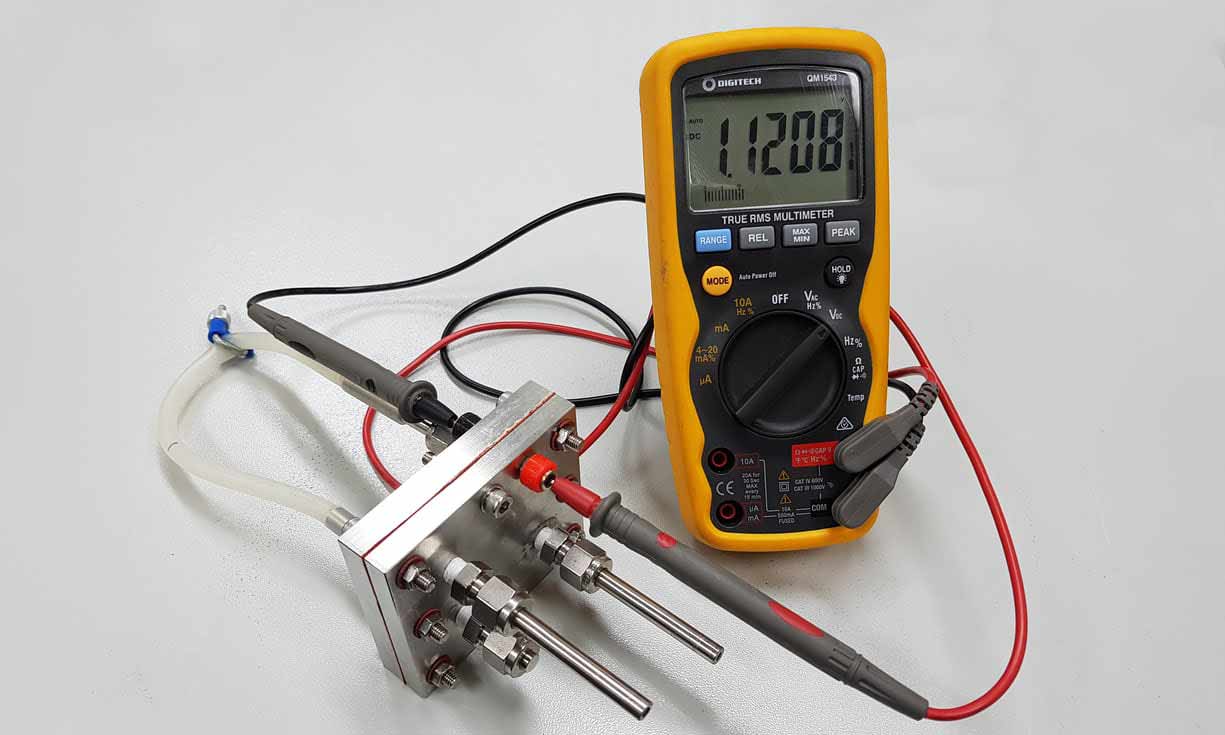
The prototype has an active surface area of 5.5 square centimeters, and capable of storing as much energy-per-mass as lithium batteries. Andrews and his team are working on ways to improve the battery, knowing the the have successfully create a working prototype.
"Powering batteries with protons has the potential to be more economical than using lithium ions, which are made from scare resources. Carbon, which is the primary resource used in our proton battery, is abundant and cheap compared to both metal hydrogen-storage alloys, and the lithium needed for rechargeable lithium ion batteries."
"Future work will now focus on further improving performance and energy density through use of atomically-thin layered carbon-based materials such as graphene, with the target of a proton battery that is truly competitive with lithium ion batteries firmly in sight," Andrews said.
"This is a crucial step towards cheap, sustainable proton batteries that can help meet our future energy needs without further damaging our already fragile environment."
Previously, Samsung has created a prototype which uses graphene balls to replace lithium.