China has long been a difficult market to enter for non-Chinese companies. But still, it has eased the regulations to approve more games imported to the company.
However, there are strict laws.
For example, China requires all digital games to receive receive a license from the country’s National Press and Publication Administration before release to ensure that the games meet the country’s strict rules on content. They too need to have a publishing number (ISBN), before the games can be published in the country.
And here, the government has cracked down thousands of unlicensed mobile games in China’s Apple App Store.
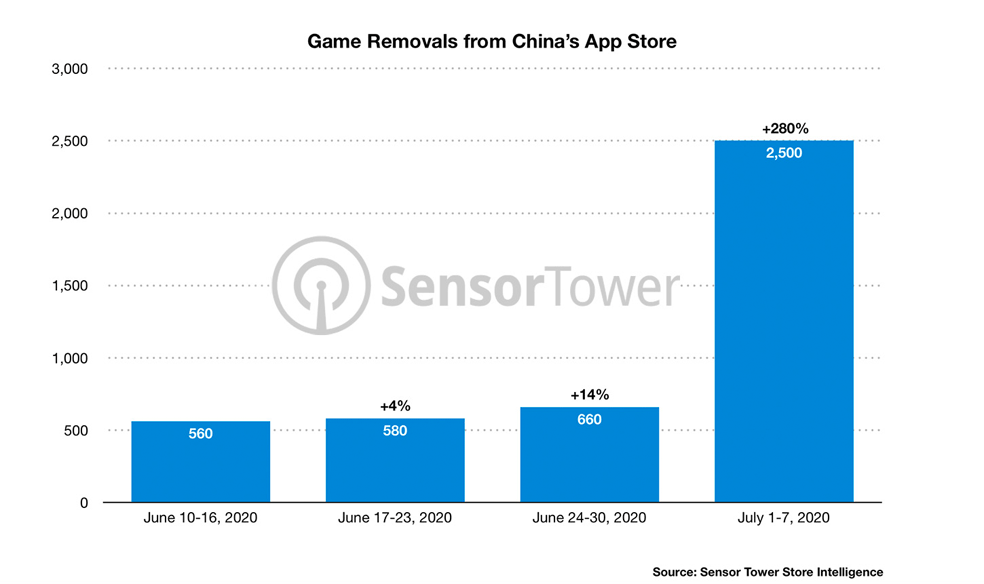
This resulted in the removal of over 2,500 game titles in the first week of July alone.
The games removed in the first seven days of July had generated a combined $34.7 million in lifetime gross revenue in China, and had accumulated more than 133 million downloads in the country. That according to a report from measurement firm Sensor Tower.
Apple is removing many of the game titles at the request of the Chinese government.
Notable games removed from China’s App Store during this period include Hay Day from Supercell, Contract Killer Zombies 2 from Glu, Solitaire from Zynga, ASMR Slicing from Crazy Labs, and Nonstop Chuck Norris from Flaregames.
In the past, games were able to get on the iOS App Store without approval.
But since Apple has started adhering to the Chinese regulations, developers of the games have until July 31 to enter their approval number and supporting documentation to their game’s page in the App Store. If not, the games will be removed until a license number is provided, Sensor Tower said.
In the meantime, 660 games have received licenses and have been approved. Sensor Tower said there were four times more removals in the first week of July and than in the first week in June, and five times more removals than in May.
Sensor Tower said that the cost to acquire a license is around $30,000 and it involves a complex process that can easily exceed that amount.
Regulator State Administration of Press and Publication (SAPP) has the control over digital games in China since 2018.
While developers from any part of the world can apply, far more licenses have been granted to domestically developed games than to foreign titles.
Despite digital games are not explicitly part of the U.S.-China trade war, but the economic tensions between the two giant powerhouse have been a factor in the decline.
Usually, when China offers no official stated reason, the issue can sometimes be political.
But still, China has been the number one mobile game market in the world, generating the highest revenue of any country on Apple's App Store.
"In 2019, games on China’s App Store generated an estimated $12.6 billion, representing 33.2 percent of all global games spending on Apple’s marketplace last year," said Sensor Tower.






















































































































































































































































































