Google is tech giant, considered among the largest and most powerful. However, as a company, it is required to obey the local laws where it is conducting its business.
And that includes in Russia, a country known for its censorship and its centralized blacklist.
This time, Google had been given an ultimatum by Russia's communications watchdog Roskomnadzor, in which the tech company should remove videos it said are related to drugs, violence and extremism.
The videos are all found on YouTube, the video-streaming platform it owns.
If Google failed to comply by deleting what the watchdog calls "unlawful content in 24 hours, Google could have its services in Russia slowed down.
What's more, it could also be fined between 800,000 and 4 million rubles, and "in case of a repeated offense, the amount of the fine will be increased to one-tenth of the total amount of the company's annual revenue."
Roskomnadzor said that it sent more than 26,000 notices to Google to delete what it called “illegal information," wrote TASS, a major news agency in Russia, in its website page.
5,000 of which are "prohibited" videos, and out of them, some 3,500 incite "extremism."
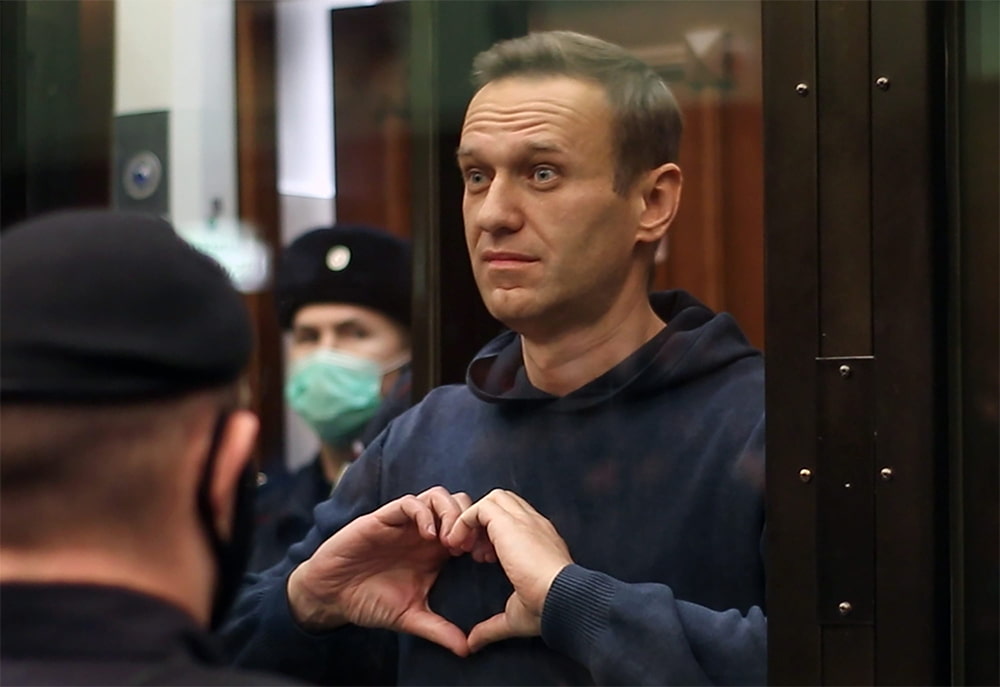
And this included twelve YouTube videos which allegedly encouraged minors to join unsanctioned protests in January, in support of jailed Kremlin critic Alexei Navalny.
Navalny has more than 6.5 million subscribers on YouTube, and regularly posts videos on the platform to voice his opinions against Russian President Vladimir Putin and the Russian government in general.
"To date, about 5,000 banned materials have not been removed from YouTube. Most of all - 3,500 - with calls for extremism. More than 900 materials recognized as banned by the court," the watchdog said.
The statement from Roskomnadzor also accused Google of restricting YouTube access to Russian media outlets, including RT and Sputnik, and supporting "illegal protest activity," and blocking the channel of pro-Kremlin, conservative Tsargrad TV.
Google said it receives requests from different governments across the world, and that the laws of each country vary. And Google said it often requires court decisions to react to requests.
On one side, the company often responds once a court decision has been reached. But one other side, Google also said that it is important for it to maintain YouTube as an open platform for various kinds of views.
The government can do this because it controls Internet Service Providers in the country.
This way, Roskomnadzor has the power to restrict access to something, or even slow down internet services when it wants to.
In the past, Russia had partly restricted access to Twitter to Russian users after Roskomnadzor said that the microblogging platform failed to remove around 3,000 posts it asked.
Russia's competition authorities are also investigating Google for alleged abuse of its market dominance, and have sought to ban foreign companies from having dominance on the Russian software market through laws requiring Russian-made apps, such as browsers and search engines, to be preinstalled on all smartphones sold in Russia.
Russian lawmakers had submitted a draft bill that would force large technology companies to open offices in Russia, or ban Russian companies from having business with them.
Previously, Google had only acted as a defendant or third party in lawsuits brought against it by the Russian authorities, according to a post by Kommersant, a Russian news agency. But this time, as Roskomnadzor is eyeing on Google, the company is contesting the Russia's content removal requests, by filing its first-ever lawsuit against Russia.
While Google is at this time at the spotlight, it should be noted that Roskomnadzor requested both foreign and Russian technology companies, including Facebook, VKontakte and Twitter to delete tens of thousands of posts, videos and pictures it said violated Russian law against promoting participating in unauthorized rallies.
In the end, it was reported that Alphabet, which is Google's parent company, was ordered to pay a total of 6 million rubles for three different offenses, Moscow’s Tagansky District Court said. Facebook on the other hand, was fined 26 million rubles in total, on eight separate counts.
Both companies were guilty of administrative offenses, the court said in separate statements.
Further reading: Journalist For A Telegram Channel Arrested After Providing The Means To Criticize Belarus President






















































































































































































































































































