Google is one of the largest internet company. On one side, it needs to make sure that its servers around the world are operating at their peak performances. On the other side, it needs to also make certain that its servers can deliver all that speed and capacity to its users.
One of the ways, is by utilizing undersea cables that are scattered in many parts of the world.
The Pacific Light Cable Network (PLCN) undersea cable for example, connects Los Angeles to Hong Kong, the Philippines and Taiwan. Partly funded by Google and Facebook, the U.S. regulators have blocked its activation over fears the project could jeopardize national security.
But due to Google in reaching its capacity in the Asia-Pacific region, Google submitted an appeal, saying that it would face significant higher prices if it required to route traffic through other systems. This in turn would diminish the value of capital investments in the U.S..
The tech giant claims “an immediate need to meet internal demand for capacity between the U.S. and Taiwan, in particular to connect Google’s Taiwan data center to Google data centers in the United States and to serve users throughout the Asia-Pacific region.”
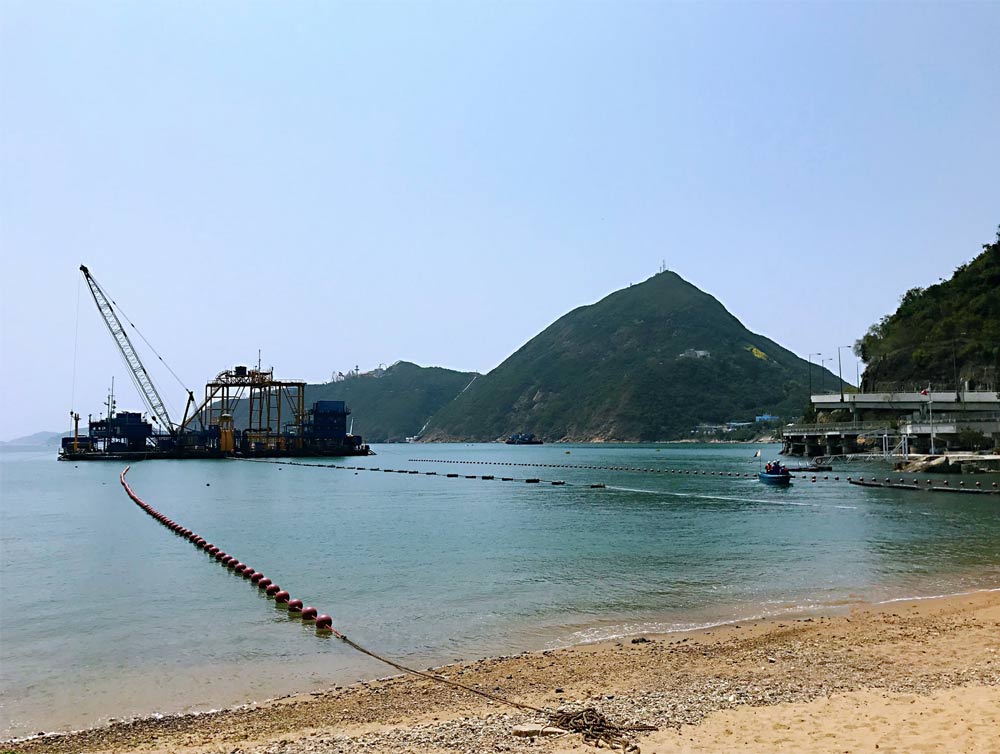
In response to Google’s appeal, the U.S. Federal Communications Commission (FCC) has granted the company permission to run the U.S. to Taiwan portion of the submarine cable for six months, while it awaits for a final decision on the activation of the PLCN.
According to the FCC, Google should also “pursue diversification of interconnection points in Asia” as part of the temporary agreement.
Receiving FCC’s approval, Google added that its “dedicated global network deployment and operations team is continually increasing capacity to meet the needs of our users.”
However, FCC said that the PLCN sections that run to Hong Kong should remain inactive amidst security fears and ongoing conflict between Washington and Beijing.
Regulators also put some concerns about the involvement of Chengdu Dr. Peng Telecom&Media Co., Ltd. in the project - a company with strong links to Chinese tech giant Huawei.
Announced in 2017, PLCN was originally billed as the first undersea internet cable to connect the U.S. and Hong Kong.
The 6 pairs of fiber optics span 12,800km across the Pacific Ocean, and has an estimated capacity of 120TB per second.
Managed by the Pacific Light Data Communication Co., Ltd. (PLDC), which was founded in October 2015 in Hong Kong, PLCN is directly connecting Hong Kong and Los Angeles in the U.S., by including the C+L technology.
Its with this deployment of C+L band that PLCN could almost double the per fiber pair capacity to provide high-speed, low latency and more secure bandwidth to all internet users.
The fiber optic cable network boasts 240 channels of 100Gbps in a single fiber pair (100G * 240 WL), 24 Tbps per fiber pair and 144Tbps for the whole system.
This makes it one of the highest capacity undersea cables in the trans-Pacific route.
Google here, owns one pair. Facebook owns another pair, and PLDC owns the remaining four pairs.