The internet is free to use for anyone with connection. With the many information available, this scares many governments that want to control the contents their citizens consume.
China is one of the countries where the government has put strict restriction to how internet companies operate and how contents are delivered to its citizens. With The Great Firewall of China, for example, the government uses a combination of legislative actions and technologies to enforce the People's Republic of China to regulate the internet domestically.
In one way or another, Chinese citizens have found ways to bypass such restriction. One of which, was by using Apple's AirDrop feature.
Protesters in Hong Kong use AirDrop to share information among other Apple users over Wi-Fi and Bluetooth, to breach China’s Great Firewall in order to spread information to mainland Chinese visitors in the city.
What they did, was leaving their AirDrop settings open to allow anyone in the vicinity to share and receive the files.
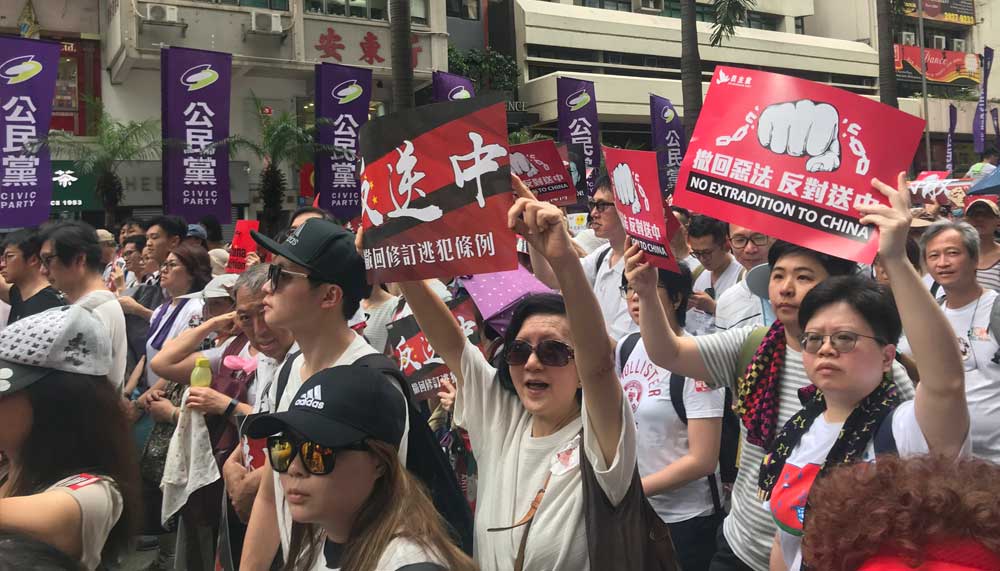
The messages were about China's extradition bill which would allow people to be sent to mainland China for trial in courts controlled by the Communist Party.
This has triggered outrage across the Hong Kong society amid concerns that it threatens the much-cherished rule of law that underpins the city’s international financial status. Hong Kong citizens have freedoms not enjoyed in mainland China, including the right to protest and an independent judiciary.
Protests against the then-suspended bill have drawn millions of people to the streets in the former British colony. With the aim to tell people from mainland China about the city’s opposition to a hated extradition bill, this was considered Beijing's biggest challenge to its rule territory since Hong Kong returned to Chinese control in 1997.
Because this kind of news would be heavily censored in mainland China, the Hong Kong’s protesters turned to Apple’s AirDrop feature to get their message across to their mainland Chinese supporters.
The messages that were written in simplified Chinese, confirm that the intended audience is Chinese tourists.
"Did you know? Over the past month, Hong Kong has seen three massive rallies, with as many as 2 million people taking to the streets," read one such AirDropped content. "Don’t wait until [freedom] is gone to regret its loss. Freedom isn’t god-given; it is fought for by the people."
"Maybe you’ve heard that Hong Kongers are constantly marching, 1 to 2 million people at a time, to oppose the extradition bill," read another poster. "We wish you a pleasant journey. Feel the freedom of assembly along the way. This space for freedom is the reason why we fight."
Another AirDropped files explained why there were no "foreign forces" behind Hong Kong’s protests, and how China’s government had led to the Tiananmen massacre of 1989.
To entice (trick) people in opening the messages, the Hong Kong protesters AirDropped the files to contain what looked like QR codes to Alipay and WeChat Pay, two popular mobile payments systems used in China.
People who scanned the codes thinking they would get free gifts, were not expecting to see information on the dangers of the extradition law.
Protesters also came up with other creative ways to share their anti-extradition, pro-democracy messages with mainland Chinese tourists.
For example, they held up placards that drew a direct link between protests in Wuhan, where thousands have been protesting against a waste incinerator plant. They also handed out physical leaflets to tourists, informing them of the state of censorship in mainland China and urging them to join and support the city’s opposition to the extradition bill which has caused political turmoil.






















































































































































































































































































