The intersection of digital content creation and high-risk sports has transformed how audiences experience extreme environments.
Over the past decade, social media algorithms have increasingly favored high-octane visual spectacles, turning niche local tracks and specialized sports arenas into global viral attractions.
This evolution in digital media culture has fundamentally shifted the relationship between online personalities, their massive global audiences, and the physical spaces where these activities take place.
Within this landscape, certain content creators achieve a level of influence that far exceeds traditional athletic sponsorship.
These personalities function effectively as gatekeepers and tastemakers for entire subcultures, driving massive tourist volume and commercial interest to specific locations.
Through a steady stream of first-person perspective videos, passenger reactions, and aggressive performance testing, they offer viewers an immersive look into a world that previously required years of local experience to navigate. This viral exposure brings tremendous economic value and global attention to local ecosystems, but it also alters the baseline culture of the sport itself.
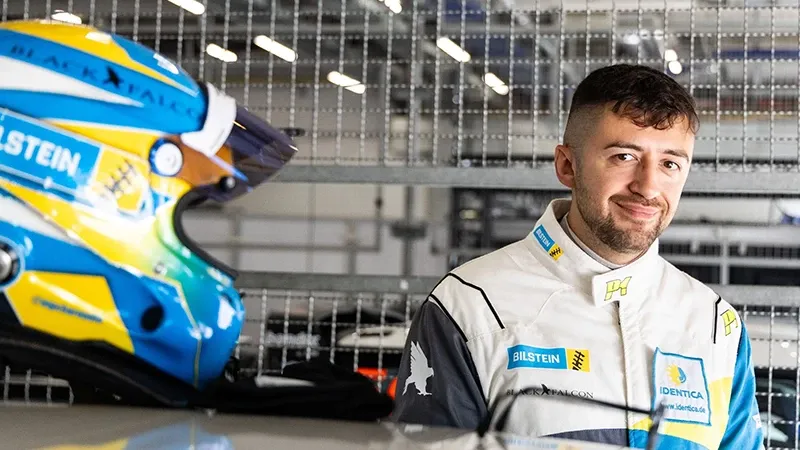
Misha Charoudin is a Dutch-Russian automotive personality who moved to the German village of Nürburg specifically to live beside the circuit.
Having completed tens of thousands of laps over the past decade, he built a massive online following through videos where he drives unfamiliar, modified subscriber cars at absolute capacity, analyzes lap telemetry, and gives passenger hot laps.
He is widely regarded as one of the circuit's primary gatekeepers and modern ambassadors, regularly hosting visiting international content creators, automotive executives, and professional racing drivers who come to experience the track.
Despite his immense online visibility and deep local knowledge, Charoudin is neither the fastest driver on the circuit nor an official record holder. The fastest lap times belong to factory-backed GT3 racers and professional test drivers setting production car benchmarks for major manufacturers.
Instead, he operates as a highly skilled track specialist and endurance driver whose memory of the layout is so precise that he famously called out corners blindfolded from the passenger seat.
His ability to control unfamiliar performance cars at near-racing speeds while managing live commentary is what draws millions of viewers to his channel.
However, despite not being the fastest in the so-called "Green Hell," he is one of the most influential people who drive there frequently.
And this caused him some problems.
The friction surrounding his massive reach eventually materialized in a public effort to restrict his access to the circuit.
A Change.org campaign titled "Temporarily Ban Misha Charoudin from the Misha Charoudin Nordschleife" emerged, calling for a one-year suspension from both public tourist sessions and industry test pools.
The petition pointed to a recurring pattern of high-speed near-misses, aggressive overtakes, and track crashes recorded and published across his channels.
The core argument was not simply about individual driving errors, but about the broader ripple effect on track culture.
Critics asserted that broadcasting high-risk driving during open sessions encourages international visitors to treat a public toll road like a lawless video game track, elevating dangerous behavior among drivers who lack Charoudin's thousands of hours of experience.
The label of being a dangerous presence stems not from an intent to cause harm, but from the nature of him pushing varied machinery during open tourist sessions.
Also called the track's public "touristenfahrten" sessions, anyone can pay a small fee to take a lap around the circuit. These public sessions also fall under the same restrictions as you’d find driving down a typical German roadway, which means no HANS devices are allowed to be installed in the car. This is the reason why viewers see Charoudin without his helmet in some of his videos.
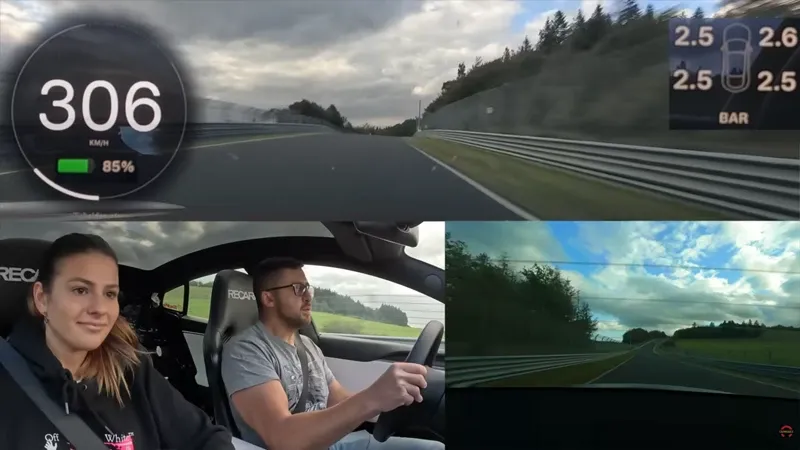
And because Charoudin routinely drives customer cars, some are modified beyond stock, some of which have over 1,000 horsepower, some with unknown mechanical histories, he has his own share of experiencing several publicized mechanical failures and near-misses at extreme speeds, including a high-speed incident at over 300 km/h in a Tesla.
One of his worse moments, was when he crashed a heavily modified, subscriber-owned G82 BMW M4.
Charoudin doesn't have the actual crash footage since his media license agreement with the property forbids him from sharing any crashes captured during a touristenfahrten session. He only explained how things started to go wrong after the car went through the famous Foxhole corner. At the time, the brake pedal stopped responding properly.
And because the couldn't have total control of the car, exhibiting unusual handling accompanied by an error code, he didn't have time to adjust to address the situation.
As a result of this, the M4 continued to barrel towards the safety barrier just before Adenauer Forst, and made contact with the barrier at around 120 km/h.
The force of the impact destroyed the windshield, while also tearing a huge hole straight through the roof panel.
While driving the M4 was probably his worse experience, that wasn't the first time he has been in one of these situations. Previouslym he was involved in crashes in a turbocharged BMW E30, a modified Mazda Miata, and his own Toyota GR 86 track car, in the past year alone.
Critics argue that broadcasting aggressive overtaking maneuvers and close calls, and reporting crashes, creates a dangerous narrative for his audience.
The concern is that viewers try to copy his driving style during public sessions without having his thousands of hours of experience, confusing high-risk content creation with safe track etiquette.
The debate exposes a fundamental rift in how high-octane content creation is evaluated when filmed in shared public spaces.
On one hand, petitioners argue that a creator with millions of impressionable followers has a duty to model cautious, respectful behavior rather than prioritizing viral entertainment over mutual safety.
On the other hand, Charoudin's supporters view the backlash as a targeted smear campaign against a driver whose deep experience actually helps prevent catastrophes when sudden mechanical failures occur.
They contend that his videos provide an honest, unvarnished look at the inherent risks of track driving, while his promotional reach brings massive global tourism and economic vitality to the local Nürburgring region.
Ultimately, this controversy reflects a systemic challenge facing modern action sports venues as viral digital media continues to dictate public interest.
The line between educational transparency and reckless spectacle becomes blurry when algorithmic rewards favor maximum excitement.
While track managers must balance the undeniable economic benefits generated by digital ambassadors against strict operational safety, the debate around Charoudin highlights the growing tension over who bears responsibility when the pursuit of viral content meets the unpredictable reality of a dangerous circuit.
Further reading: How A Viral Nürburgring Crash Video Reignited The Decades-Old Porsche-BMW Rivalry






















































































































































































































































































