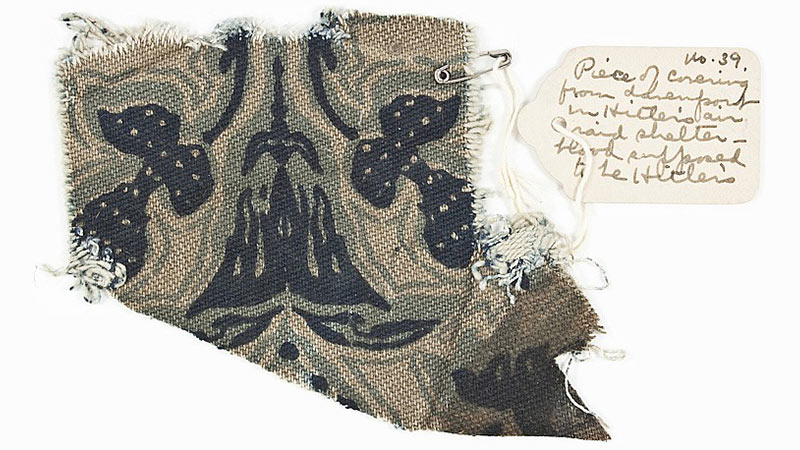
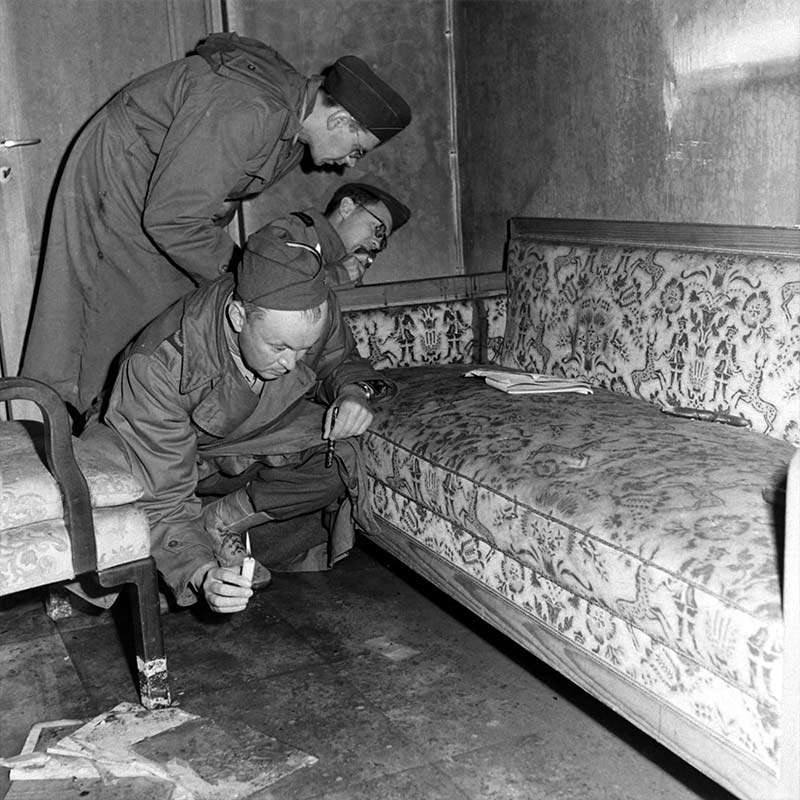
In the dim, smoke-filled chaos of Berlin's Führerbunker on April 30, 1945, Adolf Hitler ended his life with a gunshot to the head, his blood soaking into the fabric of a modest sofa as Soviet shells rained down overhead.
That unassuming piece of upholstery, cut away by a U.S. Army colonel in the war's frantic aftermath, spent decades tucked away in the Gettysburg Museum of History, a forgotten relic of history's darkest chapter.
But now, eighty years later, it has become the unlikely key to unlocking the genetic secrets of the man who unleashed unimaginable horror on the world.
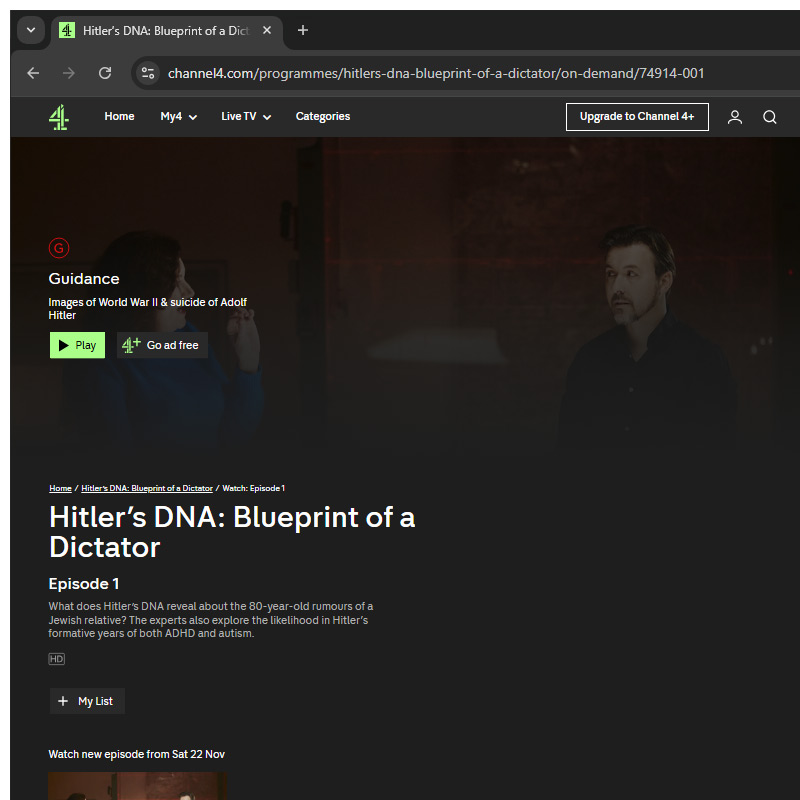
A groundbreaking two-part Channel 4 documentary, Hitler's DNA: Blueprint of a Dictator, airing its first episode on November 15, 2025, reveals the results of the first-ever direct analysis of Hitler's genome, extracted painstakingly from that bloodstained fabric after four years of forensic detective work.
Led by renowned geneticist Professor Turi King of the University of Bath, the project marries cutting-edge science with historical scrutiny, confirming the sample's authenticity by matching its Y-chromosome to that of a distant male-line relative.
What emerged isn't just a scientific curiosity; it's a window into the biological vulnerabilities of a tyrant, shattering long-standing myths and sparking a global firestorm of debate.
And the internet is both amused and nevertheless, captivated.
After all, this is about Hitler, the origin of the unspeakable horror on the 20th century, the prime example of a person in modern history who comes closest to a universally agreed-upon personification of evil.
At the heart of the findings lies a rare genetic mutation in the PROK2 gene, a deletion that points to Kallmann syndrome, which can be described as a congenital disorder that disrupts the hormonal signals guiding puberty.
In males, this can lead to low testosterone levels, delayed or incomplete sexual development, undescended testicles, and, in about 5% to 10% of cases, a micropenis.
Historians like Dr. Alex J. Kay, the documentary's senior consultant and a leading expert on Nazi Germany, describe this as a "major finding," one that aligns eerily with wartime rumors and medical records.
A 1923 physical exam during Hitler's imprisonment for the Beer Hall Putsch noted his right testicle as undescended, fueling the infamous British ditty: "Hitler has only got one ball."
The syndrome also often impairs the sense of smell, a trait Hitler reportedly lacked, and could explain his documented discomfort around women, his obsessive, unconsummated infatuation with half-niece Geli Raubal, his late and chaste marriage to Eva Braun, and a private life marked by celibacy amid the debauchery of his inner circle.
Yet the experts are unequivocal: this is a predisposition, not a definitive diagnosis, and it offers no excuse for his ideology.
As King emphasizes, "We cannot say for certain about the state of his genitalia."
However, the genetic marker provides a biological thread to the personal insecurities that may have intertwined with his toxic worldview.
Equally striking is the debunking of one of history's most persistent rumors: that Hitler harbored Jewish ancestry, a speculation born in the 1920s from his grandmother Maria Schicklgruber's brief employment in a Jewish household in Graz.
This tale, weaponized by foes and even echoed by Russian Foreign Minister Sergei Lavrov in 2022 to justify the Ukraine invasion, suggested a "self-hating Jew" at the helm of the Holocaust.
The Y-chromosome haplogroup E1b1b, rare in Western Europe but common in parts of Austria and Germany, matches Hitler's paternal line precisely, no breaks, no foreign intrusions.
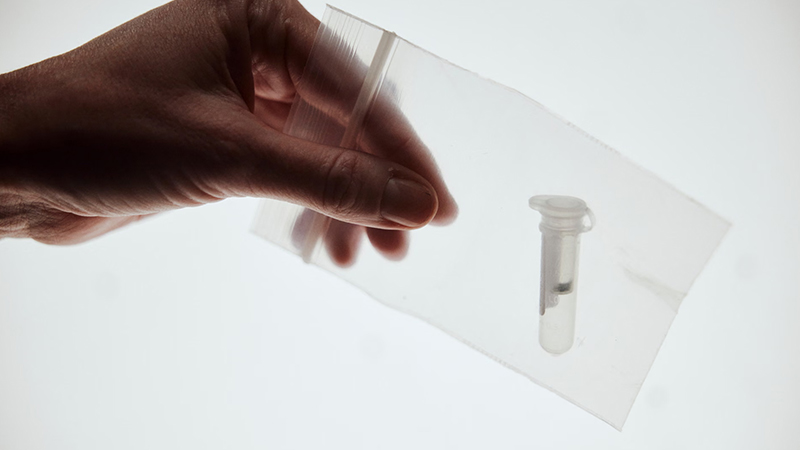
"That DNA match not only confirmed this is Hitler's DNA but also confirms that story of Jewish ancestry is just simply not true," King said. For Holocaust scholars and survivors' descendants, it's a quiet but profound vindication: Hitler's virulent antisemitism was no projection of hidden heritage, but a deliberate, ideological poison rooted in the era's virulent racism.
As the documentary notes, this closes a chapter of speculation that has haunted biographies for decades, allowing focus to shift from myth to the unadorned evil of his choices.
But the analysis delves deeper, into the murky terrain of mental health, where polygenic risk scores, statistical estimates derived from thousands of genetic variants, place Hitler in the top 1% of the population for liabilities to autism, schizophrenia, bipolar disorder, and ADHD.
Conducted by experts at Aarhus University in Denmark, these scores compare Hitler's genome to a database of 30,000 individuals, revealing an unusually high overlap across conditions.
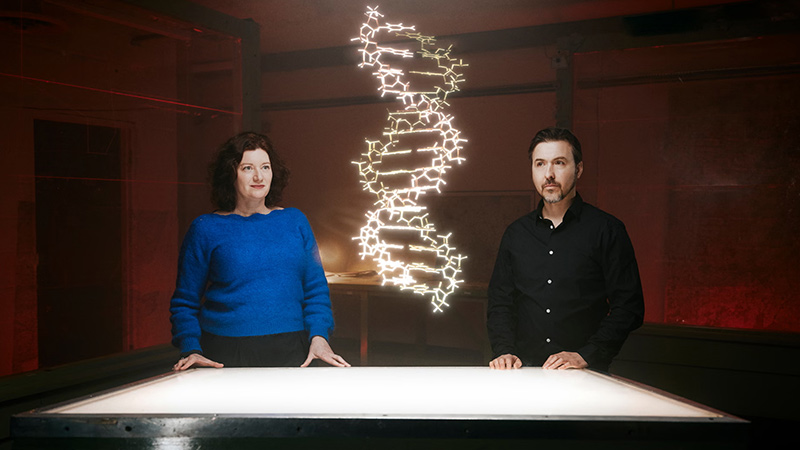
Professor Ditte Demontis, who led the psychiatric genetics work, was "surprised" by the results: among Danes with equivalent scores, the odds of diagnosis hover around 5%, but Hitler's profile suggests a profound vulnerability amplified by environment: his abusive childhood, World War I trench horrors, and the Weimar Republic's economic despair.
Symptoms like paranoia, grandiosity, and social withdrawal, long inferred from eyewitness accounts, now have a genetic shadow.
Psychologist Sir Simon Baron-Cohen, appearing in the film, warns against stigma: "Associating Hitler's extreme cruelty with these diagnoses risks stigmatizing people who are neither violent nor cruel." Indeed, polygenic scores are research tools, not crystal balls; they predict population trends, not individual fates.
As historian Kay puts it, "Nothing can ever fully explain Adolf Hitler's evil"—behavior is a tangle of nature, nurture, and choice, not a "tyranny gene."
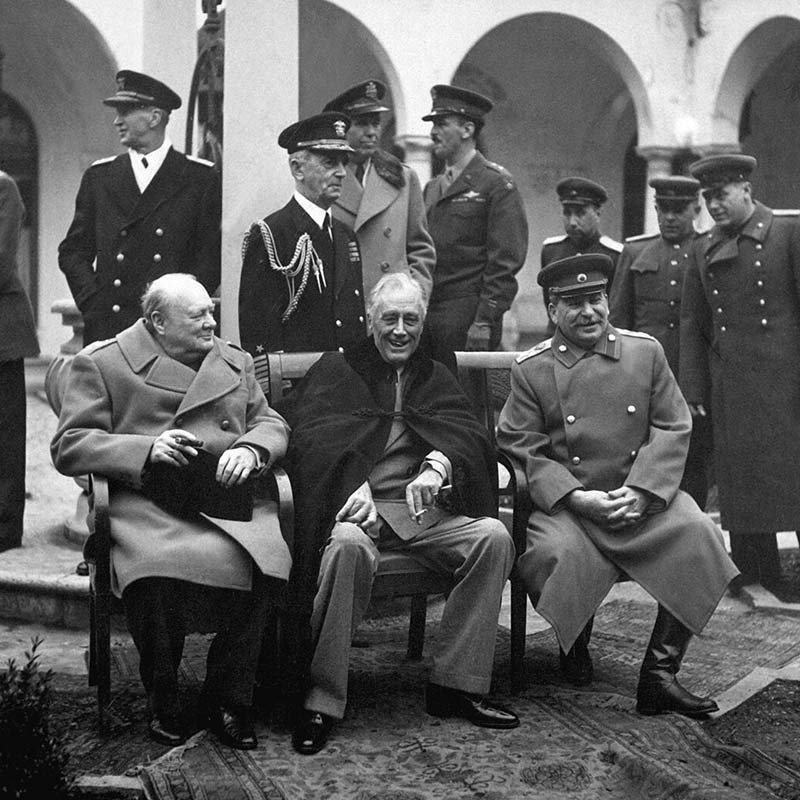
The documentary's release has ignited the internet like few historical revelations before it.
Since the story broke on November 12, X (formerly Twitter) has erupted with over a million impressions on top threads, blending dark humor, ethical outrage, and morbid fascination.
Posts in English, Portuguese, and Italian rack up tens of thousands of likes: one viral tweet quips, "Hitler therefore had low testosterone... if alive today, he'd be a redpill Trump supporter sipping Campari," while another in Portuguese translates the micropenis revelation with a shocked emoji cascade.
Major publications and publishers dominate shares, thanks to their catchy headlines, fueling memes that resurrect the old wartime song.
Yet amid the laughs, serious voices emerge.
Some other publications and publishers debate whether the study should have happened at all, citing risks of glorifying a monster, while others critique the sensationalism, noting the team's failure to secure fresh relative DNA due to privacy concerns.
On X, historians praise the myth-busting, but ethicists fret over "genetic determinism," fearing it could excuse atrocities or burden the neurodiverse.
Read: 'Monster: The Ed Gein Story' And Why The Internet Isn't Ready For The Man Beneath The Mask
The controversy surrounding this discovery is not only about unearthing fragments of lost history, but also about the ethics that shadow every step of the project.
Confirming that the dried blood on the recovered fabric truly belonged to Adolf Hitler required a genetic match with one of his surviving relatives. Researchers attempted to obtain new, voluntary DNA samples from living family members in Austria and the U.S., but all declined, understandably wanting no connection to a man whose name is synonymous with atrocity.
With no modern samples available, the team turned to an older source: a Y-chromosome swab collected years earlier by a Belgian journalist who had been chasing rumors of Hitler fathering a child during the war. That archived sample produced a perfect match. Whether the relative who provided it ever consented to having his DNA repurposed for a primetime investigation into the genetics of the twentieth century’s most infamous tyrant remains, at the very least, uncertain.
A second issue cuts even deeper, touching on the long-standing tension between scientific capability and scientific restraint.
The idea of extracting genetic material from the dead, then using it to probe or reconstruct the past, has long been romanticized in fiction. Steven Spielberg’s Jurassic Park helped popularize the fantasy: science resurrecting what history buried. It was dazzling, and it showed how far technology could reach. But beneath that excitement lies an uncomfortable question. Even if we are able to pull DNA from a relic of the past, analyze it, sequence it and fold it into a narrative for modern audiences, should we?
Complicating this even further is the cultural weight surrounding Hitler’s name. Few figures in modern history carry such infamy, and society has spent decades rightfully portraying him in the darkest possible light.
That notoriety shapes every retelling, every documentary, every scientific inquiry that touches his legacy. Projects like this inevitably attract scrutiny, because any attempt to study him risks being interpreted either as sensationalism or as another attempt to revisit horrors that most people would prefer remain sealed in the past.
The world does not need help remembering him as a monster; that status is unquestioned. Yet the fascination persists, pushing researchers, journalists and film studios toward stories that walk the narrow line between uncovering truth and exploiting history.
In the end, the debate is less about whether this project can proceed, and more about what responsibility comes with reopening the pages of a life defined by devastation.
In the end, Hitler's DNA doesn't rewrite the Führer's legacy; it humanizes the inhuman, reminding humanity that even monsters are flesh and code, products of flawed biology and fateful decisions.
As the credits roll on Channel 4, with King's team pondering future analyses of other tyrants, one truth endures: science can illuminate the past, but it can't absolve it.
Hitler's genes may whisper of vulnerabilities of a boy stalled in adolescence, wired for isolation.
But they scream nothing louder than the choices that turned a man into a murderer of millions.
In an age of genetic crystal-gazing, this is perhaps the most viral lesson of all: our blueprints guide us, but they don't define us.






















































































































































































































































































