Quantum-based communication and computation technologies promise a next level of possibilities.
From more secure communication methods, to increasingly precise sensors, and quantum computers that are capable of solving specific problems with the capacity beyond any traditional computers.
Quantum technology also promises a way where connections can be established through quantum channels, in order to create what it's called the "quantum internet.".
Quantum information networks however, require a way to work with information and quantum data.
So before this quantum internet can happen, researchers have to deal with some of the challenges for the first time.
And that includes creating the protocol for it.

UAB researchers dealt with this challenge, by sorting data from a quantum systems network according to the state in which they were prepared.
The research was published with the title Unsupervised Classification of Quantum Data and is authored by researchers from the Quantum Phenomena and Information Unit at the UAB Department of Physics Gael Sentís, Àlex Monràs, Ramon Muñoz-Tàpia, Jon Calsamiglia and Emilio Bagan.
In the paper, the researchers said that:
"We derive the optimal single-shot protocol for the binary case, where the states in a disordered input array are of two types. Our protocol is universal and able to automatically sort the input under minimal assumptions, yet partially preserves information contained in the states. We quantify analytically its performance for an arbitrary size and dimension of the data."
"We contrast it with the performance of its classical counterpart, which clusters data that have been sampled from two unknown probability distributions. We find that the quantum protocol fully exploits the dimensionality of the quantum data to achieve a much higher performance, provided the data are at least three dimensional."
"For the sake of comparison, we discuss the optimal protocol when the classical and quantum states are known."
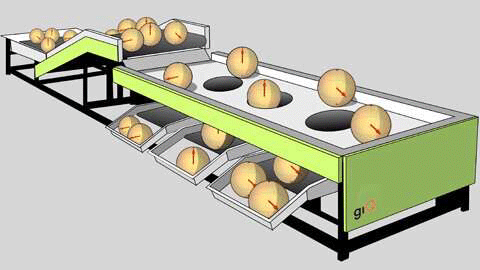
"Our protocol shows a natural connection to an archetypical use case of classical machine learning: clustering data samples according to whether they share a common underlying probability distribution," said the UAB researchers.
This problem solving shares a similar pattern to how a classical computer discerns the origin of different sounds, like from conversations, traffic and a street musician, captured simultaneously using a microphone placed on the street.
However, unlike soundwaves, identifying patterns in quantum data is much more challenging, since a mere observation only provides partial information and irretrievably degrades the data in the process.
This is why the researchers looked at the problem of sorting a data array of quantum systems by the state in which they have been prepared.
"In the case of two possible preparations, we devise an optimal procedure that can identify clusters of identically prepared quantum systems," the researchers said.
Physicists at the UAB were also able to compare the performances of classical and quantum protocols.
According to the researchers, the protocol they created can outperform existing classical strategies, particularly for large dimensional data.
And because this protocol is regarded as a solid theoretical framework on what is physically possible in the field of automated classification and distribution of quantum information, the proposal by the researchers represents a next step towards quantum information networks.






















































































































































































































































































