Russia has ordered the shutdown of cryptocurrency mining operations across Moscow, the surrounding Moscow Region, and selected parts of the Kursk region, targeting activity in the capital of the world's second-largest Bitcoin mining power.
The ban, formalized under government decree No. 936, took effect in mid-August 2026 and will remain in place through the end of 2032.
The restrictions prohibit not only the operation of mining equipment, but also participation in mining pools from the affected territories.
Officials say the measure is necessary to protect regional power grids, which are facing increasing pressure from energy-intensive facilities.
Mining currently consumes roughly 1 gigawatt of electricity within the Moscow power system.
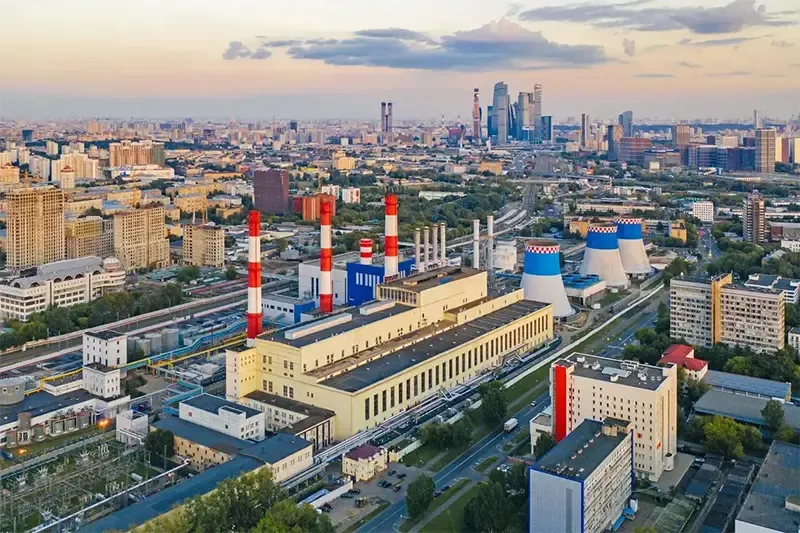
To put that figure into perspective, 1 GW represents one billion watts of instantaneous electrical power,, which is the equivalent of 1,000 megawatts (MW) or 1,000,000 kilowatts (kW).
This massive unit of measurement is typically used to describe the capacity of major national infrastructure, large-scale power grids, or massive industrial setups like modern AI data centers.
To help visualize this scale, one gigawatt is enough simultaneous electricity to power between 300,000 and 750,000 average residential homes, satisfy the peak energy demand of a medium-to-large metropolitan city, light up more than 100 professional sports stadiums during a peak event, or supply roughly one-quarter of the entire national electrical grid of Iceland.
Generating this immense amount of power requires substantial infrastructure, such as a single commercial nuclear power plant reactor operating at full capacity.
And Moscow's energy requirements are expected to grow substantially.
Regional authorities project that data-center capacity across Moscow and the surrounding area could reach 3.6 GW by 2032, potentially accounting for around 17% of peak electricity demand.
The Energy Ministry has argued that allowing cryptocurrency mining to continue throughout the year would increase the risk of capacity shortages as more data centers and other energy-intensive facilities connect to the grid.
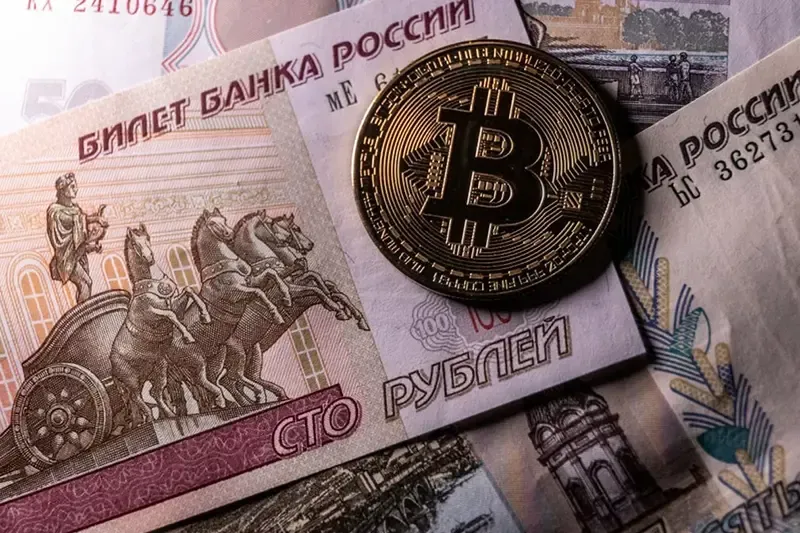
The decree builds on restrictions introduced in other parts of Russia following the country's legalization of registered cryptocurrency mining in 2024.
Similar restrictions already apply to areas including parts of Irkutsk, Buryatia, and Zabaykalsky Krai, as well as regions in the North Caucasus and territories occupied by Russia during its war against Ukraine.
Despite the domestic restrictions, Russia remains a major player in global Bitcoin mining.
During the first quarter of 2026, Russia accounted for an estimated 175 exahashes per second, representing approximately 16.4% of Bitcoin's global computing power and placing it second behind the United States.
Russian companies have also increasingly turned to domestically mined Bitcoin for international trade settlements, particularly as Western sanctions have made conventional banking channels more difficult to use.
Russian financial officials have publicly acknowledged the potential role of mined cryptocurrency in facilitating cross-border payments, while recent legislation has maintained exceptions allowing cryptocurrency to be used in certain foreign-trade transactions.
This creates an increasingly complicated position for Moscow.
The Russian government wants to preserve cryptocurrency's usefulness as a tool for international trade while simultaneously limiting its enormous domestic demand for electricity.
The pattern is not unique to Russia. Countries that initially attract cryptocurrency miners with cheap or abundant electricity can eventually find themselves restricting the industry once power supplies become strained.
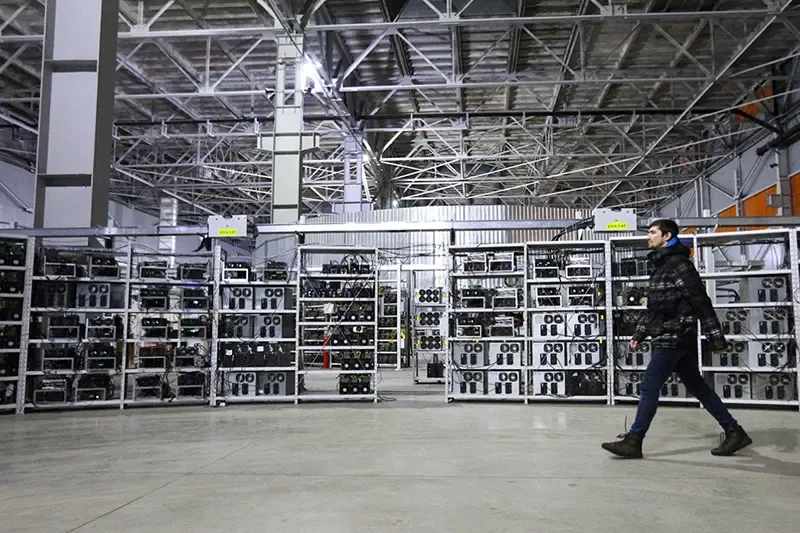
Moscow is now the latest example.
Mining operators in the capital and surrounding region will have to shut down, relocate, or find alternative ways to operate before the restrictions take full effect.
The bigger question is where that computing power goes next.
If miners can find sufficient electricity and more favorable regulations elsewhere in Russia, the hashrate could simply migrate to less constrained regions. But if available power becomes increasingly limited, some operators may have little choice but to move their operations outside the country.
For an industry that has already moved repeatedly across borders in search of cheap electricity and favorable regulation, Russia's latest restrictions could trigger another geographic shift.
And ultimately, the decision illustrates a growing problem for Bitcoin mining: the more valuable the network becomes, the more electricity it requires and eventually, even major power systems can decide that the cost is too high.

















































































































































































































































































