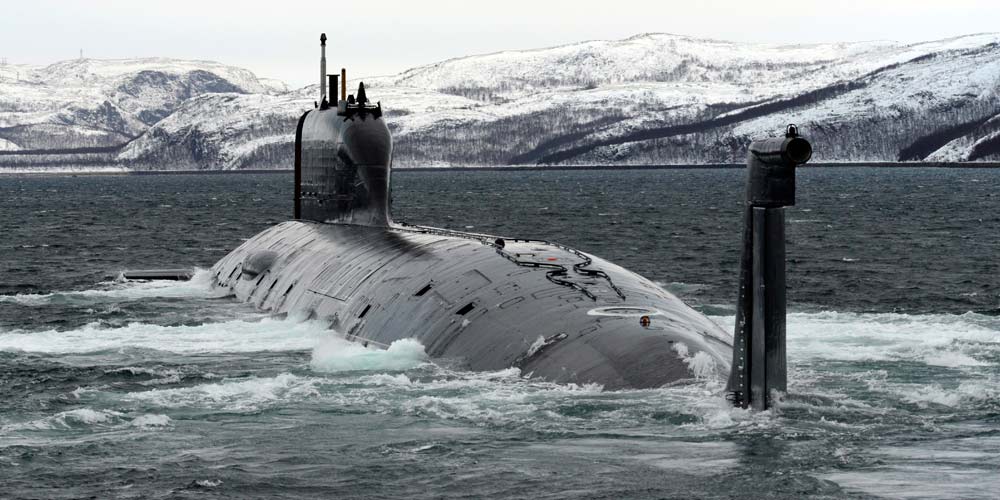
Russian submarines have dramatically stepped up their activity around undersea data cables in the North Atlantic.
In an increased activity never seen since the Cold War, said the official, the submarines focuses on the cables, which provide internet and other communication connections to North America and also Europe. This could give Kremlin the power to sever or get vital data.
"We are now seeing Russian underwater activity in the vicinity of undersea cables that I don’t believe we have ever seen," said U.S. Navy Rear Admiral Andrew Lennon, the commander of NATO’s submarine forces. "Russia is clearly taking an interest in NATO and NATO nations’ undersea infrastructure.
NATO has responded with plans to reestablish a Cold War-era command post, to help secure the North Atlantic.
NATO allies are also increasing their anti-submarine warfare capabilities and developing their own advanced submarine-detecting planes.
The data cables which form the backbone of the modern global economy, are privately owned. They are laid along the same corridors as the first transatlantic telegraph wire.
Carrying nearly all of the internet connection, facilitating trillions of dollars of daily trade. While cutting the U.S. off from the web would probably be impossible because of the number of connections going in and out of the country, but if severed, they could create a catastrophic results affecting both economy and other ways of living. If tapped, the Russian could get most of the world’s important internet traffic.
The Russian naval activity comes after Kremlin pressed against NATO in the air and on land. Russian jets routinely scout NATO airspace in the Baltics, and land troops drilled near NATO territory in September 2017.
Previously in 2014, Ukrainian telecommunication providers reported disruptions to a key internet exchange point and cable connections during Russian military activity in the Crimean peninsula. Some states are already known to have capabilities to tap cables in undersea locations, and the U.S. itself has done this in the 1970s.
What's more, documents leaked by NSA whistleblower Edward Snowden said that intelligence agencies like NSA and GCHQ can intercept data communications at listening sites such as Bude in Cornwall, where a major transatlantic cable comes ashore in the UK.
Further reading: The Internet Is Held By Underwater Cables: Connecting The World A Few Milliseconds Closer Together

























































































































































































































































































