Corporate espionage has long been the stuff of Hollywood thrillers, complete with dark alleyways, stolen files, and covert operatives.
In today's hyper-competitive technology landscape, however, reality has easily outpaced fiction.
Companies spending billions to build the next generation of AI tech and models are finding that their biggest vulnerabilities might not be clever hackers thousands of miles away, but rather the very people who walk through their front doors every morning with valid employee badges.
San Francisco's tech hub was recently rocked by a textbook insider threat that felt straight out of a spy novel.
The incident unfolded inside the headquarters of OpenAI, where a newly hired engineering leader, Abdulrahman Alfozan, allegedly set out to covertly record some of the company's most sensitive conversations.
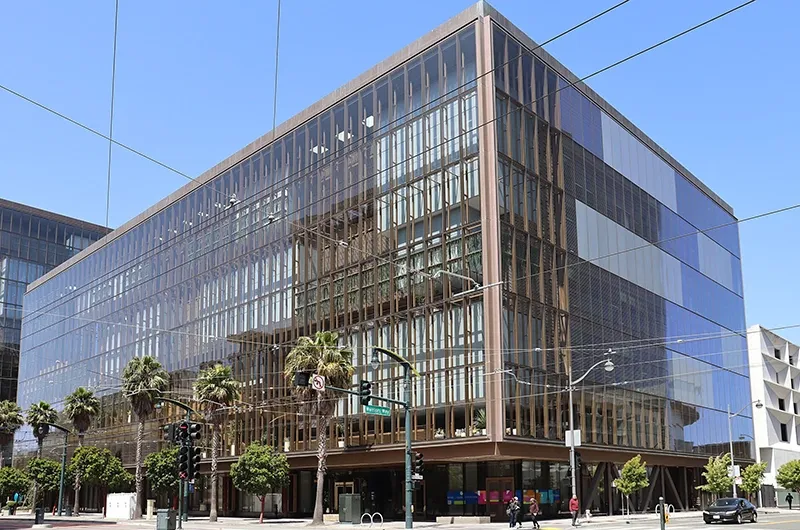
Having joined the organization only a year earlier to work on AI and data systems, he managed to gain access to a high-level executive conference room where leaders regularly gathered to discuss proprietary research, strategic business moves, and future product roadmaps.
The physical setup of the operation was strikingly low-tech compared to the cutting-edge technology being developed in the building.
Alfozan allegedly placed a hidden, encrypted audio-recording device equipped with data-transfer capabilities.
The bug was discovered by another OpenAI employee plugged directly into a USB port on the back of a television set inside the executive room.
In an odd attempt to disguise the hardware and make it blend into the shadow of the television frame, it was crudely wrapped in a piece of toilet paper.
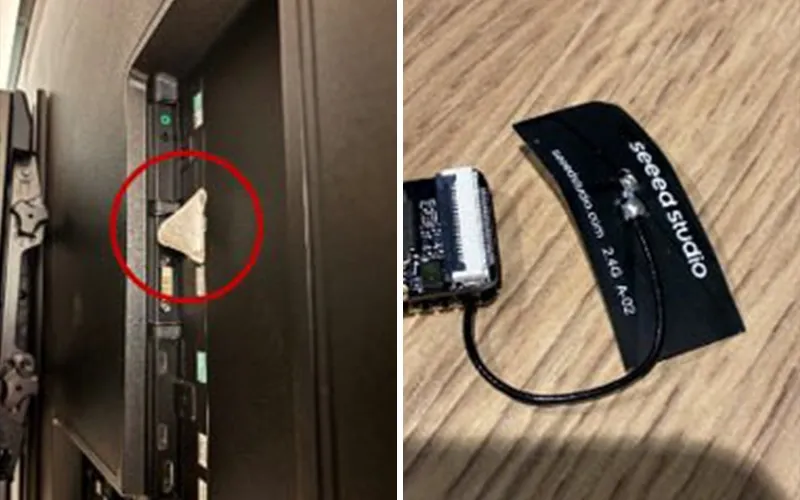
Investigators determined that the covert device was likely installed in late September, quietly monitoring conversations in a room where critical corporate decisions were made daily.
What followed was a rapid, high-stakes internal investigation that brought the breach to a swift halt.
After security personnel discovered the hidden recorder during a routine sweep, OpenAI deployed its own internal AI models alongside traditional digital forensics to analyze the hardware, trace its origins, and quickly narrow down the list of suspects.
Physical surveillance footage soon revealed Alfozan repeatedly lingering around the executive conference room without any scheduled meetings or business reasons to be there.
Security logs further showed he had been using internal company scheduling tools to track the movements of executives and monitor when the room would be vacant.
The evidence against the engineer accumulated with astonishing speed over the course of just nine days.
Federal investigators uncovered that a chatbot account linked to his family had recently been used to ask detailed questions about building, customizing, installing, and remotely accessing audio recording devices.
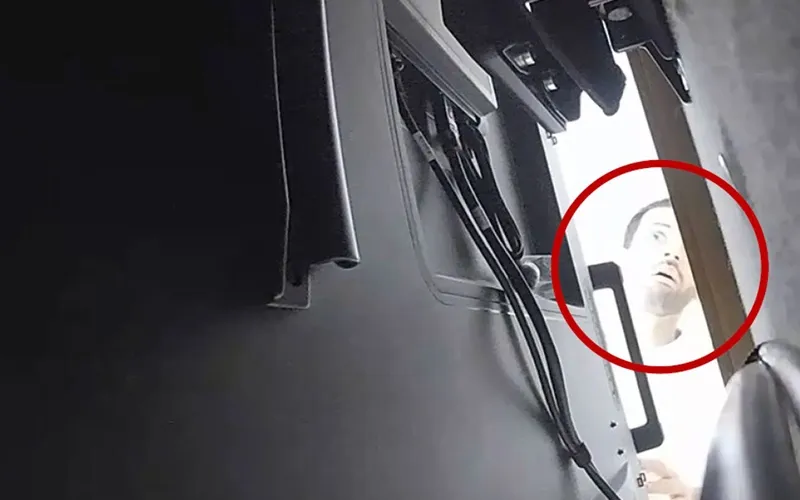
To confirm their suspicions, security teams installed a hidden camera behind the television set.
Within days, CCTV captured Alfozan returning to the room and carefully inspecting the exact spot behind the screen where the bug had originally been placed. That same afternoon, he accidentally left a bag unattended in another part of the office, which security searched to find his personal identification alongside a second, matching recording device.
The swift intervention appears to have prevented catastrophic damage.
While the full extent of what was recorded during those days remains under review, company officials confirmed that core proprietary assets, including foundational model weights, internal source code, and customer data, were never compromised.
Alfozan was immediately terminated, stripped of network access, and subsequently arrested by federal agents.
Now facing federal charges for intentionally intercepting oral communications, he faces up to five years in prison and a $250,000 fine, followed by three years of supervised release.
Federal prosecutors and the FBI note that the investigation remains active., offering a stark reminder to the tech industry that safeguard measures must extend far beyond digital firewalls and password protections.
According to reports, Abdulrahman Alfozan is a 35-year-old citizen of Saudi Arabia and holds status as a U.S. permanent resident (Green Card holder).
He studied at top elite institutions, holding a degree in Computer Science and Engineering from the Massachusetts Institute of Technology (MIT), where he attended from 2011 to 2016. He also attended the University of California, Berkeley.
Before joining OpenAI, Alfozan built a notable career across Silicon Valley tech firms.
He joined OpenAI in July 2025 as its Engineering Lead, working primarily on AI agents and the company's internal data platform.






















































































































































































































































































