There is a unique kind of nostalgia reserved for the pixelated battlefields of the late 1990s and early 2000s, a time when personal computers were cementing their place in the household and bedroom desks were illuminated by the heavy glow of cathode-ray tube monitors.
It was an era defined by a distinct soundscape of whirring disc drives, the rhythmic clicking of a mechanical mouse, and the distinct, bass-heavy thrum of industrial rock soundtracks filtering through cheap desktop speakers.
For a massive generation of PC gamers, these sensory details were inextricably tied to the experience of commanding digital armies, managing base power grids, and orchestrating massive tank rushes across digital terrain.
This was the golden age of a genre that felt completely unstoppable, where strategic brilliance was measured in actions per minute and the thrill of outsmarting an opponent, whether artificial or human, kept players awake until dawn.
At the absolute pinnacle of this digital empire stood Command & Conquer.
A decade past, and it died.
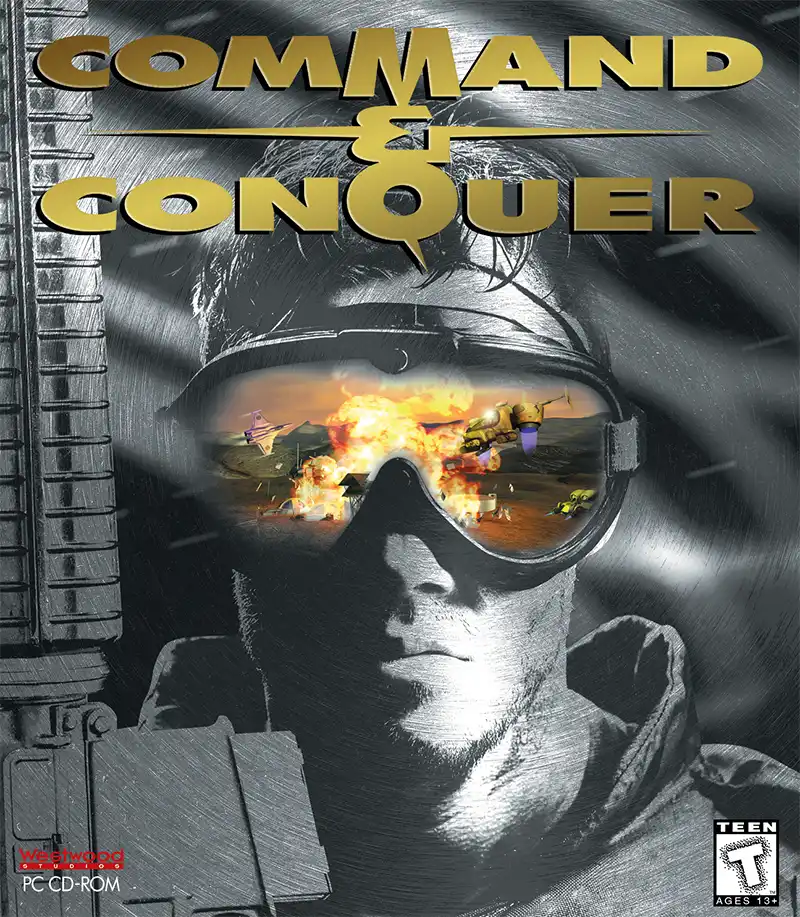
Command & Conquer is a franchise that did not just participate in the real-time strategy (RTS) boom, but also actively defined its rules, aesthetics, and cultural footprint.
Born from the creative minds at Westwood Studios, the original 1995 Command & Conquer took the foundational mechanics of early strategy concepts and supercharged them into an accessible, high-octane phenomenon.
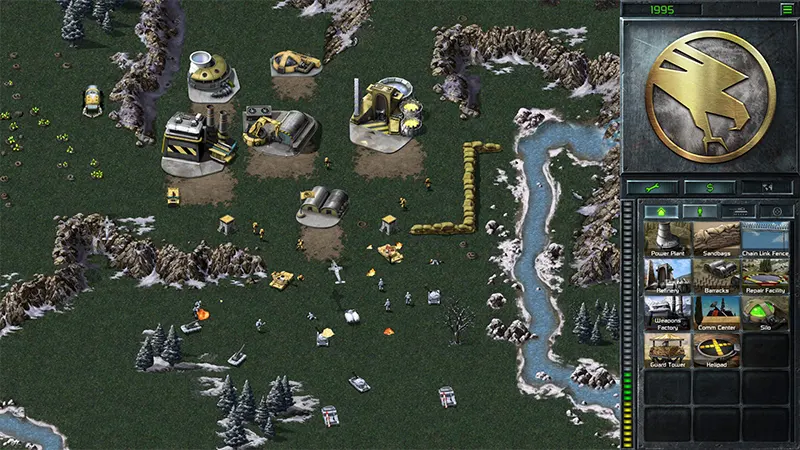
It presented a gripping alternate history fueled by the discovery of Tiberium, a toxic yet immensely valuable alien substance that divided the globe into a bitter war between the UN-led Global Defense Initiative and the cult-like Brotherhood of Nod, spearheaded by the iconic, charismatic villain Kane.
The game became an icon, pioneering the genre by blending tightly engineered base building, rapid unit production, and highly cinematic storytelling through live-action full-motion video cutscenes that gave real weight to the unfolding conflict.
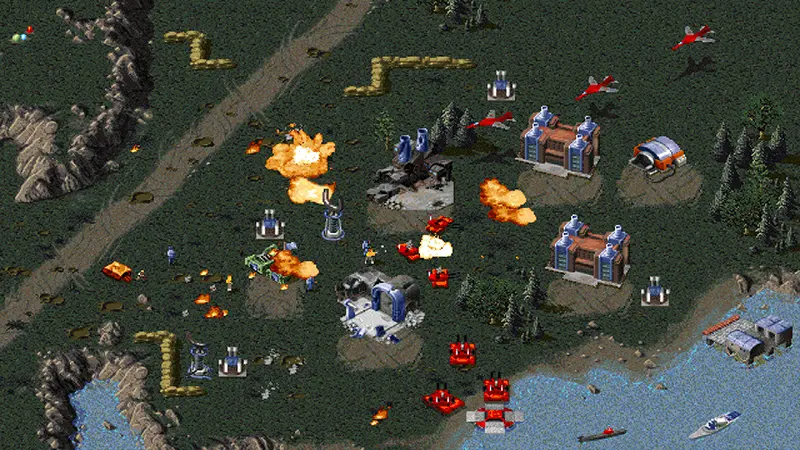
The success only multiplied with the spin-off series, Red Alert, which traded grim science fiction for an eccentric, campy cold war alternate reality filled with Tesla coils, time travel, and armored zeppelins.
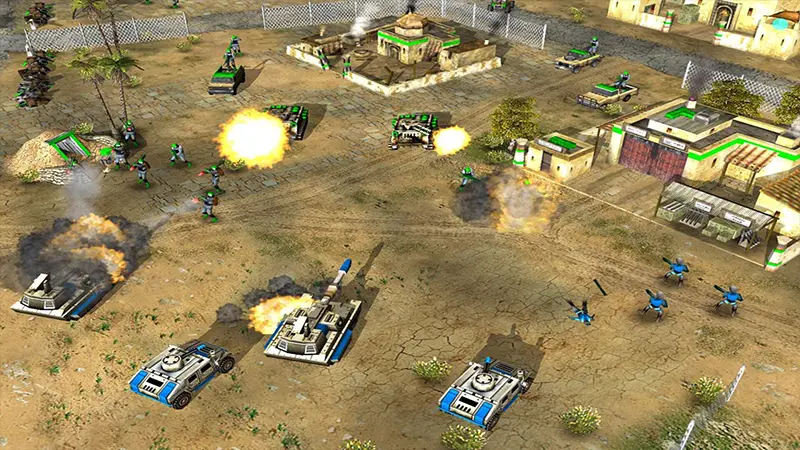
This momentum reached an absolute fever pitch in 2003 with the release of Command & Conquer: Generals, a title that boldly broke away from the established timelines to drop players into a gritty, contemporary geopolitical conflict.
By introducing a fully 3D graphics engine, unique faction mechanics, and a soundtrack that blended Middle Eastern instrumentation with heavy rock riffs, Generals became a massive commercial powerhouse and a staple of local area network gaming parties worldwide.
Together, these distinct universes sold millions of copies globally, making the franchise a household name and transforming real-time strategy into the dominant force of PC gaming.
The influence of this mechanical blueprint can still be felt across the entire gaming landscape today.
By pioneering fluid, multi-unit selection, streamlined economic harvesting, and robust online matchmaking, the series laid the structural groundwork that directly informed the development of heavyweights like Blizzard's StarCraft, Microsoft's Age of Empires, and Sega's Company of Heroes.
Beyond the traditional strategy space, the competitive framework nurtured by early online multiplayer tournaments helped establish the very concept of electronic sports.
Even modern multiplayer online battle arenas can trace a portion of their lineage back to the custom maps and unit management paradigms popularized during this period. It was a design philosophy that successfully balanced deep tactical complexity with a frictionless user interface, proving that complex military simulations could be incredibly fun and universally accessible.
Yet, the heights achieved during those peak years only made the eventual collapse of the franchise feel more catastrophic to its fiercely loyal community.
Following the acquisition of the intellectual property by Electronic Arts, a shift in corporate philosophy began to prioritize rapid development cycles and the pursuit of broader industry trends, culminating in the release of Command & Conquer 4: Tiberian Twilight in 2010.
This release was the beginning of the franchise's demise.
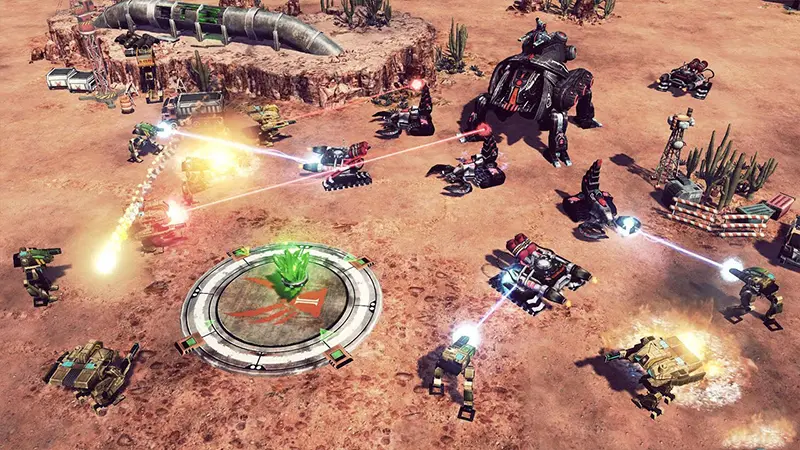
Examined purely in a vacuum, the fourth installment is an extremely average title that features bland gameplay, a poorly presented story, and a multiplayer environment that is far too chaotic for many players, even if it remains technically functional, well polished, and fairly good looking even by modern's standards.
From how the title forced a genre rebrand, in which it was never intended to be a mainland entry. Electronic Arts originally commissioned it as an online multiplayer project. Then, there is the fact in order to chase the MOBA (Multiplayer Online Battle Arena) trends, Electronic Arts had to strip the franchise's core identities, like completely removing traditional base building and resource harvesting. And lastly, Electronic Arts mandated an mandatory always-online DRM system.
Combined with a critically panned narrative, the game resulted in intense fan backlash and rapidly fading sales. Shortly after its release, a large portion of the development team was laid off.
In other words, the definitive conclusion to the iconic franchise, what began as a project back in 1995 and was globally renowned for its quality and overall advancement of the strategy genre, Tiberian Twilight only bear the Command & Conquer famous name, but never the soul.
In the end, Tiberian Twilight stands as a cynical product of corporate greed, a forced cash grab.
The fan base reacted with an unprecedented wave of hostility, completely rejecting the new direction to the point where community members frequently joke that the series canonically ended with Kane's Wrath, choosing to collectively pretend this corporate misstep does not exist.
Tiberian Twilight may carry the legendary name and feature Kane on the box, but it is fundamentally not a true Command & Conquer game, resulting in an agonizing blunder that corporate executives will struggle to get fans to forgive anytime soon.
The final blow to any immediate hope of redemption came just a few years later.
On October 29, 2013, Electronic Arts officially announced the complete cancellation of Command & Conquer: Generals 2, a highly anticipated revival that was forced to pivot into a free-to-play model mid-development before being abandoned entirely by corporate executives who chose to walk away from the traditional strategy market, though the modern release of high-quality remasters has offered a small bit of solace to a wounded community.
They closed down Victory Games on this exact day, effectively pulling the plug on the entire franchise.
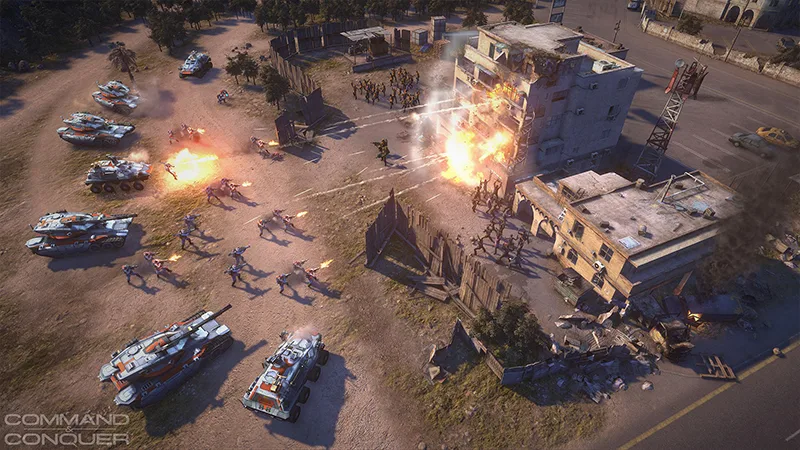
Despite the official termination of the mainline games, the memory of the franchise refuses to fade, preserved by a vibrant internet culture that frequently propels classic moments back into the viral spotlight.
Decades after their initial release, clips of over-the-top acting from the live-action cutscenes, most notably Tim Curry's brilliantly unhinged delivery of escaping to space from Red Alert 3, continue to circulate across modern social media platforms as massive, enduring memes.
Audio cues like the ominous declaration of an incoming Soviet airship have become universal gaming shorthand for impending doom, keeping the legacy alive through sheer community shared experience.
While corporate publishers may view the real-time strategy genre as a relic of a bygone era, the millions of fans who still view video essays detailing the franchise's downfall, download community-engineered open-source game clients, and track indie spiritual successors like Tempest Rising prove that the desire for classic command-and-conquer gameplay remains entirely alive.






















































































































































































































































































