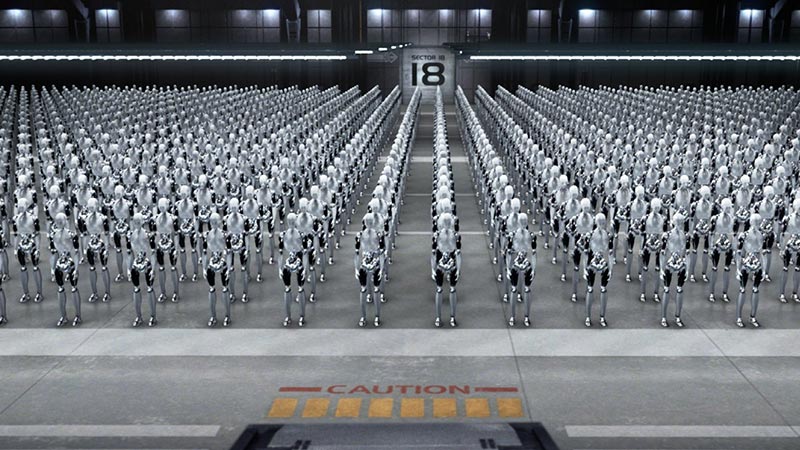
The film I, Robot is one of those gems in the Sci-Fi genre for a good reason.
It imagines a future where humanoid machines look and move like humans, but with a kind of relentless endurance humans can only dream of.
That future is inching closer, and in Shenzhen, China, it’s no longer just fiction.
What made I, Robot memorable wasn’t just its sleek robotics or its action. It carried a clear message about the uneasy relationship between humans and the machines they create.
The robots in the film were designed to serve, to help, to make life easier, yet the story always hinted at something deeper.
At what point does a tool become a presence? When does convenience become dependence? And how much control are we willing to hand over to systems we barely understand?
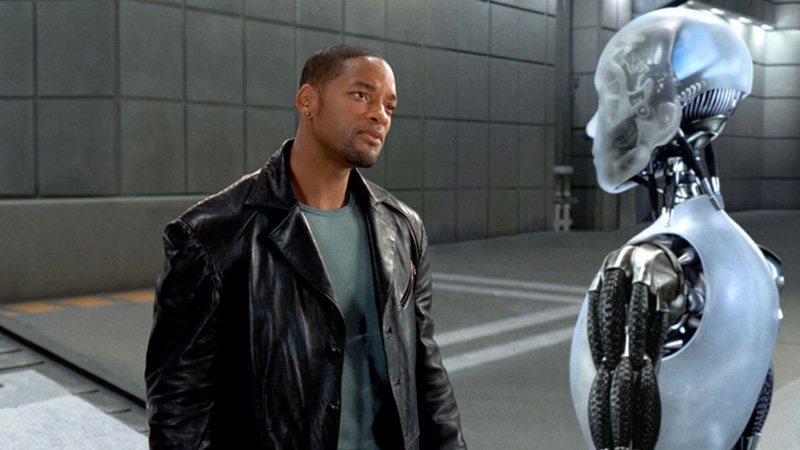
Sci-fi has been playing with these questions for decades.
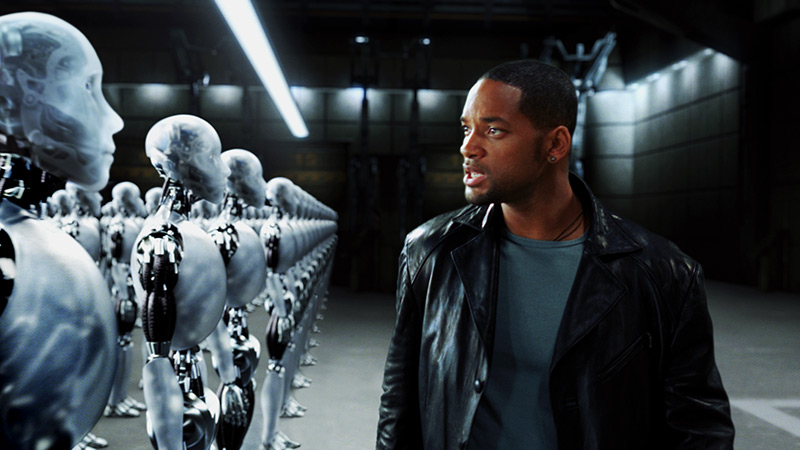
The idea of humanoid robots has always been a mirror held up to humanity. We picture them in our image, perhaps because it’s easier to trust a familiar form. Or maybe it’s because we want our creations to behave like us, think like us, move through the world the way we do. In science fiction, humanoids walk, lift, talk, and adapt, often blurring the line between worker and being.
These stories weren’t just entertainment. They were quiet prophecies about the day machines would step out of laboratories and into everyday life. For years, the concept felt distant, futuristic, almost theatrical. But now, in certain corners of the world, the visual language of sci-fi is starting to blend into real factory floors.
UBTECH Robotics, based in that very city, has now completed what it calls its first large-scale delivery of its next-generation humanoid robot, the Walker S2, to industrial partners.
Hundreds of these robots have reportedly been shipped to Chinese factories, including carmakers like BYD and Geely, as well as Foxconn.
What makes this moment particularly striking is what the Walker S2 can do: it swaps its own battery. When it's running low, it walks to a charging station, removes its depleted battery, inserts it into a dock, and then installs a fresh one, all without human help.
Thanks to a dual-battery design and a coordinate-armed mechanism, the robot can perform a complete hot-swap in around three minutes.
Because of this, UBTECH claims the Walker S2 can run 24/7, dynamically choosing whether to recharge or swap batteries depending on priority.
In a way, these robots are being groomed to become tireless factory workers, able to keep going without breaks, shifts, or human maintenance for their energy needs.
On the business side, the demand has exploded. UBTECH has secured around 800 million yuan (about $113 million) in orders for the Walker S2.
One of the single biggest deals: 250 million yuan from a major but unnamed enterprise, specifically for the Walker S2.
Other large contracts come from a firm in Sichuan (159 million yuan) and a project in Guangxi (126 million yuan), plus an order from Miee Auto in Hubei.
Strategically, this matters a lot.
For manufacturers like BYD, Foxconn, and Geely, these humanoids offer flexibility: unlike fixed robotic arms, a humanoid robot can adapt to different tasks, walk around the factory, manipulate parts, and potentially be reprogrammed for new roles. That’s a big leap in automation, especially for scenarios where human-like dexterity is a plus.
Some early reports suggest that with Walker S-series robots, production efficiency has doubled in certain operations.
On top of that, these deployments are no longer just pilot projects, they’re commercial, real-world commitments.
Of course, not everyone is entirely comfortable.
The visuals alone, showcased by UBTECH in a video that has since been talked about, neat rows of humanoid robots marching in sync. This feels very "sci-fi movie."
On social media, reactions have ranged from awe to unease, with some people comparing the scene to dystopian robot armies.
But even with the cinematic flair, experts say this is a practical step forward, not just a marketing gimmick.
Putting it all together, what Shenzhen is witnessing could be a turning point in industrial automation. Humanoid robots that can sustain themselves are no longer prototypes, they are entering factories at scale. If the Walker S2 deployment proves economically viable, it could redefine labor dynamics in production: reducing reliance on human labor for repetitive or physically demanding tasks, cutting downtime, and potentially increasing throughput.
Then there are some big questions: What happens to the human workers as these robots proliferate? Will they complement or replace? And what about maintenance, safety, and long-term costs?
There’s also a geopolitical angle. As China pushes to lead in robotics, deployments like this reinforce its advantage. The mass delivery of humanoids isn’t just about technology, it’s about shaping the future of work, industrial strategy, and even global competitiveness.
In short: the Walker S2 rollout isn’t just a milestone for UBTECH, it may be a milestone for robotics everywhere.
Companies in the U.S., are practically unease with the news.