When the world is slowly transitioning contactless payment systems to mobile and virtual wallet systems, the society isn't quite ready yet.
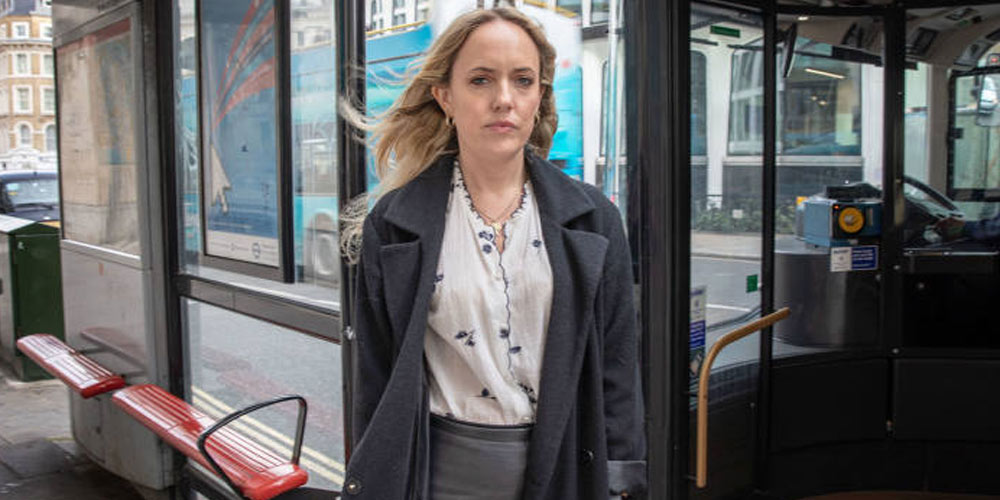
This was experienced by a Financial Times writer Jemima Kelly, when she took a bus ride in London, UK. She experienced a technological nightmare when she wasn't able to prove that she had paid for her ticket.
Embracing digital payment, she admitted that she often leaves her house without her wallet. But that she never forgets her iPhone.
With Apple Pay, she could pay for practically anything she needs, including London buses which allows people to use Apple Pay instead of buying tickers the old-fashioned way.
But unfortunately for her, when the ticket inspector wandered and asked for her £1.50 ticket, she couldn't prove she paid since her iPhone's battery just died.
According to Kelly on her Financial Times post:
"But smart though my phone is, it is not infallible. And like many new technologies, digital payments solve some problems, but they also create new, unforeseen ones. A paper ticket might be inherently easier to lose than a phone, but at least it doesn’t just die on you whenever it feels like it."
Kelly gave her personal details instead, assuming that there should be a record of her probity on the transportation company's computers.
But since she was charged with not providing the proof of payment, and simply because she didn't register her Apple Pay with the Transport for London, Kelly was Kelly was literally contactless and receiptless.
She was charged as a criminal, forcing her to go into court, which in turn would force her to plead guilty or not guilty within 21 days.
Kelly then asked her bank to produce a statement to prove that she had paid. Unfortunately for her, the Transport for London said that the prove wasn't enough to prove her innocence.
In the end, she was said to owe a fine of £476.50 because of this, as instructed by the court.
"So at this point, I wasn’t just a criminal, but I was almost £500 out of pocket, and I was also rather embarrassed that my employer had been dragged into the whole saga," she said. "That wasn’t all. The following week, I had an interview at the U.S. Embassy in London for a media 'I' visa for a five-week 'bleisure' trip — California for a holiday and New York for work. I was due to set off on May 4."
She knew that she would be questioned about whether she had any prosecutions. Because she was given a court date for appeal hearing, she brought this confirmation to the embassy. She was told that she couldn't travel to the U.S. on May 4.
She needed to get a police records certificate before they would even think about issuing her a visa.
Fortunately for Kelly, she managed to get back to court and persuade the magistrate to quash her conviction. The process took months, involving multiple contacts using email and phone.
Kelly received her passport back, and her U.S. visa, almost two weeks after May 4th. She was told that her £476.50 was going to be refunded. But because her flights were non-exchangeable and non-refundable, she was down by over £1,000 down and couldn’t afford to rebook her flights.
Days forward, Kelly had no hard feeling about the Transport of London or the so-called "digital revolution". But for her, her lesson taught her to invest in a portable charger.
"I must stop forgetting to charge it," she said.






















































































































































































































































































