AI is about intelligence demonstrated by machines, as opposed to natural intelligence displayed by living things. And OpenAI is among the pioneers in the AI field.
The research laboratory that previously created GPT-3, has what it calls the 'DALL·E 2', a portmanteau of the iconic artist Salvador Dali and the robot WALL-E from the computer-animated science fiction film of the same name.
With the public release of the 'GPT' for images AI, a number of developers have showcased more and more instances of using machine learning intelligence.
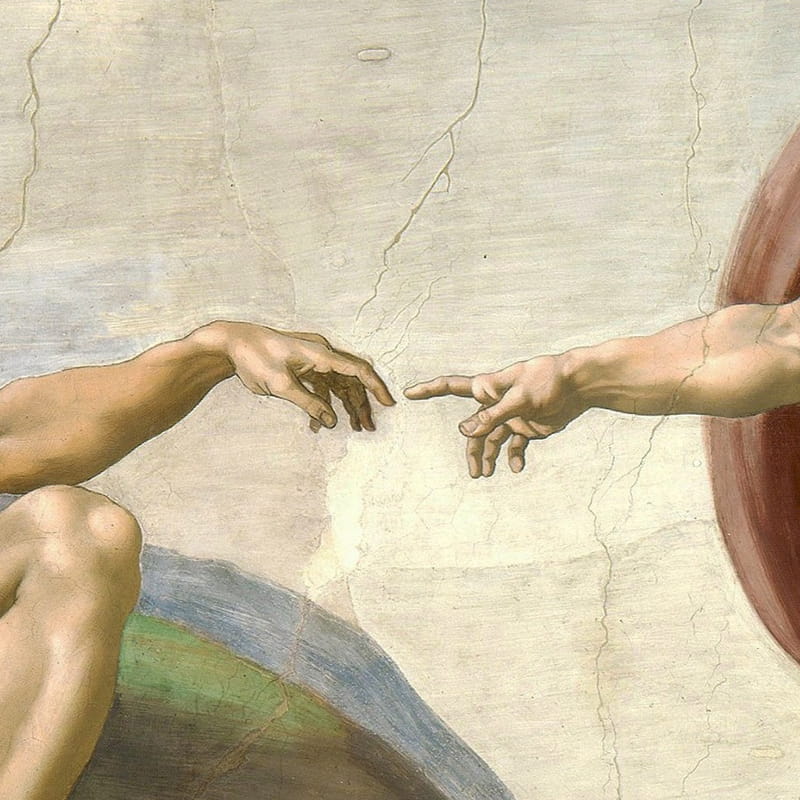
And this time, one researcher managed to use the AI to extend Michelangelo's 'The Creation of Adam' painting.
The AI literally imagined what's beyond the masterpiece
Created by a Reddit user named Gussman_dva, the AI shows how the image should be completed, in a machine intelligence's perspective.
Michelangelo's The Creation of Adam is a Judeo-Christian concept of creation.
The fresco painting by the Italian artist forms part of the Sistine Chapel's ceiling, painted in the 16th century, illustrating the Biblical creation narrative from the Book of Genesis in which God gave life to Adam, the first man.
And here, the AI was only given a cropped painting, just short of Michelangelo's depiction of God's face, leaving only a cherub poking its head in.
Then, the likeness morphs into God, who appears to be like a big baby. Adam wasn't looking like he should in the original painting.
But after that, the imagery brings amorphous creatures in what appears as worlds beyond worlds, superimposed onto globes over globes.
Zooming out, all the way to what seems to be a table spread with many plate paintings.
That surreal ended up to just a slightly uncanny buffet.
While the AI is trained with imageries, it's able to imagine the strangeness that can lie beyond the observable universe.
In this case, the AI version of the fresco was created in several approaches.
First, it was told to generate an image from the original painting. Second, the result was then returned to the neural network, which was again asked to complete the image.
As it turned out, the result was quite a psychedelic picture.
The main characters found themselves in the center of one of the worlds of the multiverse, which is controlled by their own deity.
The work of the neural network certainly diverged from the creation of Michelangelo, but retained some semblance of internal logic.
Before this, an AI made from DALL·E 2 managed to create a language that no one understands.




















































































































































































































































































