

The best thing that technology can do, isn't just about aiding and helping humans, but also to save lives.
Facebook, as the largest social media on the web, has been criticized for not being able to prevent some of its users in committing suicide. For that reason, the company is expanding the limited test run for suicide- and -self-harm reporting tools to everyone.
In order to better detect suicide attempts, the social network is implementing pattern recognition powered by Artificial Intelligence (AI) to detect when someone could be presenting suicidal thoughts. What this means, the system doesn’t rely on users to flag or report content
From there, Facebook's VP of product management Guy Rosen said that the social network will also concentrate its efforts to improve alerting first responders.
Facebook is also using more humans to look for posts flagged by its algorithms.
The news was first delivered by founder and CEO Mark Zuckerberg:
The social network’s updated algorithms use pattern recognition to search posts and comments for keywords.
When the AI recognizes the cause for concern, such as people commenting on someone's post, asking if the original poster is okay, or if they need help, Facebook will send the information to a Facebook employee for review.
AI will prioritize particularly risky or urgent user reports so they’re more quickly addressed by moderators.
If the report really determines intervention is necessary, Facebook will provide the option to alert first-responders who can then contact the individual personally, or reach out through a person-at-risk’s family and friends.
To make this work as intended, Facebook is dedicating more moderators to suicide prevention, training them to deal with the cases 24/7.
Facebook has 80 local partners like Save.org, National Suicide Prevention Lifeline and Forefront from which to provide resources to at-risk users and their networks.
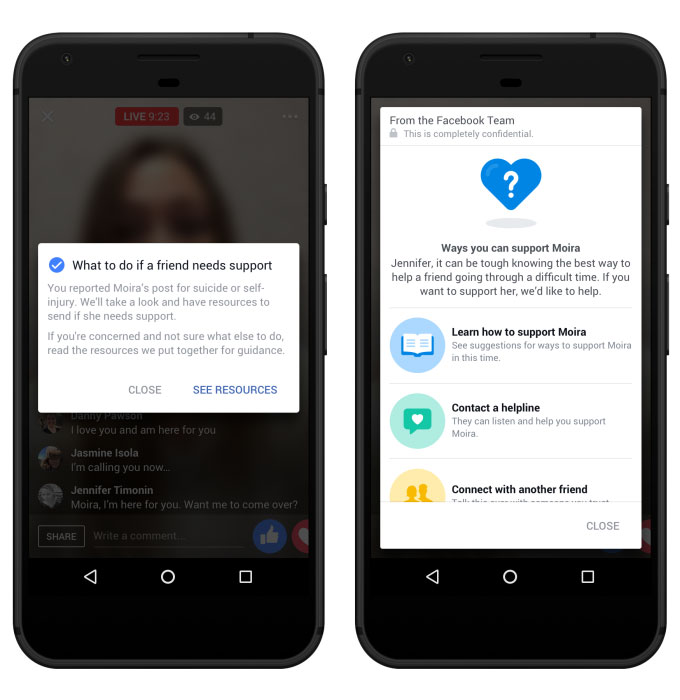
Facebook previously tested using AI to detect troubling posts and more suicide attempts in the U.S..
With the algorithm update, Facebook is scouring all types of content around the world with this AI, with the exception of the European Union. General Data Protection Regulation privacy laws on profiling users based on sensitive information complicate the use of this type of prevention in the EU.
While this is certainly a step up from previous attempts, the idea of Facebook proactively scanning the content of people’s posts could trigger some fears, especially to those that concern privacy.
They may wonder to what else the technology could be applied to. What's more, users are not being given any guarantees about the extent to which Facebook intends to apply pattern recognition to their communications on the platform.
This is where Facebook is keeping things quiet. It didn't really answer about how it would avoid scanning for political dissent or petty crime, with Rosen saying "we have an opportunity to help here so we’re going to invest in that."
However, if the social network can really be success in leveraging AI to save the lives of people, it'll be worth having users' already public communications scrutinized by its prying AI.
In the future, as the AI learns more about behavior, it should be able to understand more of the subtle nuances of language, and be able to identify different issues beyond suicide, including quickly spotting more kinds of bullying and hate.