 The social network giant Facebook has launched a new insights product called "Topic Data" to help businesses that are trying to understand how to improve or market their products. And for that, Facebook is giving a sneak peek of its treasured data, and put it to a good use.
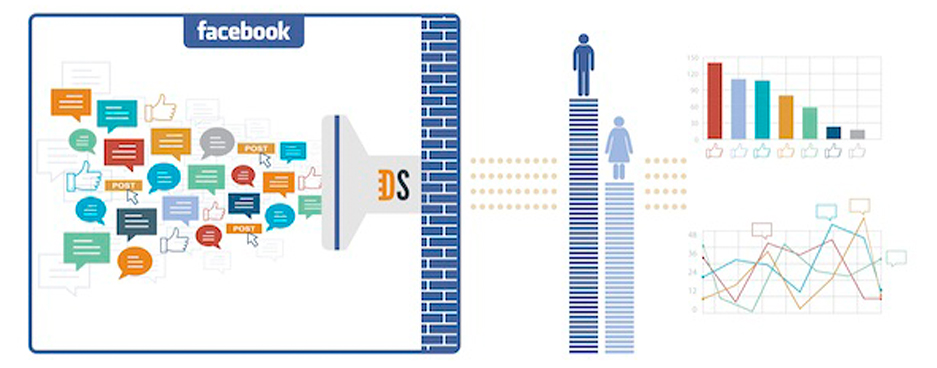
With the help of brand analytics firm DataSift, Facebook introduced Topic Data on March 11th, 2015. Facebook explained in its blog post that "Topic Data shows marketers what audiences are saying on Facebook about events, brands, subjects and activities."
An example of the feature is when "a business selling a hair de-frizzing product can see demographics on the people talking about humidity's effects on their hair," the company said.
So when someone posts a status update about how frizzy their hair is, a brand could step in to pop its advertisement spending knowing that it's the perfect time to reach that potential customer. Sentiment, location, volume of mentions and words often mentioned alongside a brand can be pulled, too.
By funneling more of its data its users' activity to brand marketers, Facebook is giving them a better sense of what people think about their products, and better identify the types of people who are talking about their products.
Topic Data basically scrape the social network for keywords and phrases, in the hope of understanding what people are saying about a particular thing.
"This is in response to interest we've been getting from marketers. They've been asking us to provide insights to help them generate more effective campaigns on and off of Facebook," said Matthew Idema, Facebook's Director of Ads Product Marketing.
The Long Awaited Feature for a Reason
Companies already can use Facebook’s data to target advertising across the social network. With the new offering, Facebook for the first time is promising insights they can use to develop products or decide which audiences to target.
Despite brands can see their targets, all on the information is anonymized and aggregated. Particularly in the privacy-concerned world, this won't disclose any data that can be traced to particular users.
DataSift provides access to the data, and it will pull information from the social network and make it available to analytics firms, so they then can analyzed and presented to their clients as they see fit.
This type of Facebook data has previously been made available to brand marketers by third parties, but it offered only a limited view of what people were saying and of their demographic details. Because Facebook's Topic Data groups data from samples to make it large enough to determine demographics, brand marketers can get "a holistic and actionable view of their audience for the first time."
"We see this as complementary to other data offerings in market today," said Idema.
Facebook already offered tools to brand marketers to let them target their ads to users based on, among other things, their "likes," interests, location and demographic information. Topic data, in contrast, cannot be used by marketers to target ads directly. Rather, it’s designed to provide guidance for marketers, Facebook said.
Because Facebook holds much more data, unlike any other social medias, Launching Topic Data in a privacy-safe way is a top concern for Facebook. The company took its time before offering this functionality that brands have been waiting, because its ensuring that personal information is not to disclose.
Since Topic Data is aggregated and anonymized, brands can't piece together the analytics results to pin point who said what. This is because the results delivered to marketers are analyses and interpretations of the information, not the actual topic data.
To put it further, Facebook confirmed that certain queries that might pull up personally identifiable data like home addresses will be banned. At least 100 different users have to match a query for it to be allowed.
Despite idea for better targeting ads is Facebook's long awaited feature, people that concerns privacy may not like it, although the feature is an aggregator of interpretations that preserve their identities. Since there is no opt-out, the only way to keep things private is to either set a post to be visible to "only me", or not posting at all.
At the moment of its launch, Topic data is available in the U.S. and UK, according to Idema, before expanding internationally.






















































































































































































































































































