

Historically, users using Google Search can type a different country code top level domain (ccTLD) to go to another country and see results from a different location.
For example, going to Google.co.id will surface results from Indonesia, while Google.com.au users will see results from Australia.
This won't be possible anymore.
The tech titan has moved away from relying on country-specific domains to serve up localized results on Google Search across desktop, mobile web, mobile apps, as well as Maps.
Here, the company is starting to automatically detect when users are accessing Google, and serve results from that location. So manually typing in a ccTLD will no longer bring users to the corresponding country service.
According to Google product manager Evelyn Kao in a blog post:
With this method, Google will no longer use ccTLDs to indicate where a user is searching from. It can automatically change its search results page based on location, without having to direct users to different Google domains.
For plenty of reasons, this can be problem for those users who want to see localized results for another country, while they're still at home.
But Google is managing that by allowing users to go to Settings and change the region by selecting the drop-down menu marked "Regions for Search Results" to set the location they want to be.
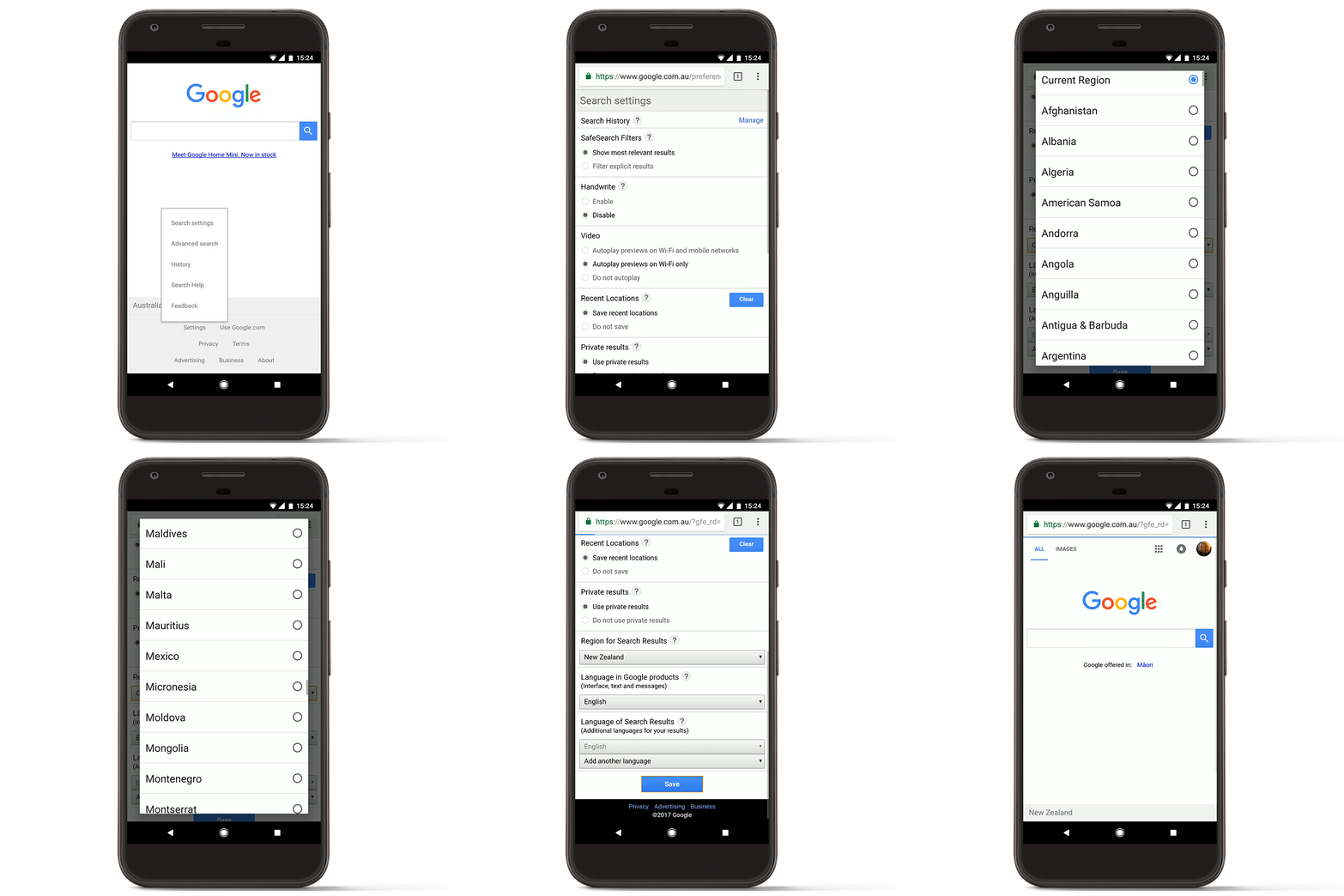
So it is still possible for users to access the appropriate country service if they want, or if Google couldn't detect their location automatically.
Users can know the location Google recognizes by looking at the lower left-hand corner of the page.
"It’s important to note that while this update will change the way Google Search and Maps services are labeled, it won’t affect the way these products work,"said Google.
With this strategy, Google Search is consistent with how the company manages its services across other platforms like YouTube and Gmail.