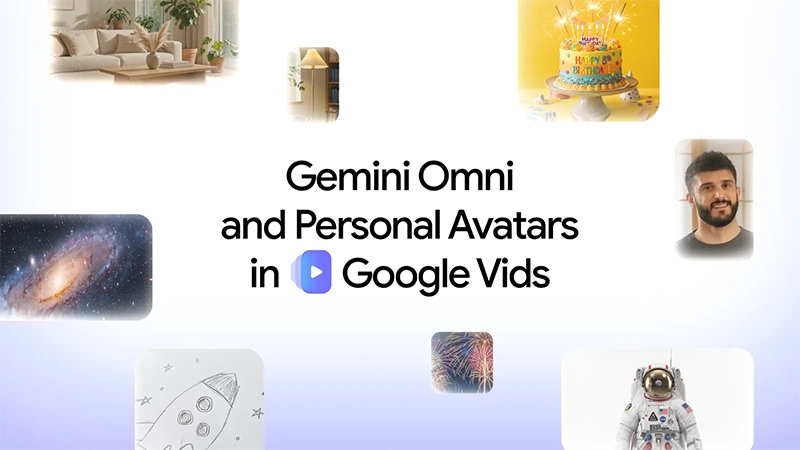
Google has introduced two significant updates to Google Vids, its dedicated video creation platform for enterprise users.
The introduction of the Gemini Omni model and personal digital avatars represents a transition from basic slide-to-video tools toward advanced generative media creation within Google Workspace.
These updates follow previous iterations that integrated earlier video generation models, such as Veo 3.1, and are designed to make high-quality video editing and personalized communication more accessible to business professionals who may lack formal production training.
The integration of Gemini Omni changes how users generate video content by allowing them to combine natural language descriptions with static visual references.
Users can input a text prompt detailing the desired scene and supplement it with an uploaded image or a rough sketch to guide the layout, style, and color palette of the output.
This multimodal approach helps the AI model synthesize more accurate visual representations, ensuring that the generated video clip aligns closely with specific design concepts or physical products.
Read: Google's 'Gemini Omni' Joins Seedance And HappyHorse In The Race For Ultra-Realistic AI Video
In addition to initial video generation, the system introduces a conversational interface for editing existing or generated footage.
Rather than forcing users to discard unsatisfactory drafts and restart from scratch, the editing system supports sequential, step-by-step modifications through chat prompts.
Users can instruct the tool to swap background scenery, adjust overall lighting conditions, or apply specific visual effects simply by describing the desired changes in plain text, which simplifies the overall post-production workflow.
The personal avatars feature introduces a synthetic media option for corporate communication, allowing users to appear in presentations and training materials without physically recording themselves.
To set up a digital avatar, an individual must upload a single selfie and provide a brief audio recording of their voice.
The system then generates a customized digital double that can vocalize and animate any written text, enabling the rapid production of video announcements, localized updates, or walkthroughs from a simple text script.
To address security concerns regarding synthetic likenesses and deepfakes, Google has established strict authentication boundaries for the avatar feature.
Every personal avatar is directly anchored to the verified account holder's identity, preventing users from generating digital doubles of coworkers or external individuals.
The feature is restricted to users who are at least 18 years old in authorized regions and is currently limited to specific enterprise tiers, including Google AI Pro, Google AI Ultra, and select Google Workspace business accounts.
To maintain transparency, all video content generated using these new tools is marked with SynthID, an invisible digital watermarking technology developed by Google DeepMind.
This watermark is embedded directly into the video data, making it resilient to common editing processes, compression, and file conversions.
By providing a reliable method for identifying AI-generated content, the watermark is intended to help organizations maintain clear records of provenance and ensure that viewers can distinguish between authentic and synthesized footage in professional environments.














































































































































































































































































