X, the platform once known as Twitter, has undergone a dramatic reinvention since Elon Musk’s acquisition.
Musk framed his takeover as a mission to restore the platform as a hub for free speech, a digital public square where ideas could circulate more openly, algorithms would be more transparent, and moderation would be less restrictive.
In the years since, X has shifted branding, business models, verification systems, and content policies, all while attempting to balance openness with credibility.
The company has repeatedly emphasized that free expression must coexist with tools that help users understand the origins and authenticity of the voices they encounter.
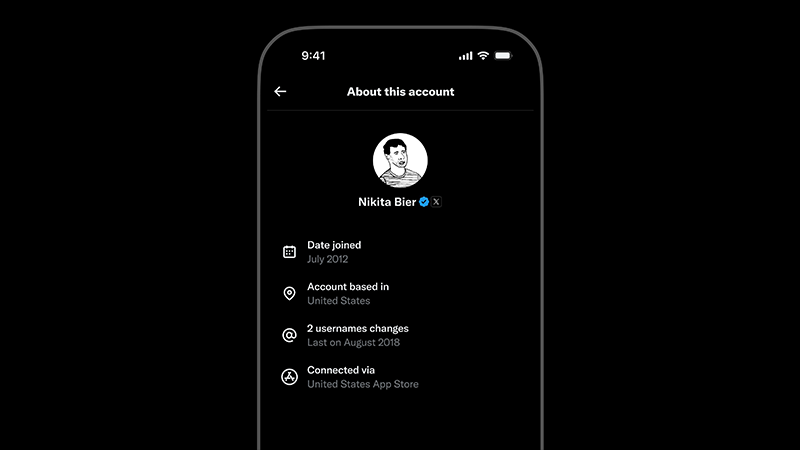
Against that backdrop, X is rolling out a new feature called 'About this account,' which reflects the platform’s evolving effort to increase visibility into who is speaking, without imposing traditional identity requirements.
The new feature provides deeper profile context by displaying key information such as the country an account is currently based in, how many times the username has been changed, the country in which the account was originally created, and whether the account was set up via the web or a specific app store.
This added transparency is meant to give users more confidence when evaluating posts, replies, and viral content.
After quiet testing last month, more users have begun to see the feature appear, often sharing screenshots as evidence that the rollout is expanding.
In a couple hours, we'll be rolling out About This Account globally, allowing you to see the country or region where an account is based. This will be accessible by tapping the signup date on profiles.
This is an important first step to securing the integrity of the global town… pic.twitter.com/5d7cX21qGj— Nikita Bier (@nikitabier) November 22, 2025
While transparency tools are not entirely new in the social media landscape, as things like Facebook's Page transparency and Instagram's 'About this account' already offer similar insights, X's implementation is positioned differently, tied to its broader narrative about authenticity as a cornerstone of open discourse.
Nikita Bier, X’s head of product, has said the feature is intended to help people assess whether an account is genuine, longstanding, or potentially misleading.
This aligns with other recent platform changes aimed at highlighting credibility signals, from visible verification tiers to reduced anonymity for certain types of accounts.
At the moment, users can view their own profile details by tapping the 'Joined' section beneath their bio, but visibility into other accounts is still limited as the rollout continues. Users can choose whether to display their country or a broader region or continent, with the exact country selected by default.
According to Bier, privacy toggles will be clearly marked so that viewers understand when someone has opted out of sharing more precise location details.
The feature also accounts for edge cases like VPN usage.
Early sightings show that profiles may include a disclaimer stating that the "country or region may not be accurate" when the platform detects routing inconsistencies.
This small detail highlights X’s attempt to provide transparency without implying certainty, a delicate balance in a world where digital identities can be fluid, shielded, or intentionally obscured.
There are a few rough edges that will be resolved by Tuesday.
If any data is incorrect, it will be updated periodically based on best available information. This happens on a delayed and randomized schedule to preserve privacy.— Nikita Bier (@nikitabier) November 22, 2025
For supporters of Musk’s vision, the About this account feature reinforces the idea that transparency strengthens free speech by giving users better tools to interpret the source of information. Critics, meanwhile, may view it as another step toward nudging users into sharing more personal data, despite assurances of control and optionality.
The timing of the feature is noteworthy. X continues to face scrutiny over misinformation, coordinated influence campaigns, and automated activity, issues that predate Musk but have taken on new dimensions under his leadership.
At the same time, the platform has reduced many legacy safety and moderation structures while elevating community-driven systems like Community Notes. In that environment, features that contextualize accounts may help fill the trust gaps that emerge when traditional oversight is scaled back.
Whether this becomes a widely embraced tool or a quietly ignored profile detail will depend on how prominently X surfaces it and how users respond once it’s fully deployed.
As X pushes forward with its reinvention, the feature represents another piece of the larger puzzle: how to create a platform that champions free speech while still giving users enough context to navigate truth, identity, and intent.
The platform's transformation has been anything but subtle, and this latest update continues that momentum.
As the rollout expands, the feature is likely to influence how people interpret what they see online, who they choose to engage with, and how trust is formed in a space that is constantly redefining itself.

















































































































































































































































































