 The tech giant Microsoft is on the move, and it's aggressive push to get Windows 10 everywhere is giving users less to no option. Windows XP was declared dead, now it's Windows 8's turn.
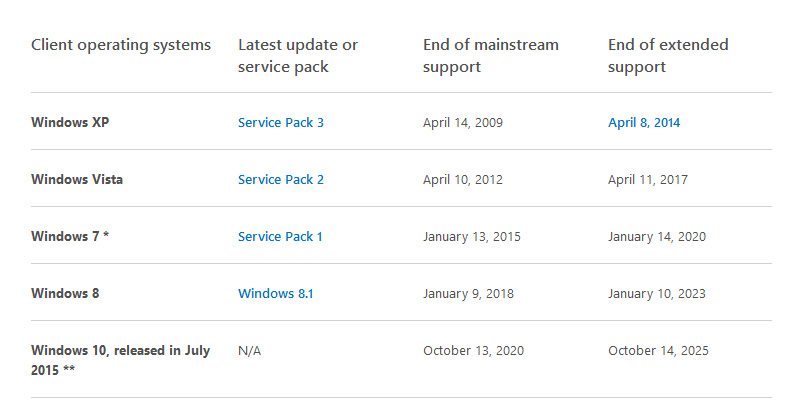
On January 13th, 2016, Microsoft is no longer releasing security patches and bug fixes for Windows 8. This has made Windows 8 to have the shortest lifecycle if compared to most other Windows operating systems.
Windows 8 was released in 2012 and it was highlighting a strong focus on touch-enabled features. But its layout, design and user-experience had generated criticisms because of its massive change. Prior Windows users feel alienated.
Windows 8.1 and Windows 8.1 Update were meant to ease the situation, at least by a bit. But in overall, both the public and Microsoft weren't that happy with the outcome. So the company decided to pull the plug and put an end to this.
Normally, Microsoft supports its Windows version for at least a decade before killing it off. But since Microsoft considers Windows 8.1 and Windows 8.1 Update as a different operating system from Windows 8, it's considering the two to be a necessary 'service pack' that contains vital OS enhancements.
"Unlike service packs that are typically just a collection of fixes, Windows 8.1 has new features and enhancements. We designed Windows 8.1 to give customers an ability to deploy this update in a manner that is similar to how customers deploy service packs, therefore we are applying the existing service pack support policy to Windows 8.1," the company said.
If users upgrade to Windows 8.1 or even Windows 10, that support will be extended. The two versions of Windows still receive security updates and bug fixes while Windows 8 won't.
Windows 8.0 is still having a huge market with over 41 million users (2.76 percent of all computers). This is more than the market of all Linux variant and flavors combined. In fact, Windows 8's market is comparable to Apple's Mac OS X El Capitan which has 2.99 percent.
Windows XP commands 10 percent of the market, and Windows 7 with 55 percent.
With that many 'old Windows' users, Microsoft still wants everybody to use Windows 10. And for that to happen, it's taking matters in its own hands.
Microsoft's aggressive move to end older version of its products is also seen when the company ends its supports for Internet Explorer 8, 9 and 10, leaving Edge and Explorer 11 as Microsoft's recommended web browsers. It’s clear that Microsoft wants users to be on Win 10 and the Edge browser. But when considering IE, there's a little twist for users running Windows Vista. The OS can't run IE 10 or 11 so users still get supports for IE 9. The end of the IE support for Vista users comes when all supports for Vista is terminated by Microsoft.
So whether any Windows users like it or not, staying up to date is a must. As Microsoft's aggressive strategies continue, its becoming less tolerant, and even ditching its popular products in favor of newer ones.
There are exceptions however. Companies, organizations and banks for example, will have difficulties when upgrading their operating systems. Microsoft has initiated the legacy rules to counter the issues. And to those that have deep pockets, can certainly pay Microsoft to continue its support on old Microsoft products, even if the products have been officially declared dead.
Being Aggressive For Many Reasons
Some of its aggressive strategies involve giving users difficulties to avoid Windows 10 upgrade, greeting old version Windows users with pushed pop-up, downloading big files automatically, and others, even if the user has not expressed any interest on the update.
Its KB3035583 update on December 2015 further pushed the attempt by making "Upgrade now" or "Upgrade tonight" to be a common notification. And since then, the software has been updated to reset Windows registry keys in order to re-download Windows 10 preparation files, prompting users to upgrade multiple times a day.
Windows 7 and Windows 8 (all versions) can begin upgrading automatically when the user set Windows Update to its default settings.
The company has made it clear that it will continue to promote Windows 10 indefinitely. "We do feel a responsibility to get people to a much better place," said Chris Capossela said Microsoft's marketing chief.
Microsoft's aggressive strategy is there for a reason. Windows 10 is a free update, and this is definitely easy for older Windows users to get their hands on the new operating system. Furthermore, it's also a lot easier for Microsoft to push the update to those that haven't.
Pushing Windows 10 is Microsoft's priority since getting every Windows users to the newest version is the company's promise of a better, more secure and faster operating system and experience. And as for Microsoft, it's getting closer in achieving its 1 billion Windows 10 users goal.
Further reading: No More Avoiding. Microsoft's Aggressive Strategy Wants Windows 10 Everywhere






















































































































































































































































































