The name Napster might once have conjured memories of peer-to-peer music chaos and the dawn of digital sharing.
But now, that same brand is emerging from its ashes with a bold new identity. After its acquisition by Infinite Reality for $207 million earlier this year, Napster has shifted gears from music disruption to AI and 3D video interaction.
And the comeback is no mere re-launch: it's an audacious attempt to redefine how people collaborate with machines, and how people learn, create, and work.
At the core of this transformation is a two-part offering: the platform called 'Napster 26' and the hardware accessory dubbed 'Napster View.'
Alongside the platform and the hardware, Napster is also launching what it calls a new creative economy, where users can collaborate not only with AI but with other users and their digital twins.
Finished projects can be published directly to the Napster platform, potentially contributing to a broader AI-driven creative community.
In other words, Napster is now back with a full stack offering, complete with the infrastructure for creation in the AI era.
We’re thrilled to announce Napster 26 for Mac, a platform redefining how people create, work, and learn by giving everyone access to a team of conversational AI video experts. Join the revolution: https://t.co/9KOKz2tIim pic.twitter.com/XkUmsYK5Ih
— Napster Corp. (@napster_corp) October 20, 2025
First of Napster 26 is called that way for a good reason: it's launched 26 years after Napster first sparked a music industry transformation that changed how people around the world consume music
And here, Napster 26 is no that peer-to-peer it was once known for. instead, it's an platform that promises access to over 15,000 specialized AI companions: from coding tutors and language coaches to business strategists and wellness gurus.
Unlike others, those on its list aren't just simple chatbots hidden behind text input. instead,, their companions are avatars with context, memory and personality, capable of collaborating in real time.
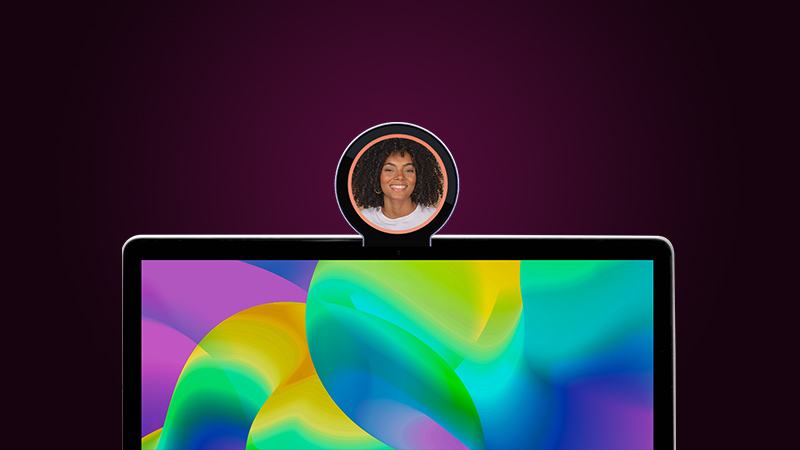
As for Napster View, it's a glasses-free holographic display that clips to the monitor, projecting these AI agents into your workspace so users can literally see them, talk with them, even share the screen with them.
Imagine a user with a device that looks like a sophisticated webcam sitting at the top. A "chief-of-staff" avatar, nodding back to users, ready to review whatever its users are working on.
From channeling email drafts, coaching users through their next creative projects, that is the vision Napster is no selling.
Crucially, the platform promises more than one-way assistance.
The AI companions are designed to understand context: what’s on the screen, what task users are working on, their recent work history, and so on and so forth. They can remember users' preferences, past conversations, and evolve with them. For example, one of Napster’s early testers mentioned that his digital twin met with his engineering team every week to review what the team was working on, summarizing issues, and relaying them back.

Napster View puts a crew of AI companions on your desk—living, breathing holograms that think and create with you.
Music artists, business strategists, engineers, wellness coaches, and designers. All there. All the time.
See how it works: https://t.co/xTmzTjZbX9 pic.twitter.com/sSCzMX2jmZ— Napster Corp. (@napster_corp) October 21, 2025
It's this dedicated spatial display for AI interaction that makes a difference.
By giving the AI a physical form, erecting one in a space between users and their everyday monitor, the AI companions are no longer hidden inside tabs or notifications; it's physically present in users' field of view. No VR headset, no glasses; just a second “holographic” screen that specializes in collaboration.
Unlike others' solutions, Napster's offering means that users' primary monitor stays uncluttered, while the companion lives in a separate visual zone.
The memory and context layers mean the AI doesn’t treat each session as brand new: it builds over time. The digital twin concept means that users can scale their presence, be in two places at once via their agent.
The ecosystem approach hints at a broader creator market, where users collaborate not just with AIs, but with other users and their digital twins, potentially publishing work to the platform and participating in a new economy of creation.
In other words, this is AI not just as tool. Paired with the hardware, it becomes more like a colleague.
The company’s CTO, Edo Segal, described it as living on the "frontier of agentic AI," rather than chatbots that only answer prompts.
And the timing is fascinating.
Napster’s pivot comes at a moment when AI-driven assistants are proliferating, when hardware boundaries are being rethought, when professionals and creatives seek deeper integration between tools and workflows. Napster sees an opening to democratize access to expertise, location, cost or connections no longer the barrier.

As the CEO, John Acunto, put it: "Your digital twin. Your expert crew across every domain. Your collaborators are available 24/7."
Of course, this reinvention carries risk and bold ambition in equal measure.
The heritage of Napster is rooted in music sharing controversy, and today it jettisons that era for something entirely different: a creative AI economy. The hardware sells for $99 at launch (with one month of free access to Napster 26), after which there is a subscription model for the platform. Then, Napster also launched in on Mac with web access, and that mobile and PC support are slated for future rollout.
But questions linger. Will users want an avatar looking at them all the time; will the novelty fade? How seamless is the experience in real-world workflows, especially for professionals used to minimal friction? How will privacy and data control play out when the AI is “seeing” what you’re working on, accessing your screen and environment (with permission, they say)? How will Napster differentiate itself in an ecosystem where giants like Apple, Meta and Microsoft are also pushing into immersive/AI hardware and software?
The brand revival is clever, but the technology needs deep substance.
In short: Napster has traded its peer-to-peer rebellion for a seat at the agentic AI table. Where once it let users swap MP3s, now it offers users a companion, a twin, a team. Whether this reinvention succeeds remains to be seen—but for the moment, as you sip your coffee and browse gadget specs, the idea of a holographic AI “colleague” hovering above your Mac is a seductive one.






















































































































































































































































































