
The competition among developers of large language models (LLMs) has intensified in recent years.
Following the release of OpenAI's ChatGPT that quickly became a central player in this space, other tech companies race to enhance not only raw intelligence but also the practical ways these systems interact with users over extended periods, further drawing millions of users who relied on it for everything from casual queries to complex ongoing projects.
One early limitation was the models' inability to retain information between separate conversations, forcing users to repeat background details each time they started a new chat.
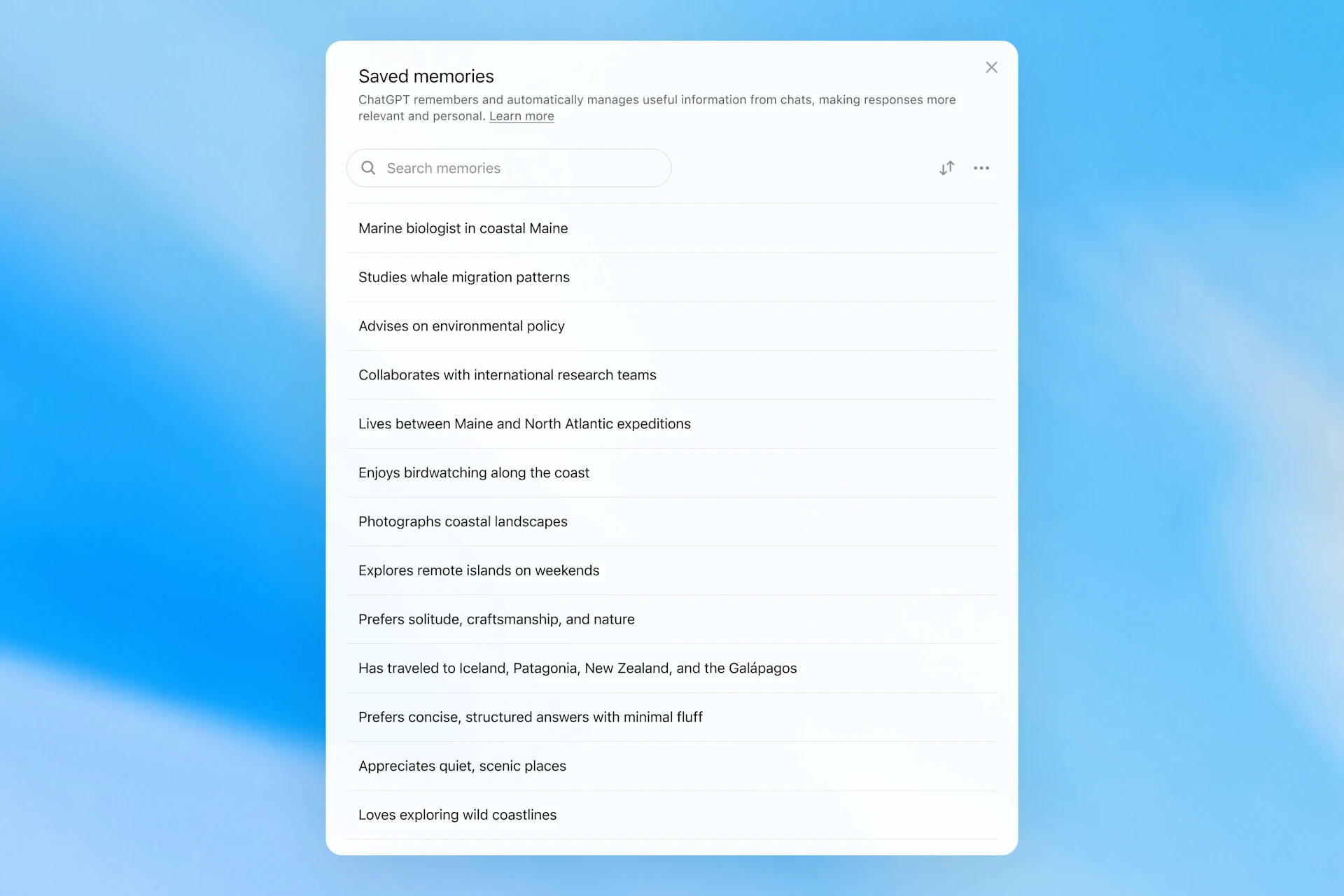
In February 2024, OpenAI addressed this by introducing a memory feature that allowed ChatGPT to store and recall specific details shared during interactions, whether explicitly requested or inferred from context.
https://www.eyerys.com/articles/news/openai-gives-chatgpt-memory-upgrade-allowing-it-remember-all-users-previous-references
This marked the first time the system could carry forward personal preferences, facts about a user's life, or project specifics across multiple sessions without manual repetition.
The initial memory system operated primarily through saved entries that ChatGPT would reference when relevant. However, this could become an issue because stored details could become outdated or irrelevant as circumstances changed, leading to responses that no longer aligned with a user's current situation.
Now, OpenAI is trying to solve that.
We’re building ChatGPT to remember what matters, follow your preferences and constraints, and adapt as things change.
If you tell ChatGPT you’re planning a trip in July, memory should understand when the trip is upcoming, happening, and already over.
That helps ChatGPT keep…— OpenAI (@OpenAI) June 4, 2026
In the announcement, OpenAI said that:
To do this, OpenAI refined the system by adding an initial version of a background process known as dreaming.
First announced in April 2025, it allowed ChatGPT to automatically review chat history and synthesize a broader understanding of the user without requiring explicit commands to save information.
The dreaming mechanism supplemented the original saved memories, enabling the model to incorporate naturally occurring details from conversations and maintain fresher context.
It represented a shift toward more automatic personalization, helping the system better support long-running tasks and adapt to subtle shifts in user needs.
Even so, the combined setup still relied in part on the legacy saved memories framework and was not yet positioned as a fully independent solution.
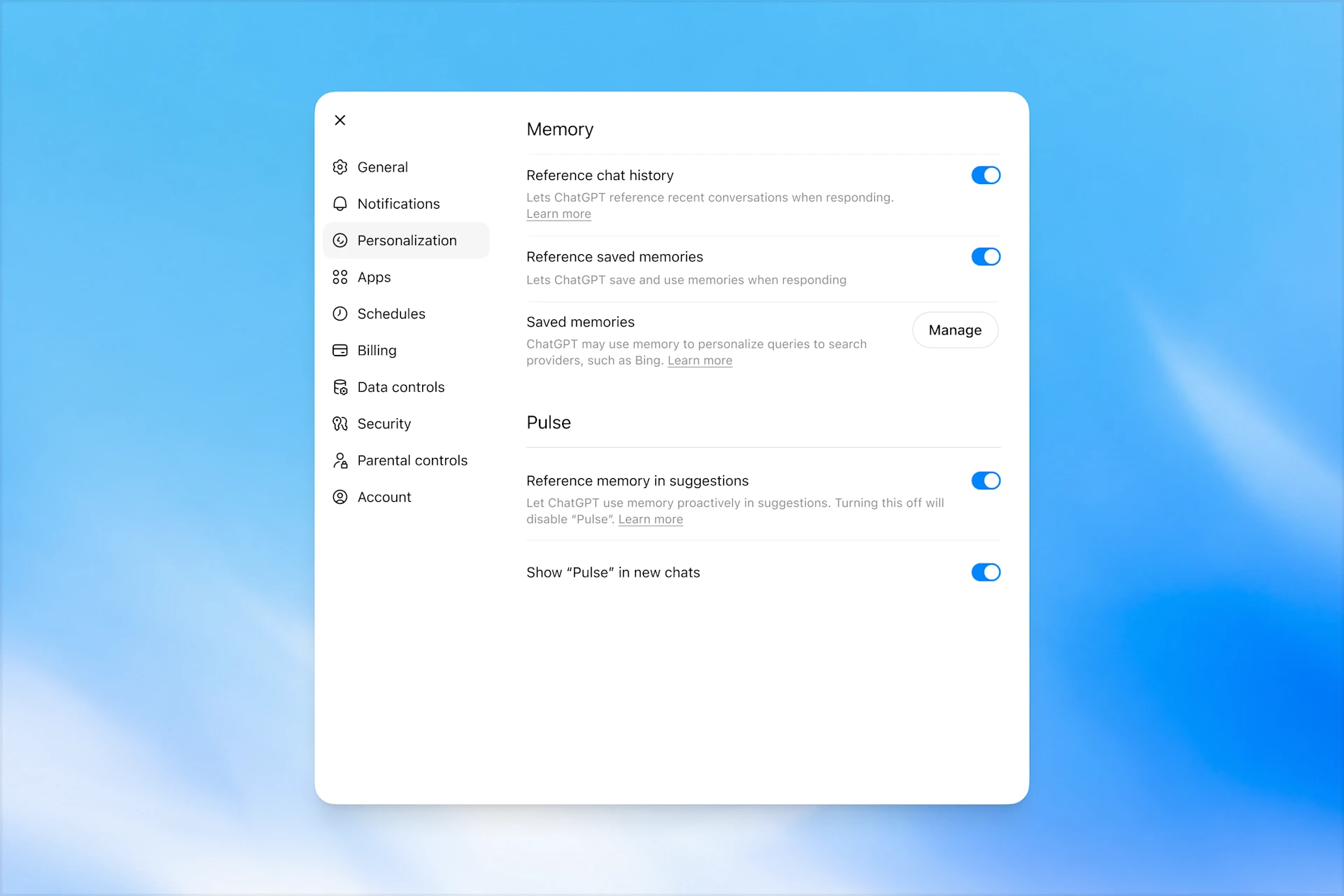
The new memory system will keep track of important details automatically. If you prefer the legacy saved memories experience, you can switch back in settings.
The new memory system is rolling out to Plus and Pro users in the US today, along with 2x more memory.
To access it on…— OpenAI (@OpenAI) June 4, 2026
This is why OpenAI further redined this, and began rolling out Dreaming V3, a significantly more capable memory architecture built directly on the dreaming foundation.
This update synthesizes context from across a user's chat history in the background, automatically curating and updating what the model knows to ensure relevance over extended periods.
It is designed to handle time-sensitive changes more effectively, for instance by recognizing when a planned event like a trip has moved from future to current to past and adjusting recommendations accordingly.
The system also doubles the available memory capacity compared to previous versions.
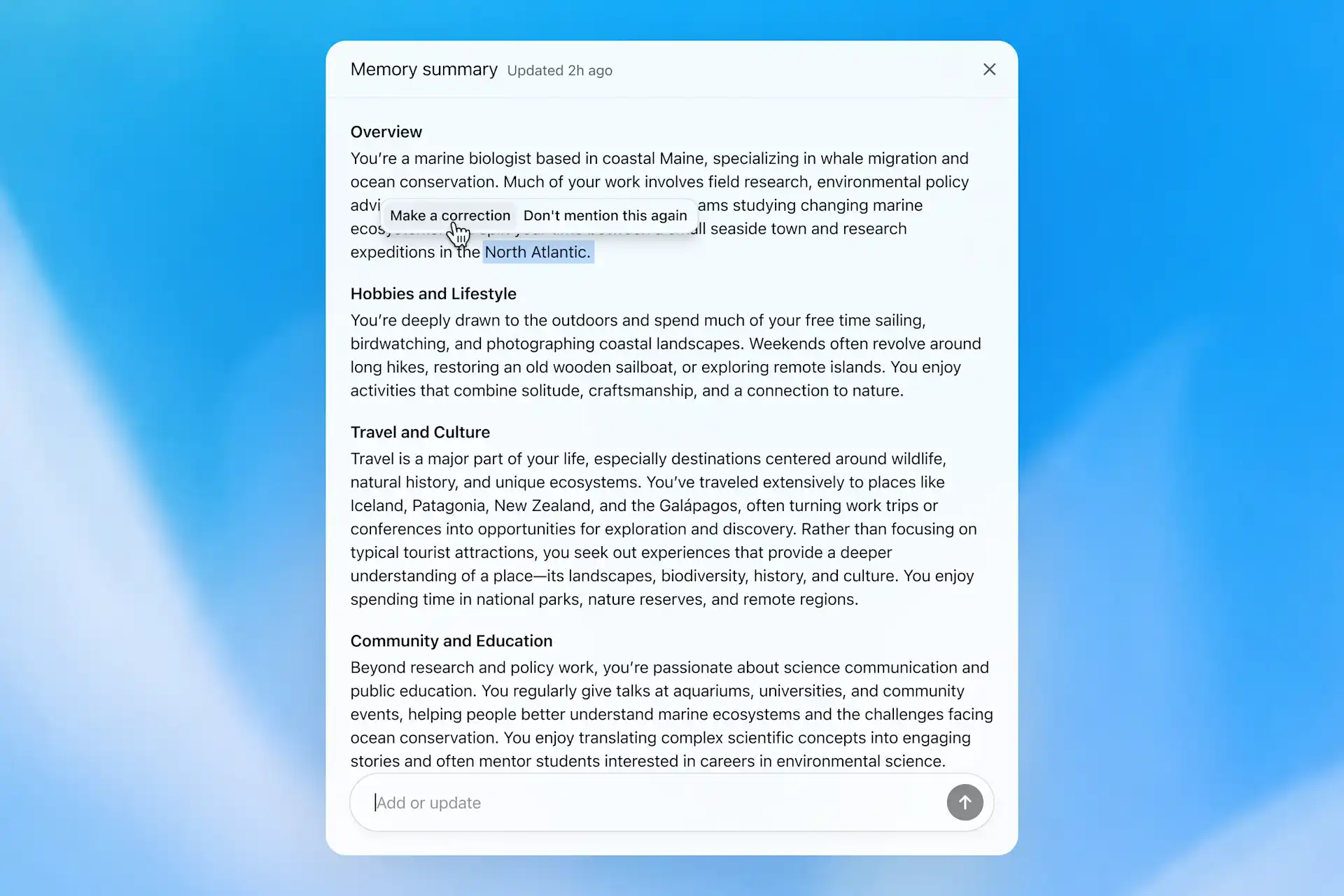
Users can now review a synthesized memory summary that provides an overview of what ChatGPT has retained about them.
From this summary page, it is possible to edit details, add new instructions, or specify topics the model should prioritize or avoid in certain contexts.
The process runs without user intervention for routine updates, though an option remains to revert to the earlier saved memories experience through settings if preferred.
The rollout started with Plus and Pro subscribers in the United States, with plans to expand to additional plans and regions in the coming weeks.
Mobile users need to update the ChatGPT app to the latest version to access it on iOS or Android.
This progression reflects ongoing efforts across the industry to make conversational AI more continuous and context-aware.
As the LLM landscape evolves, features like these address a core challenge: turning isolated exchanges into sustained, personalized assistance that evolves alongside the people using it. Whether the latest iteration fully resolves earlier shortcomings will become clearer as more users interact with it over time, but it continues the pattern of incremental refinement that has defined ChatGPT's development since its memory capabilities first appeared.




















































































































































































































































































