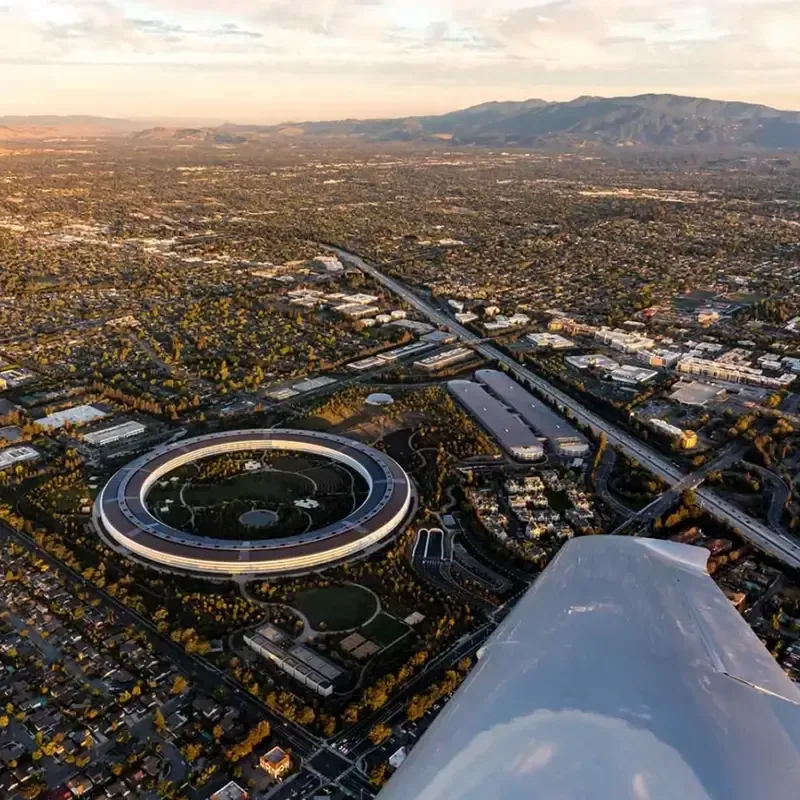
In the low hills south of San Francisco, the same stretch of highway that once carried semiconductor engineers now funnels a different kind of traffic.
Rental cars from the airport, suitcases that stay only a few weeks, and women who have already decided the next chapter of their lives will be written in the same zip codes as the people building the next generation of models.
The AI boom has minted paper fortunes at a speed that previous technology cycles never managed, and that money has begun to reshape not only real estate and restaurant reservations but the quiet calculations people make about partnership.
Chinese and Chinese American women are relocating from Los Angeles, from other American cities, and from overseas with a clear preference for men who work in artificial intelligence.
Matchmakers who have operated in the Bay Area for years say the requests have grown narrower and more explicit.
As reported by New York Post, previously clients asked for engineers in general. Now, they came to seek for specific ones, many of which are AI engineers. And within that category, these women rank their potential mates by companies by expected liquidity.
Qinghua Zhao, who founded the Chinese dating platform 2RedBeans 15 years ago, hears the same ranking repeatedly.
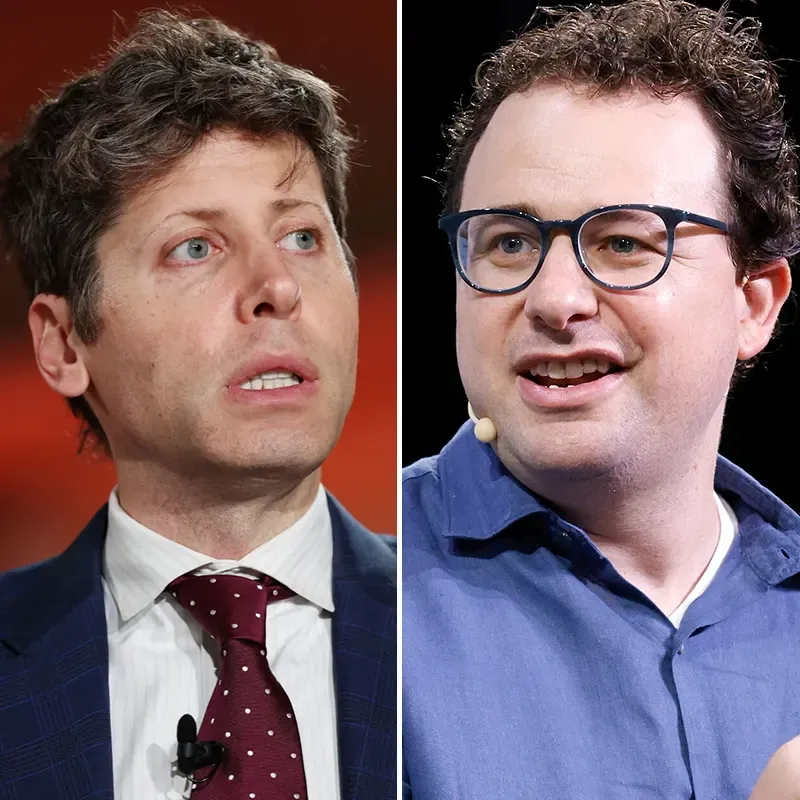
Anthropic and OpenAI sit in the first tier because their path to public markets looks short and their valuations look large.
Amy Yang, a former Oracle tax analyst who now runs a matchmaking service in the area, describes the pattern as ordinary.
Women arriving from out of town want engineers, and AI is simply better.
The logic is stated without much ornament.
One divorced Chinese businesswoman in her 40s, speaking anonymously, called marriage a restructuring of assets. She has watched salaries evaporate under California taxes and prefers a partner whose equity package could expand sharply once a company lists.
She is prepared to help someone grow, yet she wants evidence that the growth is already visible.
Sue Zhong, a single 34-years-old woman based in Los Angeles, has paid for introductions and is willing to travel because she finds the stated ambitions of people building AI systems interesting.
Another client considered a 6-month stay in San Francisco simply to be near the offices.
Packages of three introductions run around $1,500 dollars; the fee is treated as a research expense rather than a romantic one.

The same scarcity of time that makes these women efficient also makes the men they seek difficult to meet through ordinary channels.
Schedules are filled with model training, fundraising, and travel.
Many of the engineers have spent years optimizing technical problems and have less practice with the small social cues that move a conversation from interesting to personal.
Zhao notes that the concentration of high-IQ people in the Valley has not produced a matching concentration of emotional fluency.
The men who succeed at the companies in question often want partners who already hold degrees and stable jobs in the Bay Area; rising personal wealth tends to raise those expectations further.
Traditional dating apps feel, to many of them, like another optimization problem with poor returns.
A parallel market has formed around the same constraint.
Previously, Forbes reported earlier this year on a small group of high-end companions who market themselves as fluent in the subjects that dominate Valley conversation: model architectures, scaling laws, cryptocurrency, longevity research, and the practical details of running local models.
Rates cited in that reporting run from $3,000 to $6,000 an hour, with multi-day bookings reaching $23,000.
The women are escorts, offering what clients describe as a girlfriend experience that includes extended technical discussion as well as physical intimacy.

The phrase "single until Series B," once a founder joke, has become merchandise; it captures the habit of treating relationships as a distraction until a company reaches a funding milestone.
For some of the same men who are now the targets of matchmakers, paid companionship supplies attention and intellectual engagement without the scheduling friction or the risk of mismatched expectations.
The underlying numbers make both approaches rational on their own terms.
In October 2025, more than 600 current and former OpenAI employees sold shares totaling $6.6 billion; roughly 75 of them hit a $30 million dollar individual cap.
Anthropic is preparing a mid-November listing that bankers and investors have discussed in the range of $1.8 trillion to $2 trillion dollars, roughly double the valuation set in its most recent private round.
Equity packages that looked abstract a few years ago are becoming convertible into houses, investment accounts, and the kind of optionality that salaried work rarely supplies.
Women who have already navigated one financial system, or who have watched peers do so, treat the possibility of participating in the next round of liquidity as a material consideration rather than a romantic detail.
None of this is new in outline.
Hypergamy and strategic marriage appear in every period when new wealth concentrates quickly. What is distinct is the speed and the visibility.
The same platforms that let engineers discuss training runs also let matchmakers, escorts, and companions advertise their availability.
The women arriving with suitcases are not waiting for chance encounters at conferences. They are using the same tools of research, referral, and targeted presence that the tech industry itself prizes.
What this quiet migration ultimately reveals is a culture so thoroughly saturated by venture logic that even the most intimate human connections are being engineered for maximum return on investment. Relationships in the Bay Area have long reflected the dominant industry of the era, but the current wave goes further, collapsing the line between emotional compatibility, physical desire, and portfolio diversification.
When finding a partner is evaluated like a high-yield feature, prospective partners view marriage as an asset restructuring, compute capacity as a conversational baseline, and dating fees as capital expenditure, the romantic landscape becomes as transactional and highly optimized as the algorithms being deployed just down the road.
Whether these liquidity-driven, performative unions yield enduring partnerships or unravel under the weight of market volatility, they stand as a striking monument to this era: a moment when Silicon Valley's relentless pursuit of exponential growth and market cap has rewritten the mechanics of love, sex, and human bonding itself.






















































































































































































































































































