In the smoky chaos of the 2026 Middle East war, where missiles light up the skies over the Strait of Hormuz and oil prices do daily cartwheels, Iranian embassies have quietly opened a second front that's equal parts clever and chaotic: the great X meme offensive.
While the Islamic Revolutionary Guard Corps (IRGC) enforces its cheeky Hormuz toll booth with yuan, rials, and stablecoins, Iran's diplomatic missions across the world have traded stiff press releases for sharp, sarcastic humor.
From Pretoria to Harare to Jakarta, official embassy accounts have transformed into some of the most unexpectedly entertaining propaganda machines on the internet.
On X, embassies aren't just there for diplomacy anymore.
They’ve become active participants in digital culture, deploying dry wit, meme formats, and perfectly timed sarcasm. It's diplomatic messaging, but reengineered for the algorithm.
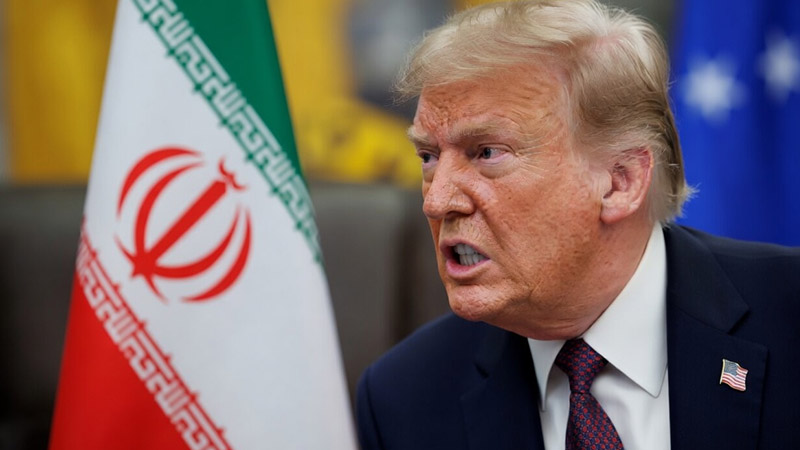
The campaign really picked up when Donald Trump began posting a series of fiery Truth Social messages demanding Iran "open the F***in’ Strait" or face serious consequences. Traditionally, that kind of rhetoric would trigger carefully worded diplomatic responses, calibrated to avoid escalation.
This time, the embassies didn't blink.
Instead, they responded with deadpan humor that spread faster than any official statement ever could.
No shouting, no long rebuttals. Just calm, controlled sarcasm that subtly mocked the demands while reinforcing a simple message: Iran is not the one under pressure here.
Read: 'You Are Fired': Iran's Sharpest Message In The Age Of Social Media And Digital Warfare
The Strait of Hormuz will be controlled by me and the Ayatollah pic.twitter.com/IxIgo1Pn6S
— Iran Embassy SA (@IraninSA) March 23, 2026
“Good and productive talks with Iran” pic.twitter.com/kEWmz37CYX
— Iran Embassy SA (@IraninSA) March 24, 2026
Without explanation! pic.twitter.com/swrBVvxFLz
— Iran Embassy in Hungary (@IRANinHUNGARY) April 6, 2026
To understand how unusual this is, under the 1961 Vienna Convention on Diplomatic Relations, embassies are supposed to serve as the formal representatives of a country abroad: protecting national interests, negotiating agreements, reporting on developments, and fostering economic and cultural ties. Diplomats operate under strict norms, backed by privileges and immunities designed to ensure stability and professionalism.
In 2026, that model hasn't disappeared.
Instead, it evolved.
Iranian embassies are still doing their traditional work, but they've layered something new on top of it: real-time, public-facing digital diplomacy. Instead of speaking only to governments, they're now speaking directly to global audiences, shaping narratives in the same spaces where news breaks, opinions form, and attention is won or lost.
What makes their approach stand out is the tone.
It’s not overly aggressive or inflammatory. Instead, it's controlled, ironic, and often genuinely funny. Posts poke at Trump's wording, joke about the Strait being "lost," or playfully question whether it was ever closed in the first place. Others lean into cultural references, historical callbacks, or simple one-liners that land precisely because they don't try too hard.
The result is a strange but effective blend of the serious and the silly.
One of the few good things about the war was that Trump finally understood the difference between 'Strait' and 'Straight'.
— Iran Embassy SA (@IraninSA) April 6, 2026
Didn’t your boss say Allah is God? https://t.co/UrDssrKMCK pic.twitter.com/nOrVoO1s7b
— Embassy of Iran in Bulgaria (@IRANinBULGARIA) April 5, 2026
تیغ دادن دَر کَفِ زَنگیِ مَست
بِهْ که آیَد عِلم، ناکَس را به دَست
عِلم و مال و مَنصَب و جاه و قِران
فِتنه آمَد دَر کَفِ بَدگوهَران
مولانا مثنوی معنوی
It is better to keep your mouth closed and let people think you are a fool than to open it and remove all doubt
Mark Twain pic.twitter.com/ySkMfqg1qw— Iran (I.R.of) Embassy in UK (@Iran_in_UK) April 5, 2026
Pogledajte izjavu kriminalnog i zabludjelog predsjednika!!!#standwithiran pic.twitter.com/AwCpW88kf0
— Iran in Croatia (@IranCroatia) April 6, 2026
Will Trump's ultimatum be successful?
I don't think so.
(Local meme) pic.twitter.com/0OYWqVR3sV— Iran Embassy SA (@IraninSA) April 6, 2026
We've lost the keys.
— Iran Embassy in Zimbabwe (@IRANinZIMBABWE) April 5, 2026
Trump: 48 hours
Iran:
Loading… since 3000 years ago pic.twitter.com/Exy8i2yAZ7— Iran Embassy in Indonesia (@IraninIndonesia) April 5, 2026
Trump: "Open the Strait of Hormuz!"
India: "Is it closed?"
Pakistan: "Closed?"
Russia: "Strange…"
South Africa: "but it's Open, of course"
France: "Doesn't look like it…"
China: "Open… we just passed through! "
Trump: https://t.co/vnNc1EQy54— Iran Embassy SA (@IraninSA) April 5, 2026
On one level, these posts are clearly propaganda, designed to project confidence, undermine opponents, and reinforce Iran’s position in the conflict.
On another level, they're highly shareable content, engineered to travel far beyond traditional diplomatic audiences. People who might never read a policy statement are suddenly engaging with Iranian messaging because it’s wrapped in humor.
That reach matters.
In a conflict where perception is as important as positioning, controlling the narrative can be just as valuable as controlling territory. And while missiles and naval maneuvers dominate headlines, these meme-driven interactions quietly shape how the conflict is understood online.
They also reinforce a broader point Iran has been making throughout the crisis: it is not cornered. Between alternative financial systems, continued oil flows, and now a confident digital presence, the country is projecting resilience across multiple fronts.
8 P.M. is not that good. Could you change it to between 1 and 2 P.M., or if possible, 1 and 2 A.M.?
Thank you for your attention to this important matter. I.E.Z. pic.twitter.com/deSXD8rpvD— Iran Embassy in Zimbabwe (@IRANinZIMBABWE) April 6, 2026
The memes, in that sense, are not random.
They are part of a larger communication strategy: one that signals calm control in the face of pressure, and turns even a geopolitical standoff into an opportunity to engage, mock, and influence.
As the world watches tanker routes, military movements, and escalating rhetoric, Iran’s embassies keep posting. The tone stays consistent: relaxed, slightly amused, and just sharp enough to cut through the noise.
Fuel prices are up more than 55%. Thank you for your attention to this "IMPORTANT" MATTER! DONALD.J. TRUMP.https://t.co/K2RcUrqBQl pic.twitter.com/aaW0zclohW
— Iran Embassy in Zimbabwe (@IRANinZIMBABWE) April 4, 2026
The only New Regime in Iran is the New Regime of Strait of Hormuz. Everything is still the same as before. pic.twitter.com/ZQDro839i1
— Iran Embassy in Zimbabwe (@IRANinZIMBABWE) April 1, 2026
Trump, please talk. We are bored.
— Iran Embassy in Zimbabwe (@IRANinZIMBABWE) April 4, 2026
As the world watches the crisis in the Middle East, these embassies keep the content flowing.
Yes sir, you burned and won! Now calm down! pic.twitter.com/LutYRuKLgL
— Iran Embassy in Sierra Leone (@IRANinSalone) April 5, 2026
No lies
No Kings pic.twitter.com/mQn1AARqNo— Iran Embassy In Malaysia (@iraninmalaysia) April 6, 2026
And in doing so, they’ve demonstrated something unexpected.
In 2026, diplomacy isn’t just happening behind closed doors or through official statements. It’s unfolding in timelines, replies, and viral posts where a well-placed joke can carry just as much weight as a formal declaration.
While the missiles fly, the meme war is very much alive.
Mr. @realDonaldTrump @POTUS,
The Strait of Hormuz remains open, though access can be influenced by the level of hostility.
It may be prudent to diversify updates and not to rely on those from newly appointed military Generals before making public statements on such sensitive… pic.twitter.com/I3BC3FonDl— IRANinFINLAND (@IRANinFINLAND) April 5, 2026
#POTUS has stooped to an unprecedented level of begging, laced with bitter, hollow rudeness and threats.
The desperation is almost palpable, dripping from every syllable—especially the haphazardly hurled expletives.
We solemnly remind everyone, once again, that attacking… pic.twitter.com/d8zsfuCO0m— IRAN Embassy in Austria (@IraninAustria) April 5, 2026






















































































































































































































































































