In recent years, AI has begun reshaping how entertainment is created, managed, and consumed.
The rise of "virtual idols," or digital performers with computer-generated visual avatars and synthetic voices, has offered studios characters that promise total behavioral control and flawless consistency, free from the personal complications that often impact human celebrities.
This trend is particularly visible in China, where meticulously managed public images are standard in the idol industry.
However, a recent case involving a small student-run project tested how far audiences are willing to accept synthetic storytelling when digital characters borrow storylines from sensitive real-life human experiences.
The reason is because out of no where, one of the members got pregnant, and fans are furious.

It all began on September 2026, when a new K-pop-inspired project appeared on Chinese social media.
Operating under the fictional label BABYPVSSY Entertainment with an IP location in Liaoning province, BABYQUEEN was introduced as a five-member AI-generated girl group consisting of Hyeina, Kim Nawon, Youngxi, Jocee, and Mity.
Designed to mimic real K-pop acts, each member was given distinct visual traits, realistic photographs, individual social media profiles, and curated backstories.
Despite the polished presentation, verified statements from the creators confirmed the project was non-commercial and run as a hobby by a small group of female students with roughly 1,100 followers.
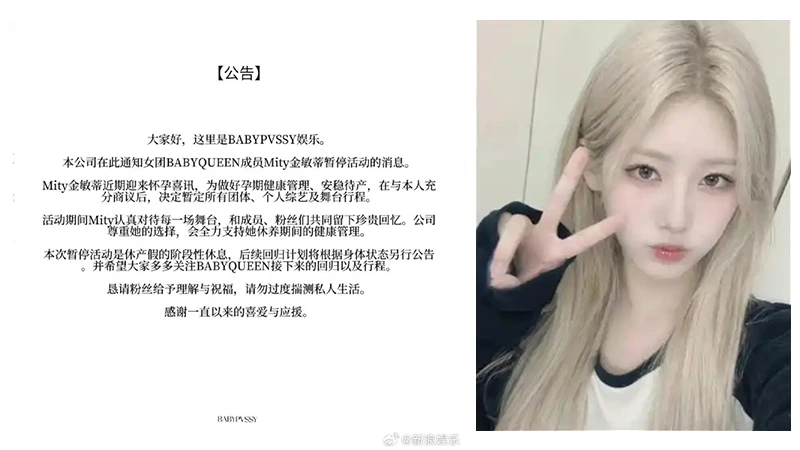
On October 12, 2026, the group's main account published a formal notice stating that member Mity, also identified as Kim Min-ti, was pregnant and would immediately suspend all public and stage activities to manage her health and prepare for childbirth.
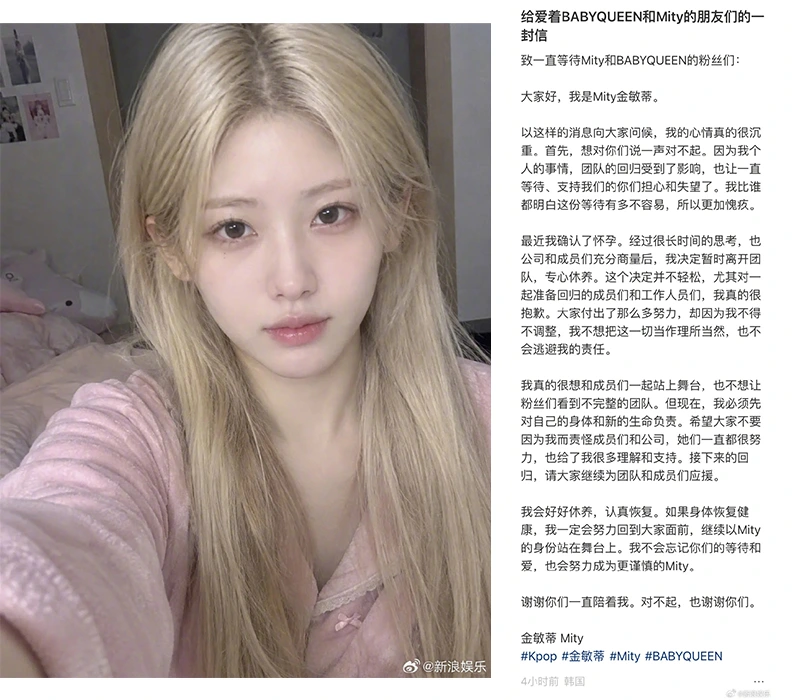
The following day, Mity's individual account shared a 500-character personal statement written in the earnest, apologetic tone common to real-world celebrity announcements.
The post included an image of the virtual character lying in bed wearing pink pajamas, expressing guilt toward fans and asking the public to respect her privacy during this period.
Roughly one hour after Mity's personal statement went live, the group released a teaser for upcoming music featuring only the remaining four members.
The news spread rapidly across Chinese and international platforms, generating over 78 million views on Weibo.
Rather than being received as creative world-building, the announcement provoked widespread skepticism and anger.
Fans and users in general questioned how a non-physical entity could undergo pregnancy, and many criticized the decision as trivializing real women's reproductive experiences.
Comments ranging from sarcastic queries about who the fictional father was to jokes about whether an AI should apply for government maternity subsidies.
Critics argued that using pregnancy as a throwaway plot device trivialized sensitive biological, social, and professional experiences that real women navigate. Commenters also noted that replicating celebrity crisis communications for a marketing gimmick was manipulative and destructive to public trust.
As the backlash escalated, the creators removed the posts and released a brief explanation before shutting down the social media channels.
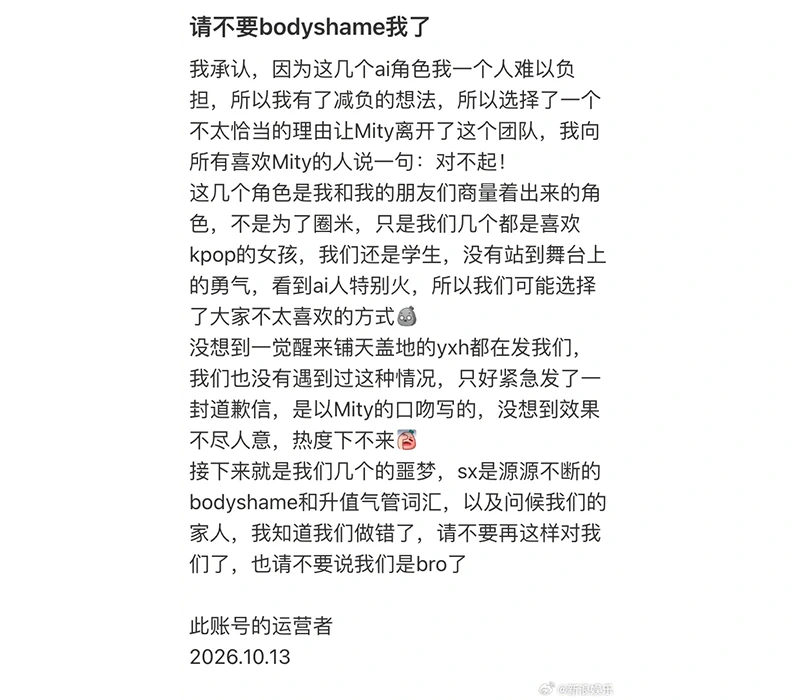
The student creators admitted that the pregnancy was completely fabricated.
They explained that managing five distinct AI characters, generating unique images, keeping character personas consistent, writing daily posts, and rendering media had become mentally and financially overwhelming.
To reduce their operational workload, they needed to write one character out of the active roster.
They initially assumed a pregnancy storyline would offer a quick and convenient hiatus excuse, only to realize later that it was perhaps the worst choice they could have made.
The creators acknowledged that the choice was inappropriate and misjudged. They reported that after the post went viral, they faced intense online harassment and privacy leaks targeting them and their families.
The BABYQUEEN incident highlights major challenges in the emerging virtual entertainment space.
While AI simplifies image generation, running believable digital personas still requires substantial human effort in prompt engineering, scriptwriting, and community management.
Without continuous content creation, synthetic characters stagnate.
Furthermore, audiences expect virtual characters to maintain grounded narrative logic.
When digital projects mimic serious human milestones, such as illness, grief, or pregnancy, without care, they risk offending audiences and undermining the credibility of the medium.






















































































































































































































































































