According to a report by media outlets, people entering the northwestern Xinjiang region will have their phones installed with a surveillance app.
When attempting to cross the border by land from central Asia into Xinjiang, Chinese border agents stop and insist people to hand over their phones.
The officials will then forcibly install an surveillance app called 'FengCai (蜂采)' to the devices.
German cybersecurity firm Cure53 that has analyzed a sample of the surveillance app, said that the source code suggests that it was developed by FiberHome, a Chinese telecommunication manufacturer that is partly owned by the government.
The app can directly be installed on Android phones, but for those using Apple devices, the border officials reportedly connect the phones to a hardware-based device that is believed to install similar spyware.
What this spyware is capable of, is downloading all text messages, contacts, call log history, calendar entries, and installed apps.
The app then automatically scans for data for 73,000 specific items that China deems threatening.

That includes materials that encourage terrorism, al-Qaeda or ISIS recruitment fliers, bomb-making instructions, images of executions, Western academic books about terrorism, pages in Arabic that express religiosity like portions of the al-Qur'an, photo of the Dalai Lama, among others.
FengCai also scans for music by a Japanese grindcore band called Unholy Grave, which has a song titled "Taiwan: Another China".
The investigation started when several tourists to the region had been told to hand over their phones. After leaving China, they went to reporters in Germany with the story.
To see the facts for themselves, a research by The New York Times, with the help of Motherboard, The Guardian, Süddeutsche Zeitung, and Norddeutscher Rundfunk, flew a journalist to cross the border into Xinjiang, just like how the tourists did.
Stopped at the border, the journalist also experienced the same thing, as the officers forced to install the surveillance app before allowing entry.
Xinjiang, is a provincial-level Chinese autonomous region in the northwest. It's regarded as the largest Chinese administrative division and the 8th largest country subdivision in the world, that spans over 1.6 million square-kilometers.
Xinjiang has Aksai Chin, the disputed territory which is administered by China but claimed by India. Borders of Xinjiang which are mostly occupied by the rugged Karakoram, Kunlun and Tian Shan mountains, are shared with Mongolia, Russia, Kazakhstan, Kyrgyzstan, Tajikistan, Afghanistan, Pakistan and India.
The region is the home for a number of minority ethnic groups, which include Uyghur which are mostly muslims, Han, Kazakhs, Tibetans, Hui, Tajiks, Kyrgyz, Mongols, Russians and Xibe.
These minorities are subjected to Chinese surveillance.
Since 2014, at least 120,000 people from the Kashgar's Muslim Uyghur have been detained in Xinjiang's re-education camps, where the Chinese aimed to change their political thinking, their identities and their religious beliefs.
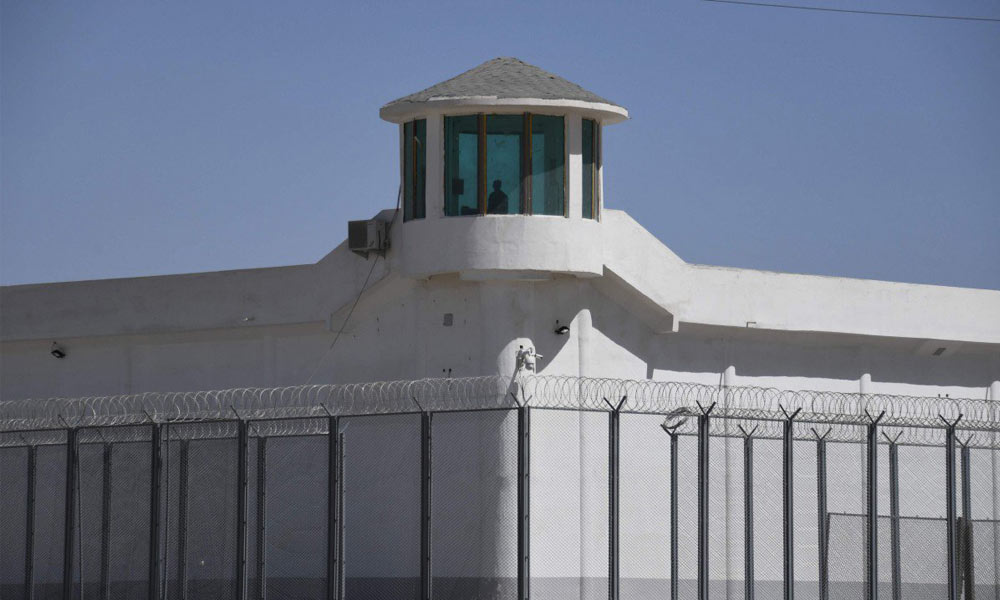
People at Xinjiang are profiled using the government's AI-powered facial recognition, and minorities are forced to hand over their biometric data, which include DNA samples, fingerprints, voice samples, and blood types.
There are multiple checkpoints in the region, where officials can stop passerby as they walk through the streets. During this occasion, the officials may inspect their phones.
China has already forced these minorities to install the surveillance app on their phones. But for the population of Xinjiang, the app installed is called 'JingWang', which does things similar to FengCai, but has an official icon for its app for a more official impression, according to Cure53.
Xinjiang also has facilities where China experiments in new technology and surveillance systems. Some of the technology that came out of these laboratories are used on the Uyghurs, before being implemented elsewhere in China, or sold abroad.
China denied the existence of such activities and detention centers for Uyghurs, by referring those places as "vocational education centers."
Surveillance is nothing new in China, as cameras equipped with AI and facial recognition can be found in many places throughout its cities.






















































































































































































































































































