The cost of ordinary computer memory has risen so steeply that the familiar sequence of upgrading a desktop machine has broken down for many owners.
A kit of 32 gigabytes of DDR5 that once sold for a few hundred dollars now frequently costs several times that amount, while a comparable kit of the older DDR4 standard, though itself more expensive than it was a year earlier, still sits at roughly half the price.
The gap is large enough that people who already own working systems are choosing to keep them longer, and people planning new builds are delaying purchases or settling for smaller amounts of memory than they originally intended.
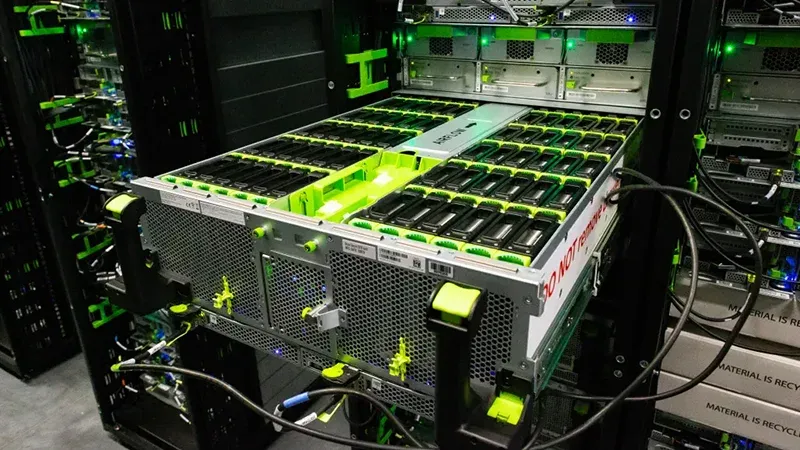
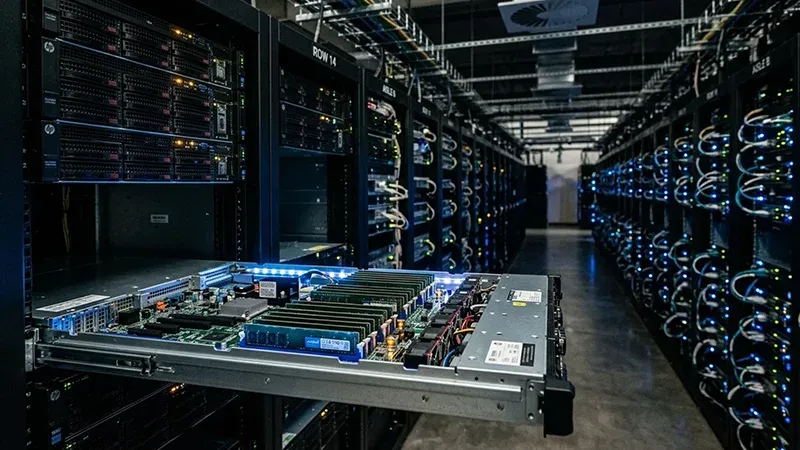
The pressure originates in the rapid expansion of AI infrastructure. Large data centers require specialized high-bandwidth memory chips that can feed the accelerators used to train and run the largest models.
Those chips consume advanced manufacturing capacity at the three major memory producers, and the producers have therefore redirected a substantial share of their wafer starts away from the conventional DRAM used in personal computers.
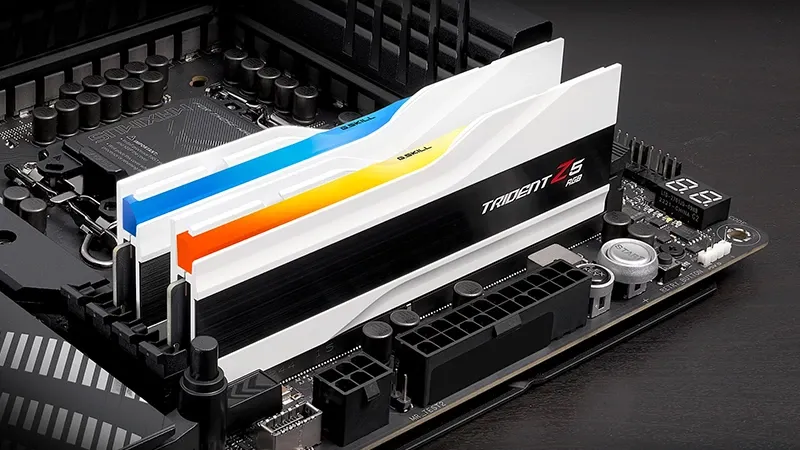
Within the remaining capacity for ordinary memory, priority has gone to the higher-margin grades of DDR5, so production of the older DDR4 process nodes is being wound down even while a large installed base of machines still depends on them.
Demand for consumer memory has not vanished; it has simply been overtaken by a higher-value use of the same factories. The outcome is a shortage that has pushed prices for both standards upward, yet has hit the newer standard far harder because that is where the bulk of remaining production is concentrated.
Processor makers and the companies that design motherboards have begun to treat this imbalance as a condition that will last long enough to require changes in their own plans. Intel’s newest desktop platform is limited to DDR5, but the socket that preceded it, LGA 1700, can accept either standard according to the motherboard that is chosen.
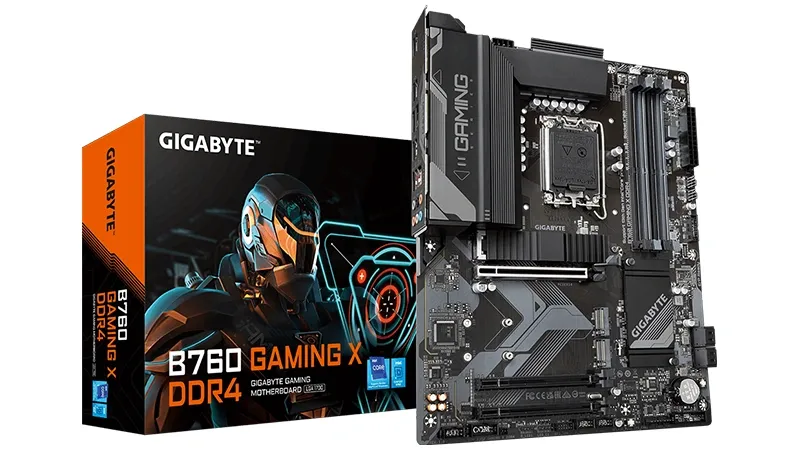
In early October, a major board maker announced that it had prepared firmware updates for its entire range of B760 and H610 boards so that forthcoming processors designed for that older socket would be supported from the day they arrive, which is expected early next year.
The announcement covered both the DDR4 and the DDR5 versions of those boards, meaning an owner who already has a DDR4 system can replace the processor without also replacing the memory.
Similar signals have appeared from other board makers, and Intel executives have stated that the previous generation of processors will remain part of the company's lineup for years precisely because demand for systems that can use the cheaper memory remains strong.
The processors themselves are widely understood to be further refinements of existing silicon rather than an entirely new architecture, but the practical effect is the same: an upgrade path that does not force the purchase of expensive new memory.
AMD has moved in a comparable direction with its own older platform.
The AM4 socket, which accepts only DDR4, has continued to receive limited new processors and refreshed motherboards even after the company shifted its main effort to the DDR5-only AM5 platform.
The reintroduction of a well-regarded earlier model tied to the tenth anniversary of that socket has been accompanied by new boards from several manufacturers.
The pattern is therefore similar on both sides of the market: rather than insist that every buyer migrate to the newest memory standard, the companies are extending the life of platforms that already support the more affordable option.
These adjustments amount to a temporary reversal of the normal product cycle.
Under ordinary conditions the industry steadily phases out older sockets and memory types so that volume can shift to the latest designs.
In the present environment that sequence has been interrupted because the cost of the newest memory has become the dominant constraint on sales. Board makers have reported rising interest in DDR4 models and, in some cases, have increased production of them for the second half of the year and into the next.
The strategy does not restore DDR4 support to the newest processor architectures; those remain limited to the more expensive standard. It does, however, give a large number of existing owners a practical route to better performance without absorbing the full cost of a complete platform change.
How long the approach remains useful will depend on the duration of the shortage and on whether the manufacturers can actually supply enough of the older-style processors and boards while still meeting the much larger demand coming from data-center customers.
For the moment the industry is simply acknowledging that the memory which customers can still afford is the memory that will determine what systems they are willing to buy.
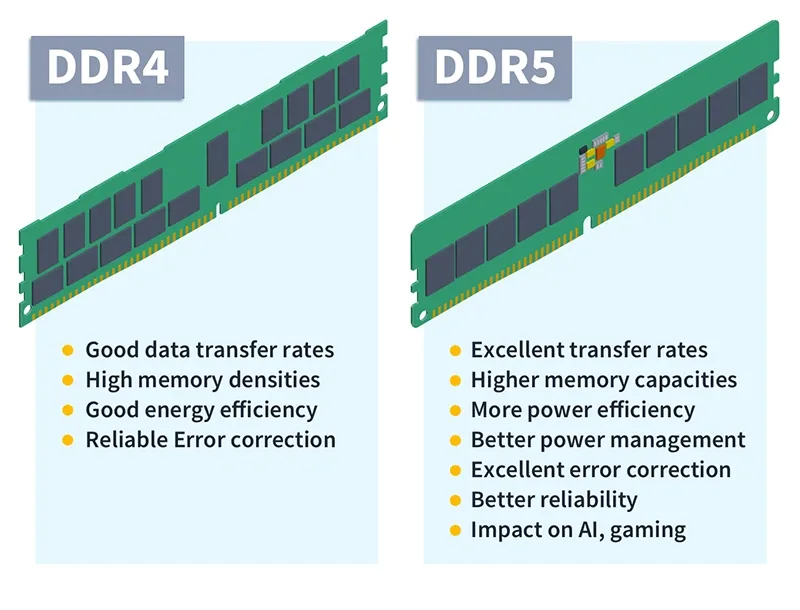
The practical differences between the two standards help explain why the price gap has become so decisive for many buyers.
DDR5 delivers substantially higher bandwidth and begins at higher base speeds than DDR4, which can improve performance in memory-sensitive workloads and in games that are not already limited by the graphics card.
It also runs at a lower voltage and incorporates on-module error correction along with a redesigned channel layout that allows each stick to operate more efficiently. In absolute terms the latency numbers on DDR5 modules are often higher, yet the increased clock rates usually more than compensate, producing a net gain that varies by application.
On current high-end processors the advantage in gaming typically falls in the range of roughly 10 to 15% on average, though the difference can be smaller at higher resolutions or with a very powerful graphics card, and larger in certain productivity tasks that move large amounts of data.
Those gains, however, come with physical and platform constraints.
DDR4 and DDR5 modules are not interchangeable; they use different slots, different voltages, and different controllers, so a board designed for one cannot accept the other. Moving from a DDR4 system to a DDR5 system therefore requires a new motherboard and, in most cases, a new processor as well.
When the cost of the memory alone has risen to the point where a 32-gigabyte kit approaches or exceeds the price of the rest of the components, the performance increment no longer looks automatic.
Many owners are discovering that the extra bandwidth is real but not large enough, under present prices, to justify replacing every major part of an otherwise serviceable machine.
The result is that the technical superiority of DDR5 remains intact, yet its economic case has narrowed for anyone who already owns working DDR4 memory and is simply looking for a modest improvement rather than a full platform replacement.