The future of Air Force One has become one of the most unexpected aviation and political stories of the year. What began as an effort to replace the United States' aging presidential aircraft has evolved into a global conversation about diplomacy, security, government spending, and ethics.
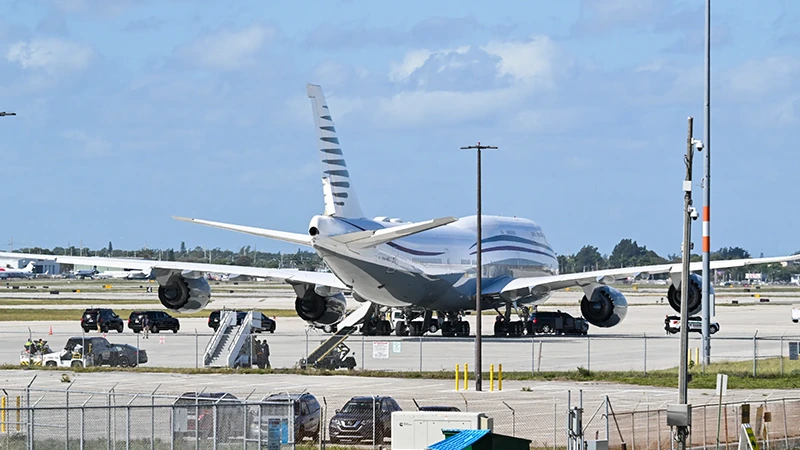
At the center of the controversy is a Boeing 747-8 originally owned by Qatar and valued at roughly $400 million.
The aircraft was accepted by the U.S. Department of Defense in May 2025 and formally unveiled in June 2026 as a temporary addition to the presidential fleet while Boeing continues work on the long delayed next generation Air Force One program. Critics question whether accepting such a valuable gift from a foreign government is appropriate, while supporters argue it offers a practical solution to an increasingly urgent problem.
And now, Trump is finally innagurated the Qatari plane as the new Air Force One.
And the internet couldn't stop debating it.
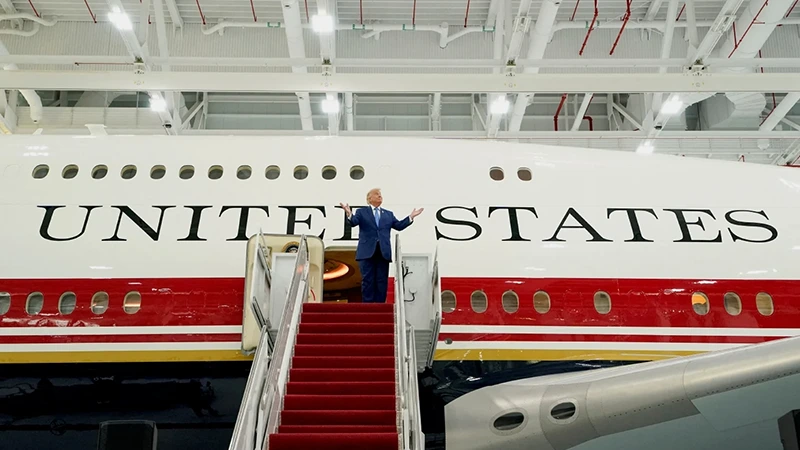
The current Air Force One fleet consists of two heavily modified Boeing 747-200B aircrafts. Dubbed a "palace in the sky," they replace a Boeing 747-200, and first entered service in 1990 during the administration of President George H. W. Bush.
And since then, the two planes served as Air Force One for six presidents, dating back to Bush to Trump.
Although meticulously maintained, and paid for using taxes, these aircraft are more than three decades old. Keeping them operational has become increasingly expensive and complex as replacement parts become harder to source and maintenance requirements continue to grow. Reports indicate that one of the aircraft recently experienced technical issues, adding urgency to efforts to modernize the fleet.
For years, Boeing has been developing two new VC-25B aircraft to replace the existing presidential jets.
The project, first announced during Trump's first term, has faced repeated delays and rising costs.
What began as a $3.9 billion program has reportedly grown to approximately $5 billion, with delivery now expected in 2027 and 2028 rather than the original timeline. The delays created pressure inside the administration to find an interim solution that could enter service more quickly.
That search ultimately led to Qatar's Boeing 747-8.
According to reports, U.S. officials explored available aircraft after learning Boeing's replacement program would take several more years to complete.
Qatar possessed a relatively young luxury 747 that could potentially be converted into a presidential aircraft.
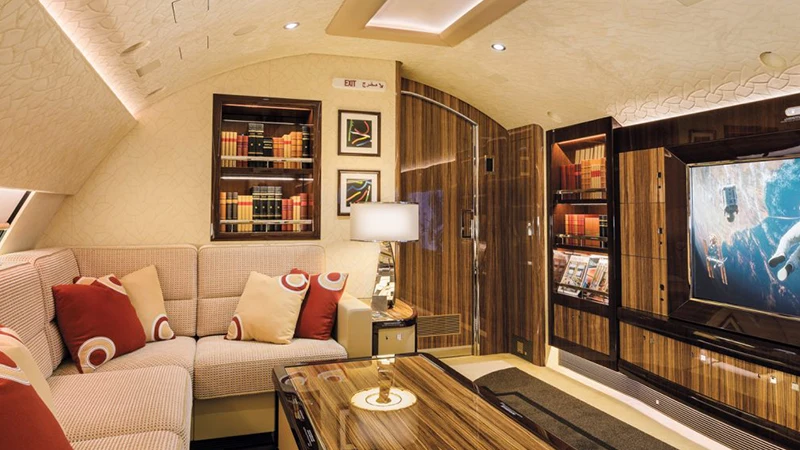
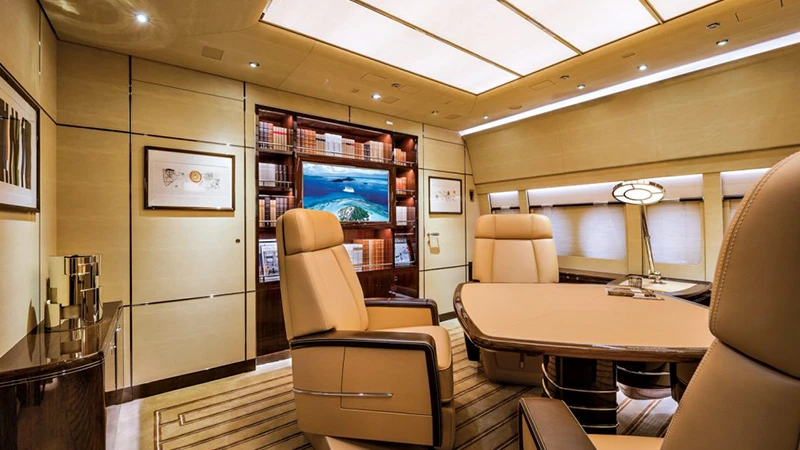
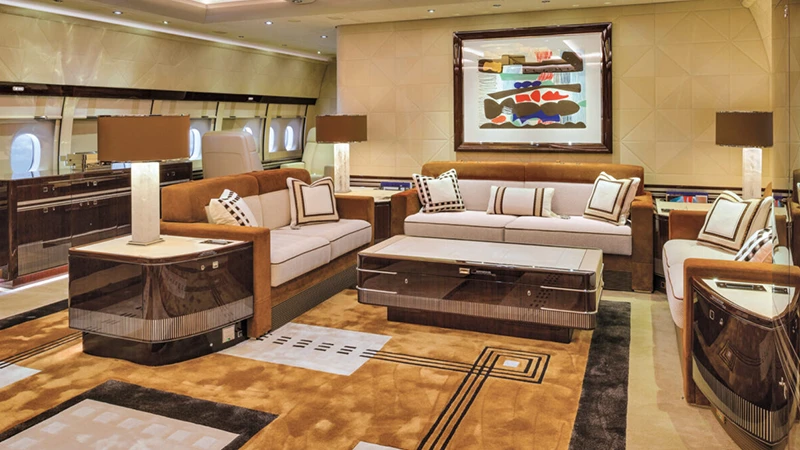
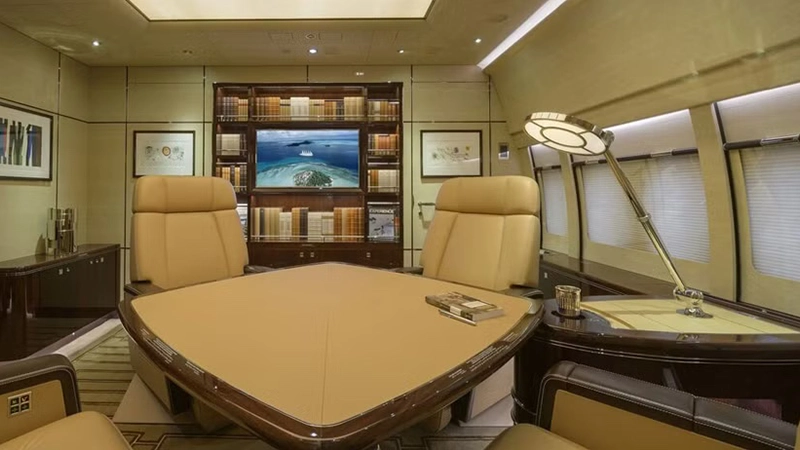
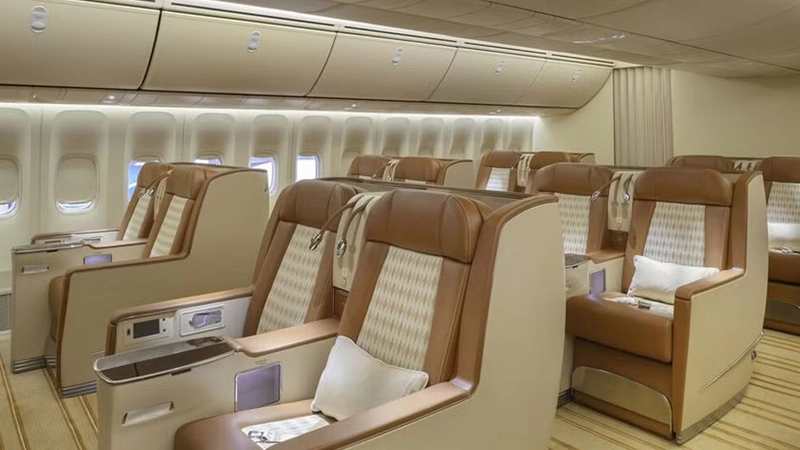
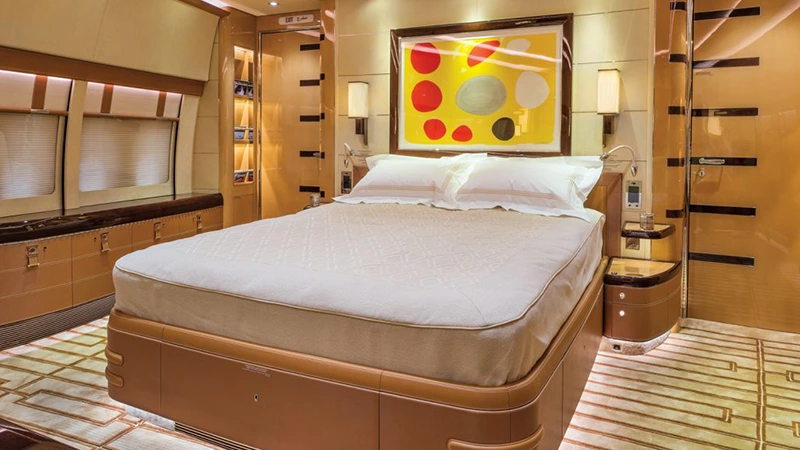
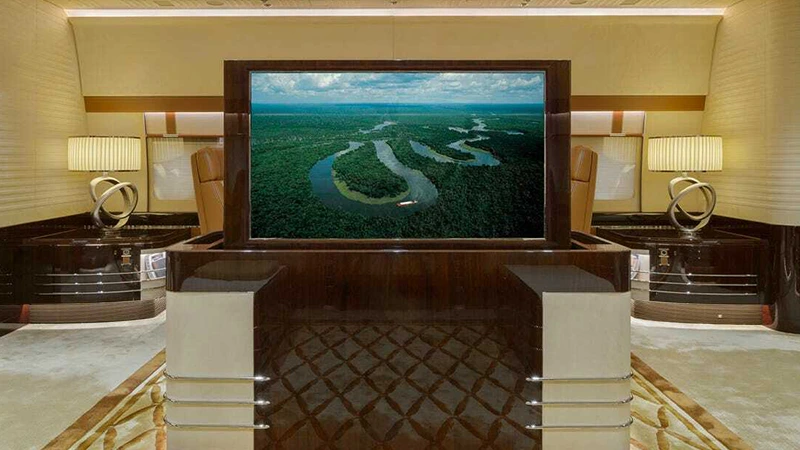
The Qatari Boeing 747 was never an ordinary aircraft. Before it was transferred to the United States, the jumbo jet served in Qatar's VIP fleet and was outfitted with the luxurious features expected of an aircraft used by royalty.
But for a plane tasked with carrying the President of the United States, that alone was not enough.
After the Pentagon accepted the aircraft in May 2025, the U.S. Air Force began the complex process of converting it into a presidential aircraft. The transformation involved far more than a new paint scheme or upgraded seating. Engineers and defense contractors had to integrate secure communications systems, defensive countermeasures, and other classified technologies required for an aircraft that functions as a flying command center.
While many details of the retrofit remain classified, officials say the aircraft has retained much of its opulent interior. Reports describe oversized leather seating, plush carpeting, gold colored accents, and spacious meeting areas that reflect its origins as a royal jet.
The aesthetic aligns closely with the luxury image that has long defined President Donald Trump's personal brand. Before entering politics, Trump traveled aboard his customized Boeing 757, widely known as "Trump Force One."
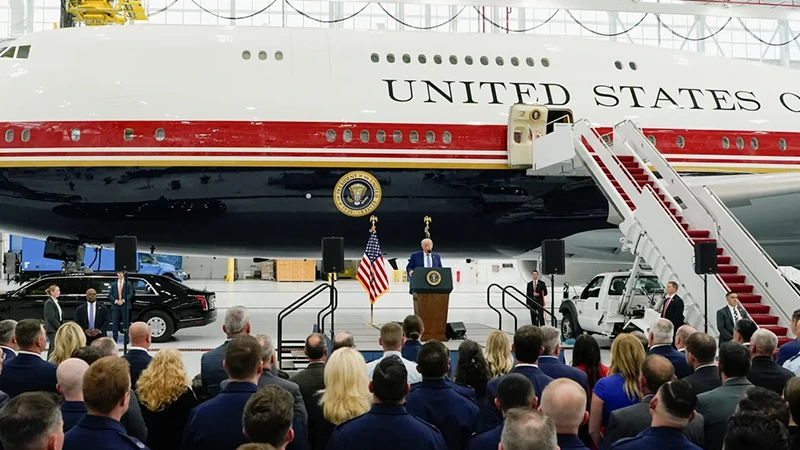
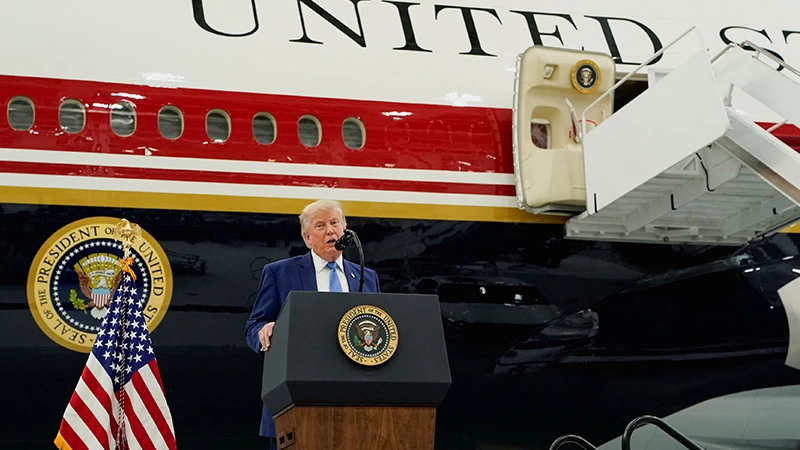
Speaking during the aircraft's unveiling at Joint Base Andrews in June 2026, Trump praised the jet's craftsmanship.
"The workmanship of this plane is, when you see it, you won't believe it," he said. "Actually, the quality of the woods, the quality of the materials, the quality of the engines. These engines are the finest in the world. Nothing like it."
Trump also described the aircraft as "the world's most luxurious plane."
A new Boeing 747-8 is estimated to be worth about $400 million. Air Force Secretary Troy Meink told lawmakers that the cost of retrofitting the gifted aircraft will "probably" be less than $400 million, although some critics and aviation experts believe the final cost could be significantly higher.
More than a mode of transportation, the redesigned aircraft projects an image of wealth, prestige, and executive power that supporters say reflects Trump's vision for the presidency, while critics argue it blurs the line between presidential symbolism and personal branding.
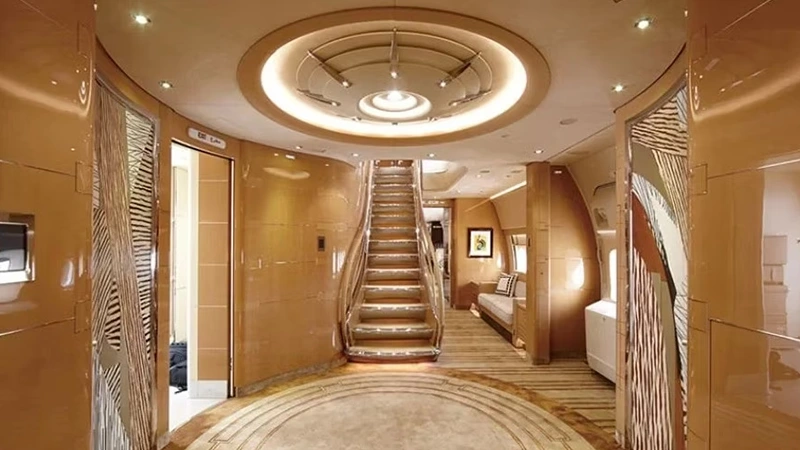
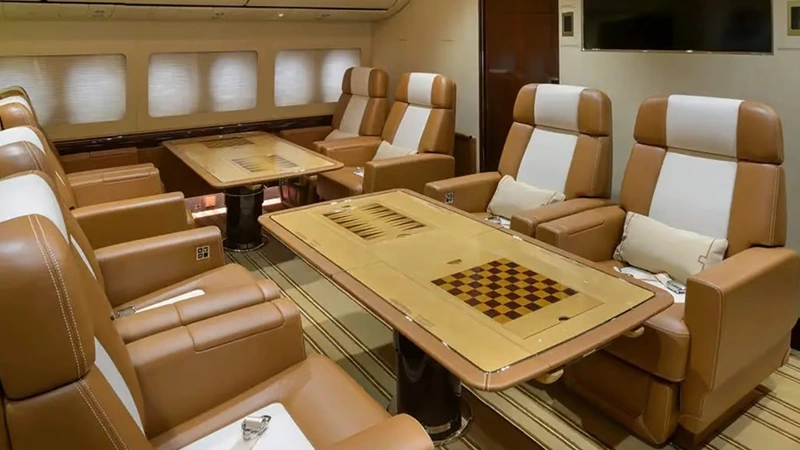
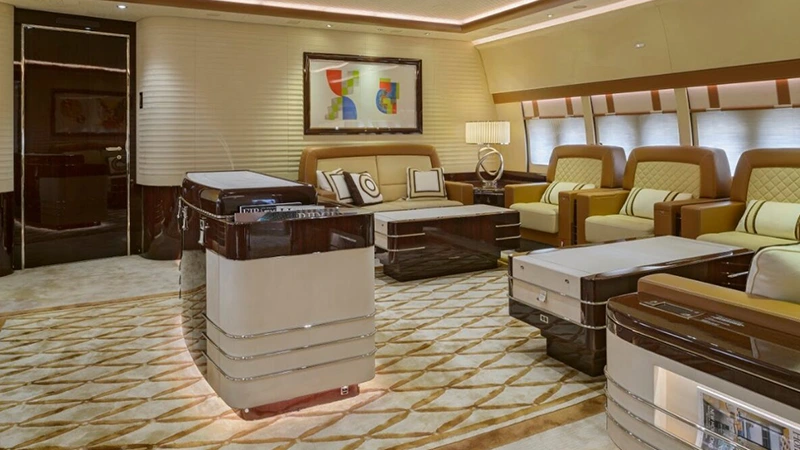
Despite widespread headlines, it is important to understand that the aircraft was not gifted directly to President Donald Trump.
The aircraft, which the Air Force says was modified to meet presidential security requirements, will serve as a temporary Air Force One while Boeing struggles to deliver a long-delayed replacement fleet that is still not expected to arrive until at least 2028. Technically an aircraft is only classified as Air Force One while a sitting president is on board.
The Pentagon maintains that the transfer was made government to government and that the jet belongs to the United States Air Force. Defense officials say the acceptance complied with federal rules and regulations. Nevertheless, the optics of a foreign government providing one of the world's most recognizable symbols of American power have fueled intense online debate.
The VC-25B Bridge aircraft has officially arrived at Joint Base Andrews!
More info: https://t.co/xhurcI0mjL pic.twitter.com/zyUpB99jqm— U.S. Air Force (@usairforce) June 19, 2026
The US Air Force is proud to deliver the VC-25B Bridge aircraft to the @POTUS.
More info: https://t.co/xhurcI0mjL https://t.co/wwpB3Mzaby— U.S. Air Force (@usairforce) June 20, 2026
Air Force One is designed to function as a flying White House and military command center.
It contains hardened communications systems, advanced defensive technology, protection against missile threats, and capabilities intended to ensure presidential continuity during a national emergency. Experts note that integrating these systems into an aircraft previously operated by a foreign government presents significant technical and security challenges. The Pentagon has stated that extensive modifications are required before the aircraft can safely transport the president.
Those modifications are also expected to be expensive.
Although supporters point to the aircraft's estimated $400 million value as evidence that taxpayers are saving money, critics argue that retrofitting costs could exceed $1 billion.
Some analysts question whether the total expense of converting and maintaining the jet will ultimately outweigh the benefits of accepting it in the first place.
Legal experts have also raised constitutional concerns.
The debate centers on the Emoluments Clause, which prohibits U.S. government officials from accepting gifts from foreign states without congressional approval.
The Trump administration argues that because the aircraft was transferred to the U.S. government rather than to the president personally, the arrangement complies with the Constitution. Opponents disagree and contend that Congress should have played a more direct role in approving such an unprecedented transfer. Several lawmakers have introduced legislation aimed at preventing foreign owned aircraft from serving as Air Force One in the future.
The internet's reaction has reflected these competing views.
Supporters argue that accepting the aircraft is a practical decision that bridges the gap until Boeing delivers the official replacements. They point to escalating costs and years of delays in the existing program as evidence that Washington needs a more efficient solution.
Critics, however, see the move as a troubling example of foreign influence and question why the United States, with the world's largest defense budget, would rely on a donated aircraft for presidential transport.
Across social media platforms, users have debated everything from national security risks to the symbolism of accepting a luxury jet from a foreign government.
The controversy has been amplified by the aircraft's striking appearance. Unlike the traditional blue and white livery associated with Air Force One since the Kennedy administration, the modified jet features a new red, white, dark blue, and gold design that closely resembles the color scheme President Trump proposed during his first term.
The redesign has generated almost as much discussion online as the aircraft itself.
It's worth noting though, that despite widespread headlines, the aircraft was not gifted directly to President Donald Trump.
The Pentagon maintains that the transfer was made government to government and that the jet belongs to the United States Air Force. Defense officials say the acceptance complied with federal rules and regulations. Nevertheless, the optics of a foreign government providing one of the world's most recognizable symbols of American power have fueled intense online debate.
After all, the Air Force aircraft has long been a symbol of American leadership, technological capability, and national power.
Any change to that symbol was always likely to attract attention.
This time, the conversation extends far beyond aviation enthusiasts and policy experts. It has become a global debate about influence, transparency, national security, and the price of modern presidential travel.

















































































































































































































































































