Japan has long been synonymous with innovation, a nation that consistently pushes the boundaries of what's possible.
From the sleek efficiency of its bullet trains to the precision of its robotics, Japan has a remarkable knack for turning futuristic concepts into everyday realities. It's a place where the present often feels like the future, and this is especially true when it comes to their internet infrastructure.
While many at the rest of the world still contend with buffering and slow downloads, Japanese researchers announced that they have achieved a groundbreaking internet speed of 1.02 petabits per second (Pbps).
To put that into perspective, this isn't just fast; it's an astounding 16 million times faster than India's average internet speed and 3.5 million times faster than the average in the United States.

The most mind-boggling implication of this achievement is that, the new technology could theoretically download the entire Netflix library in under one second.
To put this into another perspective, that speed can download massive 150GB video games instantly, or streaming 10 million 8K ultra-HD videos simultaneously.
Users can even download 1,27,500 years' worth of music in just a second.
The core innovation lies in a specially designed 19-core optical fiber cable.
Unlike conventional fibers that use a single light pathway, this new cable packs 19 distinct optical cores into a standard 0.125 mm diameter, identical to existing fibers.
This clever Space Division Multiplexing (SDM) creates 19 independent "lanes" for data transmission within the same physical footprint. Building on this, the researchers also employed Wavelength Division Multiplexing (WDM), transmitting 180 different wavelengths (colors of light) across both the C-band and L-band within each of the 19 cores.
This layering of WDM over SDM dramatically multiplies the data capacity, creating thousands of simultaneous channels for information flow.
To sustain such immense speeds over long distances, sophisticated optical amplification systems were crucial.

The National Institute of Information and Communications Technology (NICT) developed and utilized advanced amplifiers capable of simultaneously boosting signals from all 19 cores across all 180 wavelengths over the 1,808-kilometer experimental distance.
This was demonstrated through recirculating loops of cable, proving the viability of long-haul, high-capacity transmission.
Furthermore, advanced Digital Signal Processing (DSP) plays a vital role, employing complex modulation formats, coherent detection, and algorithms like MIMO (Multiple-Input Multiple-Output) to precisely encode, decode, and compensate for signal distortions, ensuring accurate data recovery despite the extreme speeds and multiple interwoven data streams.
This collaborative effort between NICT, Sumitomo Electric, and European partners showcases the power of international scientific cooperation in pushing the boundaries of what's possible in telecommunications.
At the moment of the announcement, this ultra-fast internet is still in the laboratory testing phase and not yet available to consumers.
Regardless, the potential represents a crucial step toward meeting the ever-increasing demands of our digital world.
As global internet traffic continues to surge, driven by advancements in AI applications, autonomous vehicles, and billions of connected devices, such breakthroughs are essential for expanding network capacity without requiring entirely new infrastructure installations.
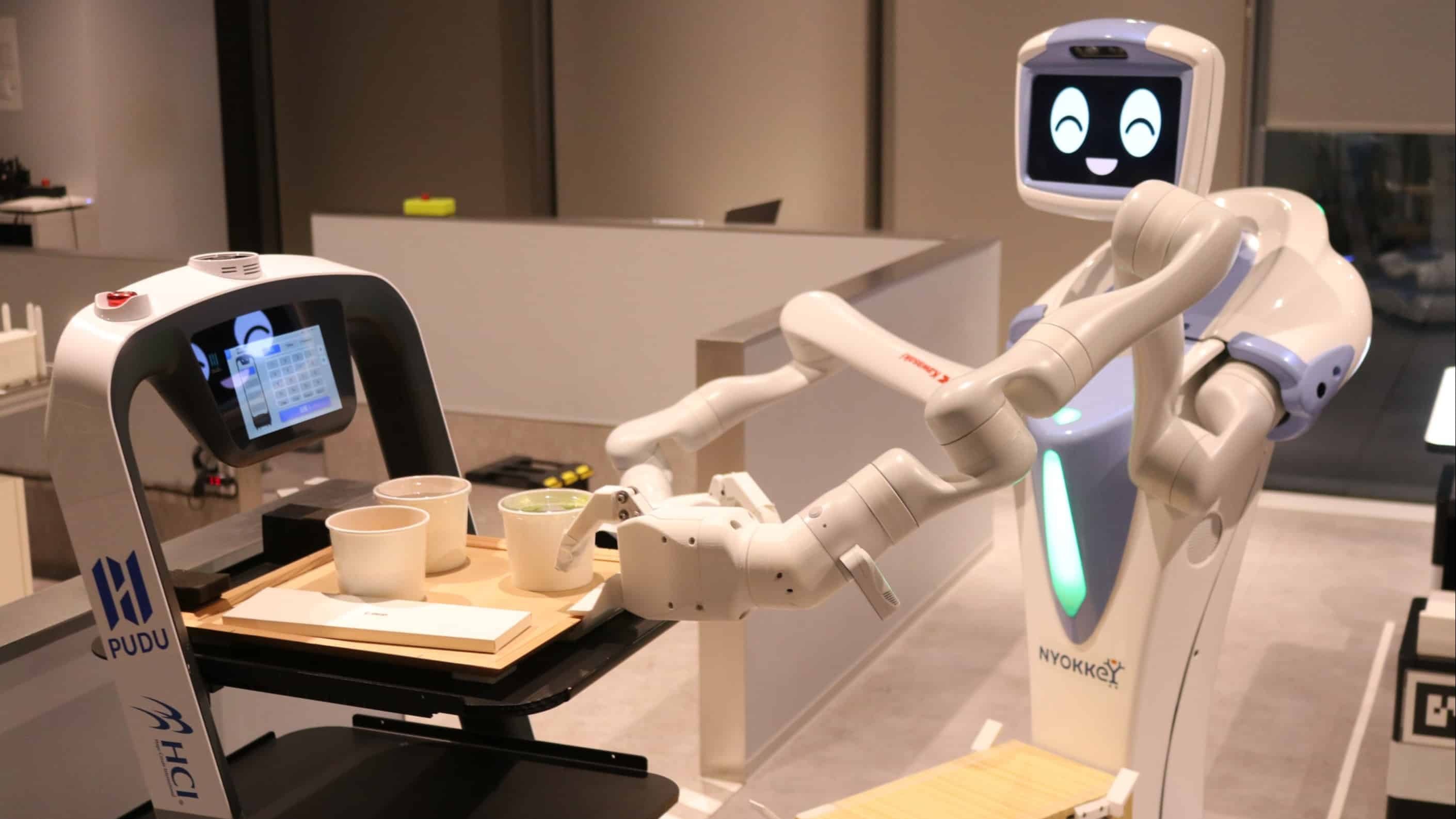
In Japan, over 90% of the population and nearly all medium to large businesses enjoy high-quality internet services. Mobile internet, particularly on smartphones, is the most widely used type of service. And an increase in speed is certainly favorable.
But Japan's commitment to technological advancement extends far beyond internet speed.
The nation is one of only a handful of leaders in robotics, with robots utilized in various sectors from restaurants to hospitals. Japan has also made significant strides in aerospace research, nuclear energy, electronics, and biomedical research, consistently ranking among the top countries for research and development.
Their innovations range from the invention of Braille blocks and sustainable new materials to advanced disaster-prevention technologies and high-precision manufacturing.
In essence, Japan isn't just building the future; they're living in it, constantly pushing the boundaries of what's possible and setting new benchmarks for technological excellence.
The recent internet speed record is just another testament to their unwavering dedication to innovation, promising a future where digital connectivity is truly instantaneous.














































































































































































































































































