In Indonesia, in the sprawling urban sprawl of greater Jakarta, where millions of people move every day between the dense neighborhoods of Tangerang Selatan and the central business districts, the Commuter Line has long been the quiet backbone of ordinary life.
Platforms fill with students in uniforms, office workers clutching phones, and families heading home under the late afternoon heat. Trains arrive with a familiar rumble, doors open and close, and the city keeps its rhythm.
Most days pass without notice, the delays measured in minutes rather than lives.
Yet every so often a single moment on a platform breaks that rhythm completely, and the news that follows travels faster than any train.
On the afternoon of Monday, 10 August 2026, around half past four local time, that moment arrived at Jurangmangu railway station.
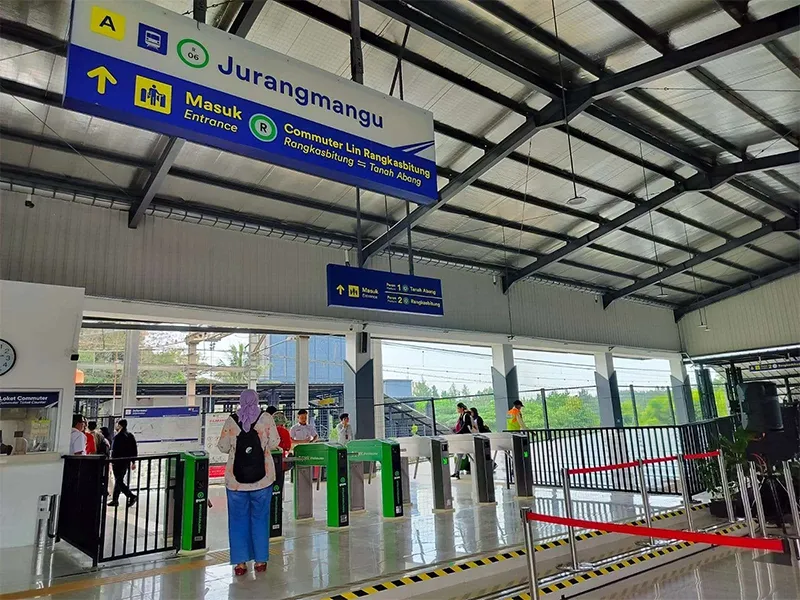
In the Ciputat area, south of Tangerang, a KRL train, the 1742D service running from Tanah Abang toward Parung Panjang, was entering the station on its usual path when an incident on the platform brought the line to a halt.
Witnesses later described a young woman standing near the edge.
Some said she had placed or thrown her bag down moments earlier. Security staff and passengers noticed her fall or move onto the tracks as the train approached.
The impact was immediate.
She was hit, and died on the spot.
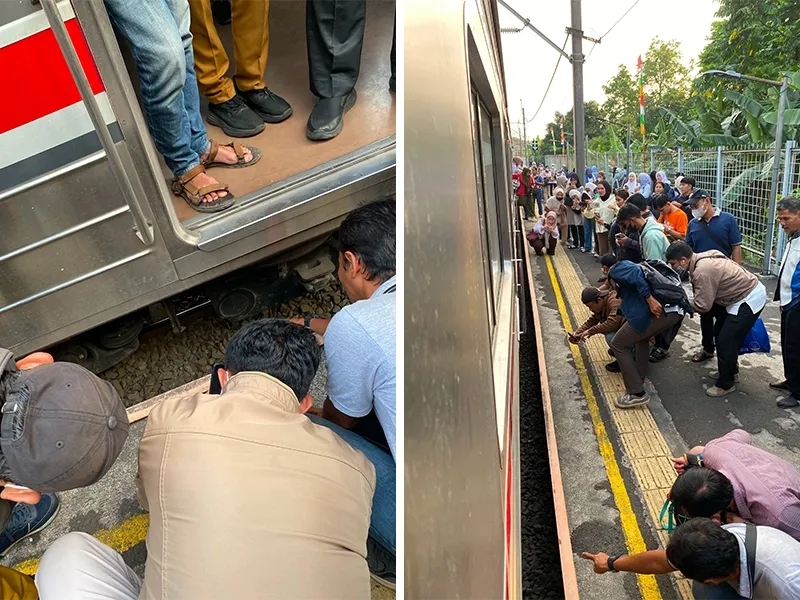
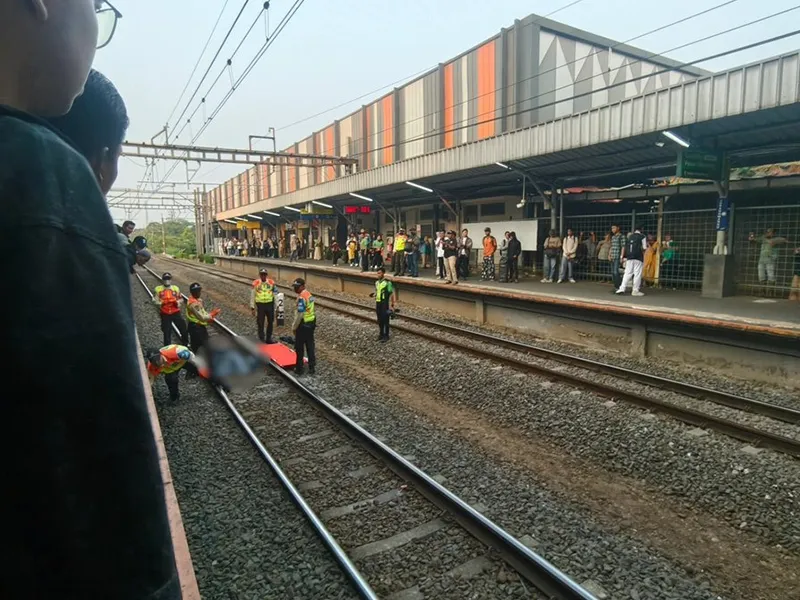
Emergency teams and station personnel responded quickly, securing the area and evacuating the body.
Operations on the Rangkasbitung corridor were delayed for roughly 20 to 26 minutes while the scene was cleared.
It happened so fast.
The incident occurred around 4:45 p.m., and by the evening of the same day, train services had resumed and most commuters on their journeys probably never knew what had happened on that stretch of track.
However, the story had already begun to spread.
Online, soon after the incident happened, the victim was identified as a female high school student in her first year of high school, class 10, reported age between 14 and 16, known in early reports by the initials AP or A.
She attended a private school in the Tangerang Selatan area.
Police from Polres Tangerang Selatan and Polsek Ciputat Timur confirmed the basic facts that same evening.
The body was taken to RSUD Tangerang Selatan for examination. By the following morning she had been buried after prayers at a local mosque. Investigators continue to examine the scene, collect witness statements, review any available camera footage, and speak with people who knew her.
Officials have repeatedly stated that they will not rush to a conclusion about whether the death was accidental or intentional.
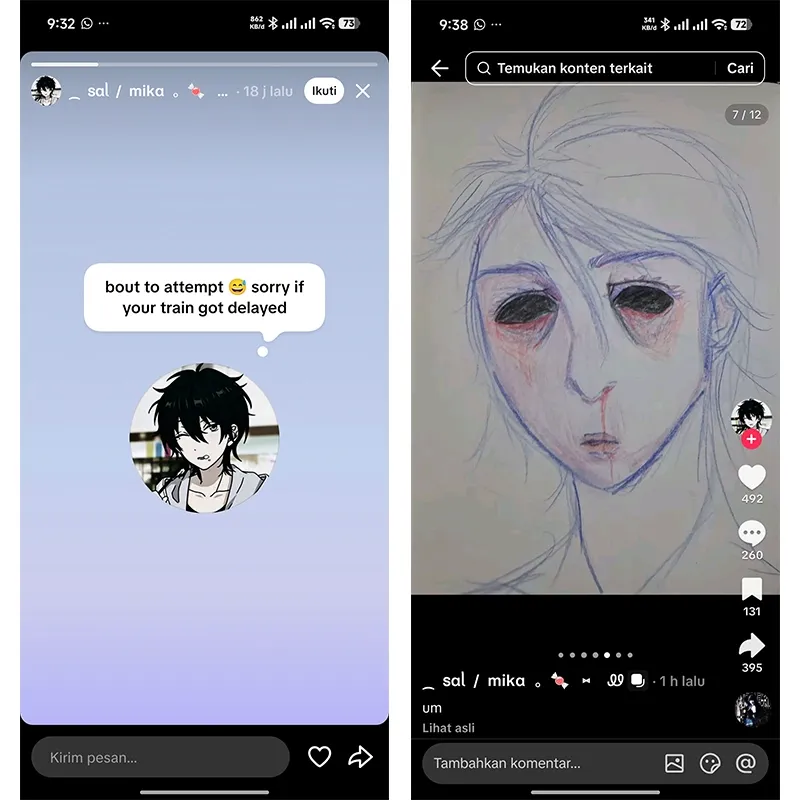
During the moment the case is under active investigation, just hours after the incident, screenshots from a TikTok account linked to the student began circulating widely.
The posts, made earlier that same afternoon, contained dark humor and expressions of deep despair.
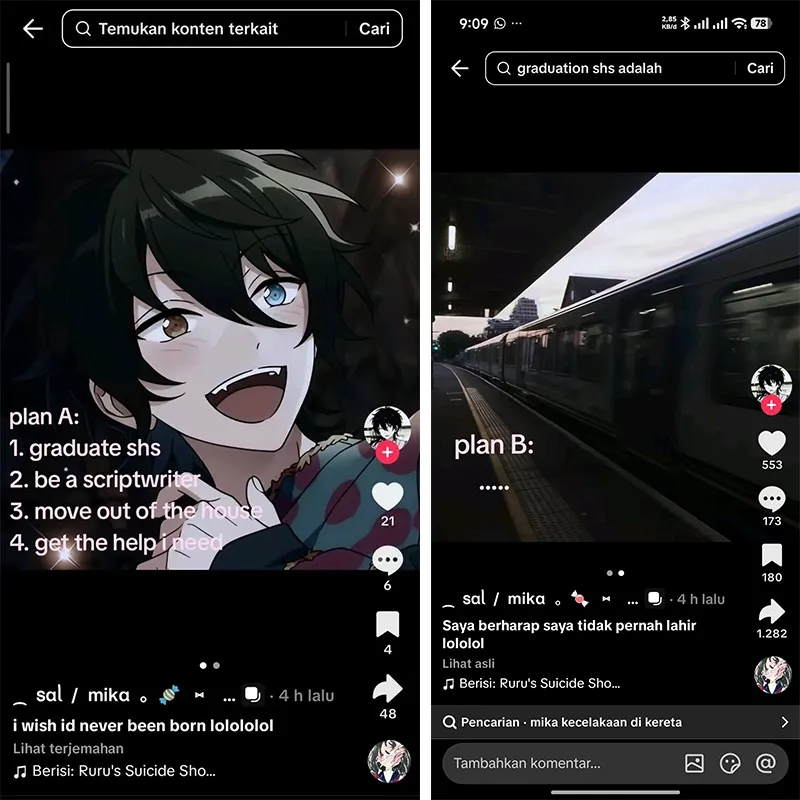
One message referenced an attempt and apologized in advance for any train delay. Another showed a train and labeled it as a secondary plan, paired with a caption wishing never to have been born.
Melancholy drawings accompanied some of the content.
These images moved quickly across social platforms, especially X and Instagram, and fueled intense public discussion.
Many users treated the posts as evidence of long standing emotional struggle. Others urged caution, noting that police had not yet determined the full circumstances.
School representatives spoke the next day and firmly rejected claims that the student had been bullied.
Staff described her as warm, well mannered, and quick to adapt.
She had recently finished the orientation period for new students and had even written a handwritten note of thanks and prayer to one of her teachers.
Family members, according to reports, said she had grown up in a caring household.
These statements stood in contrast to the wave of online speculation that mixed genuine concern with unverified theories about family pressure, academic stress, or social isolation.
Mental health advocates used the moment to call for better support systems for Indonesian teenagers, while some posts simply offered condolences and asked people to check on friends who seemed withdrawn.
Public reaction on the internet was immediate and layered.
News accounts published confirmed timelines and official quotes, whereas transport-focused accounts shared the KAI Commuter statement apologizing for the disruption.
On X the conversation mixed grief, frustration, and debate.
Some say that she had jumped to the track, some conclude that she was actually pushed off the platform, some other say she just fell.
Regardless, users focused on platform safety and the need for better barriers or monitoring. Others turned the discussion toward the pressures faced by young people navigating school, social media, and the expectations of urban family life.
A smaller number of posts circulated the TikTok screenshots without context, prompting calls for restraint.
During the time the story remained active, with updates on the burial and the ongoing police work keeping it in local feeds, the outcome is straightforward and final: a teen is gone. A family is mourning. A school has lost one of its newest members. Investigators continue their work without a public conclusion on motive.
The trains at Jurangmangu run again, carrying the same mix of students and workers, yet the brief interruption on that Monday afternoon has left a longer echo in conversations about commuting safety, youth mental health, the weight of online performance, and the quiet vulnerabilities that can exist even in ordinary daily routines.
The internet is just there, watching, listening, and amplifying the news, turning a single platform moment into a shared public reckoning that stretches far beyond the tracks at Jurangmangu.
Screenshots travel faster than official statements, speculation fills the gaps left by ongoing investigations, and strangers offer both genuine concern and careless theories in the same scroll.
What began as a disruption measured in minutes becomes a prolonged conversation about the invisible weights young people carry, the speed at which private despair can surface in public feeds, and the uneasy role platforms play in broadcasting both the warning signs and the aftermath.
In the end the trains resume their schedules, the station returns to its ordinary rush, and the family is left with a permanent absence, while the digital chorus continues its restless work of noticing, repeating, and never quite letting the story settle into silence.
It's later revealed the the child's name is Aisyawalya Putri.






















































































































































































































































































