Parents' genetics contribute to their child's traits.
Upon the fertilization of the mother's egg by the father's sperm, the process of conception involves the inheritance of genetic information.
Depending on the dominant and the recessive traits, a person's inherited alleles make him/her similar to their parents in one way or another.
This happens because in essence, the genetic information passed on by parents determines various characteristics of their child, including physical traits, predispositions to certain health conditions, and more.
The is why, when the face of Japanese beauty is represented by by a Ukrainian-born model, the internet in Japan becomes the epicenter of a heated debate.
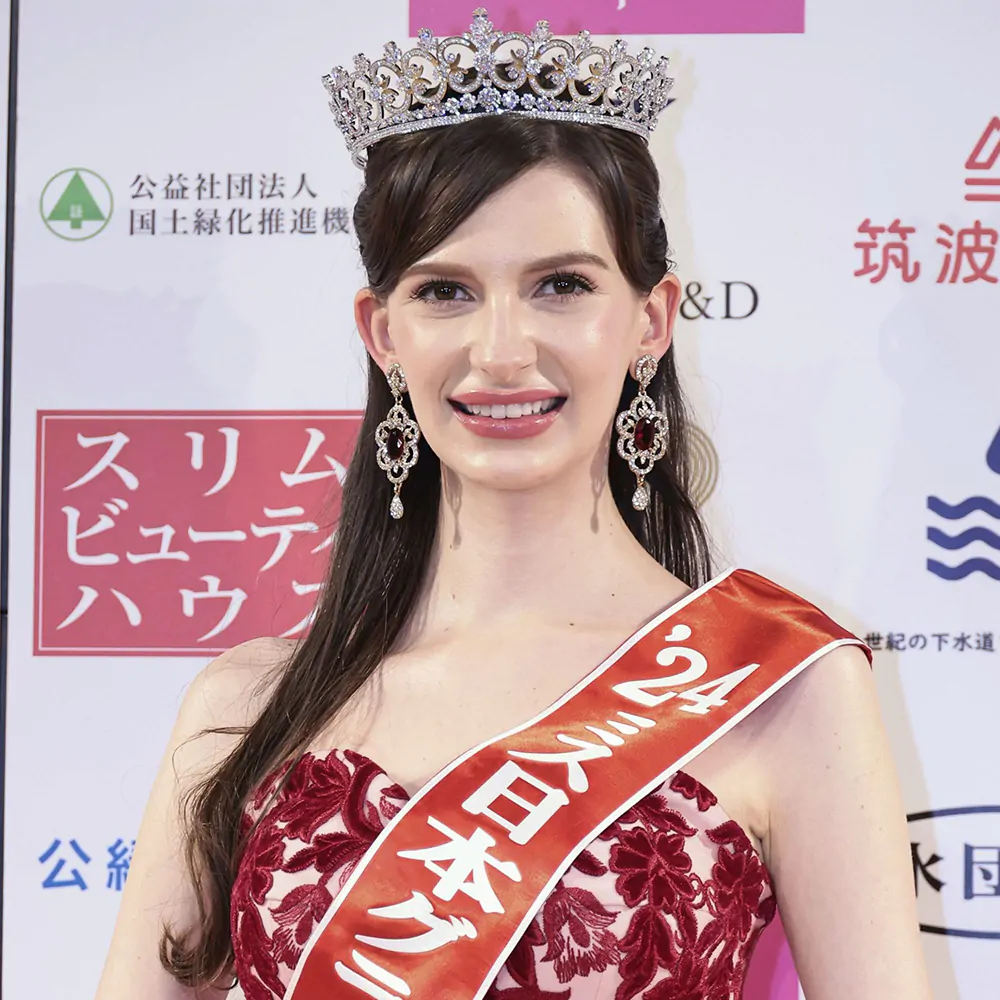
Her win sparked debates over "Japaneseness" and the shifting demographics of Japan.
This happened after pageant judges named 26-year-old Karolina Shiino as Miss Nippon.
The annual Miss Nippon contest, which takes its title from the country’s Japanese name, awards the tiara to the contestant representing the "Foremost Beauty of All Japanese Women," according to the organizers’ website.
In other words, the decision is to pick a winner from Japan.
Karolina is from Japan.
It's her heritage that raised question.
Karolina is naturalized citizen, who gained citizenship after living in Nagoya since she was 5 years old.
The pageant also speaks fluent Japanese.
The pageant's judges said she won the title because she is a hard-working and humble Japanese woman with a strong sense of consideration for others.
Following Karolina being crowned Miss Nippon, the internet in the country began discussing about the beauty standards of Japanese women, and more importantly, what it means to be a Japanese.
And then came the barrage of comments and criticisms.
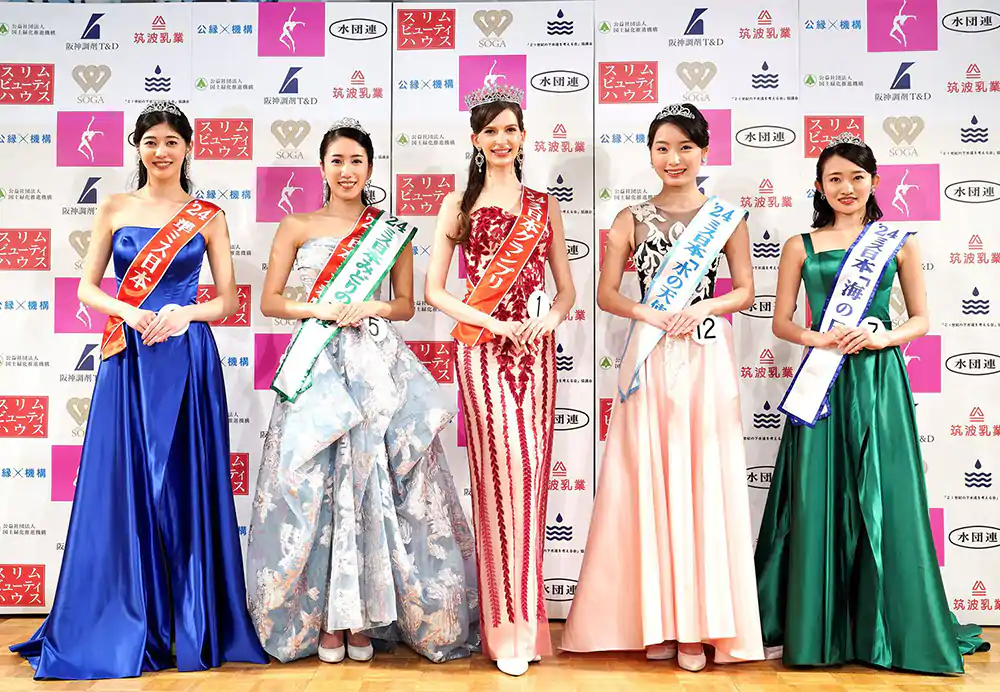
Upon hearing that the pageant crowned its first-ever naturalized Japanese citizen, some Japanese accept her victory, with one saying that there is nothing wrong with her being Miss Nippon.
Some compared her to various overseas-born athletes who have represented Japan in international sports competitions.
"They are Japanese, and so is Karolina."
Others commended her love for Japan, that is surpassed even some Japanese people towards their own country.
"Many Japanese people do not value Japan, so why is there a problem that she has cherished Japan, where she has lived since she was a child, so much that she became a naturalized Japanese citizen, took on the challenge of becoming Miss Nippon and was crowned Miss Nippon?" asked one commenter at X.
"I thought her Instagram posts were polite and well-written, and she has not only beauty, but also ‘Japanese spirit of harmony.’ This is Miss Japan."
But others questioned whether someone without Japanese ancestry could represent the country’s beauty ideals.
Literally a foreigner, some people couldn't accept the fact that she is Miss Japan, or even considered her a Japanese, despite she is legally a Japanese.
"Racial discrimination is absolutely unacceptable," wrote historian Hiroe Yamashita on X, "but if the Miss Nippon contest is based on the concept of beauty, I personally wish that it would be based on standards of Japanese beauty. With Karolina Shiino’s appearance, an (ethnically) Japanese girl has no chance of winning under the modern values of beauty."
"If she was half [Japanese], sure no problem. But she's ethnically 0% Japanese and wasn't even born in Japan," an X user said.
"This person who was chosen as Miss Japan is not even a mix of Japanese but 100% pure Ukrainian. Understand she is beautiful, but this is 'Miss Japan'. Where is the Japaneseness?" said another.
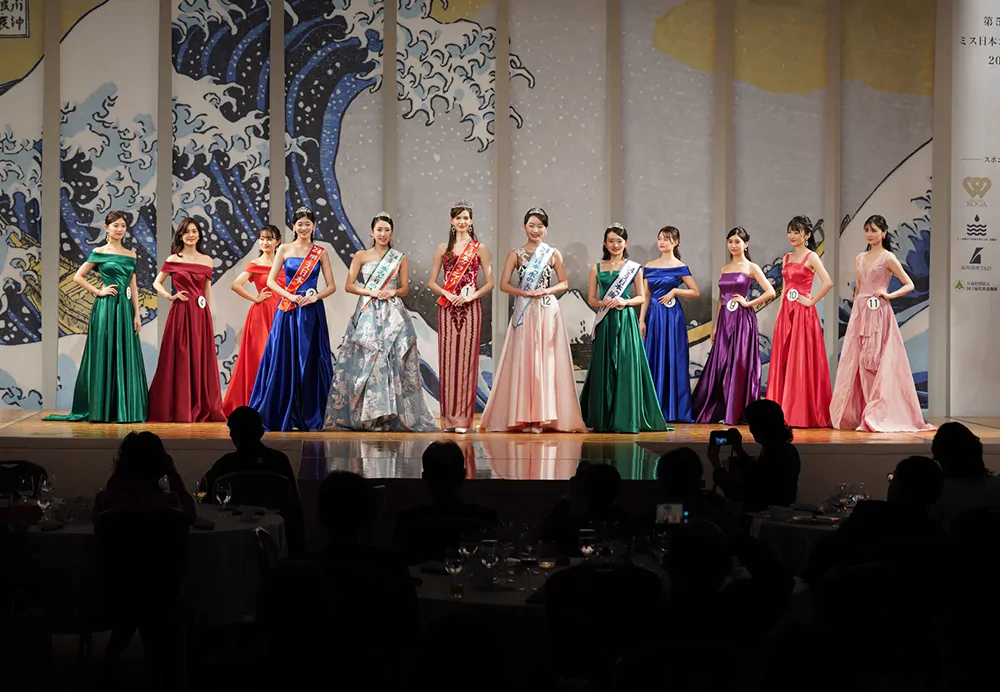
Born in Ternopil, Ukraine in 1997 to Ukrainian parents, the blood flowing in her veins makes her genetically not an Asian at all.
While she does have a brown eye color, like most Japanese, Karolina has a taller stature if compared to the general Japan populations.
And because she is Caucasian, she also has a much fairer, paler white skin color, a rather convex nose bridge, an angular-shaped eyes, and a more well-defined cheekbones. These traits aren't often found on Japanese descents, or even the majority of East Asian population, who tend to have a darker, or more yellowish undertones, concave nose bridges, almond-shaped eyes, and more rounded but full cheeks.
Karolina is also a brunette, which is unlike most Japanese, who tend to have a straight black hair.
In short, Karolina has noticeable physical differences.
Karolina is distinguishable, simply because her Slavic features make her look "too European."
But having living in Japan for so many years, and having spent almost all her life in the country, Karolina with her Japanese citizenship wishes to be recognized as Japanese as well.
"I wanted to be recognized as a Japanese person," she once said in an interview in Japan's capital, Tokyo.
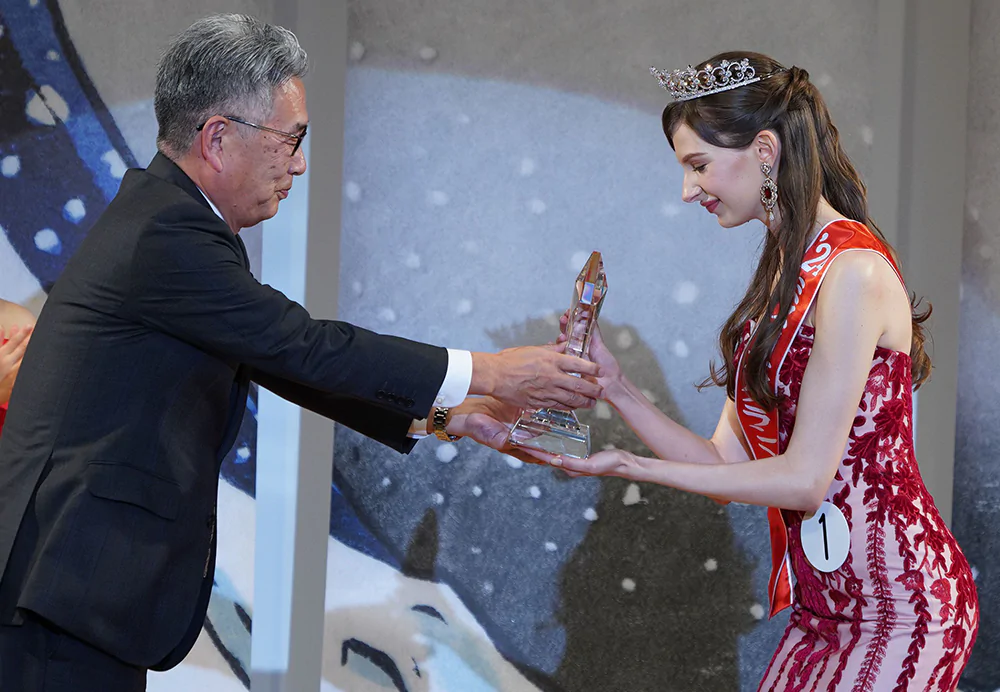
Being criticized for her appearance is something she had endured pretty much all her life in Japan, and because of that, she grew up with enough experience.
"I'm absolutely Japanese," the Ukrainian-born model responded.
"I hope to contribute to building a society that respects diversity and is not judgmental about how people look."
Genetically a foreigner, Karolina admits that she has faced difficulties being accepted as a local because of her appearance.
But following her being crowned Miss Nippon, she hopes that her win would change the minds about 'who can be considered Japanese'.
"After all, we live in an era of diversity — where diversity is needed," she said.
"There are many people like me who are worried about the gap between their appearance and (who they are)." She added:
"I kept being told that I’m not Japanese, but I am absolutely Japanese, so I entered Miss Japan genuinely believing in myself. I was really happy to be recognized like this."
On the beauty competition's website, Karolina wrote that although she looks foreign, she is Japanese in spirit.

Japan has a long history of cultural homogeneity, with the majority of the population being of Japanese ethnicity.
And this can be credited to eugenics in Japan, and because of that, the terms pure blood (純血, junketsu) and mixed blood (混血, konketsu) exist, and that they have been around for centuries.
With traditional immigration policies, limited historical experience with large-scale immigration compared to some Western countries, economic self-sufficiency, Japan is known for an ethnically homogenous country.
And with strict employment practices and social integration concerns, the result is that most Japanese have ancestors that are also Japanese.
In more recent years, Japan has enforced more immigration.
But still, the country struggles to properly balance its conservative views on immigration with the need for new and younger workers.
Karolina was granted citizenship by the Japanese government in 2022, not only because she grew up in Japan, but also because her mother married a Japanese man.
After Karolina was granted citizenship, her mother and her niece joined her in the spring of 2022, where they flew to Japan as a Ukrainian refugee following the Russian invasion of Ukraine.
It's worth noting that Karolina's win comes almost 10 years after Ariana Miyamoto became the first biracial contestant to be crowned Miss Universe Japan, one of several other national-level pageant titles.
Ariana went on to represent Japan at the 2015 Miss Universe contest.
It's also worth noting that Miss Nippon is not part of the international beauty pageant circuit and is unaffiliated with global competitions like Miss World and Miss Universe.






















































































































































































































































































