Nepal is a small, landlocked nation tucked between two giants: India to the south and China to the north. Nepal is a country of breathtaking beauty and striking contrasts.
Even though it covers only about 147,516 square kilometers, Nepal is full of diversity. From the hot, fertile plains of the Terai in the south to the icy peaks of the Himalayas in the north, its landscape has made it a meeting point of cultures, trade, and politics.
But behind the stunning scenery is a nation that has faced a long and troubled political history.
For centuries Nepal was a monarchy. Then came a ten-year Maoist insurgency, from 1996 to 2006, which killed thousands and eventually brought an end to royal rule. In 2008, the monarchy was abolished, and Nepal became a federal democratic republic. But democracy has never been stable here. Corruption, political infighting, and constant changes of prime ministers have left the country in turmoil.
And within its struggling democracy, inequality runs deep.
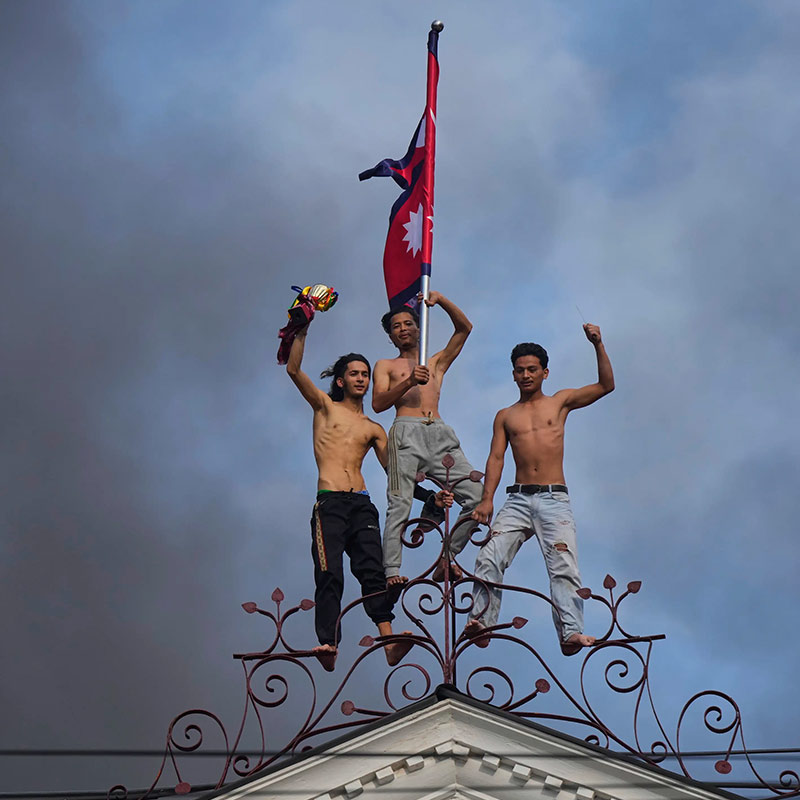
This instability has drained people’s trust in their leaders and institutions. Ordinary citizens feel tired, cheated, and left behind.
Now that patience has finally run out. Nepal, in every sense, is on fire.
In a country where agriculture still supports most people, and money sent back from migrant workers keeps the economy afloat, the Everest, the highest mountain in the world, is also a huge source of income. All of which, bring colorful festivals and joy to the streets. Yet beneath this energy lies hardship and frustration.
For the young majority, especially Gen Z, the promise of democracy has given little hope, only disappointment.
And now, this restless generation has decided they will not stay silent any longer.
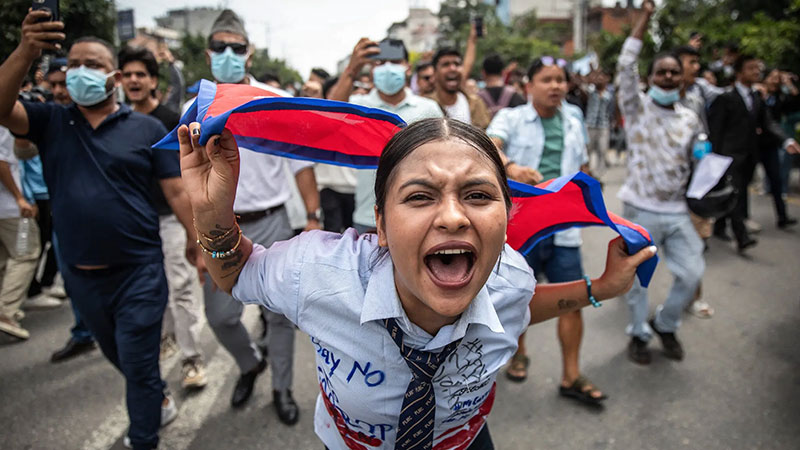
What triggered the bomb to blow up, was a series of social media posts highlighting "Nepo Baby" flaunting their parents' wealth. In the many posts that have since gone viral, depict the sons and daughters of many Nepalese politicians living in luxury, enjoying expensive food, eating at fancy restaurants, wearing branded clothes and bags, expensive watches, and more.
Videos of these youngsters with expensive cars, having foreign education, enjoying luxury vacations, and more flooded feeds, juxtaposed with the daily hardships of ordinary Nepalese.
The posts were focused on showing how contrast these privileged people live, with those of the less fortunate civilians who make the most of Nepalese's population.
For citizens who work multiple jobs, work day and night, or for families sending their loved ones abroad just to repay debts, the contrast was too painful to ignore.
This triggered a series of protest.
The anger directed at these Nepo Babies and "Nepo Kids" was not envy, but outrage at what they represented: the inheritance of corruption and impunity across generations.
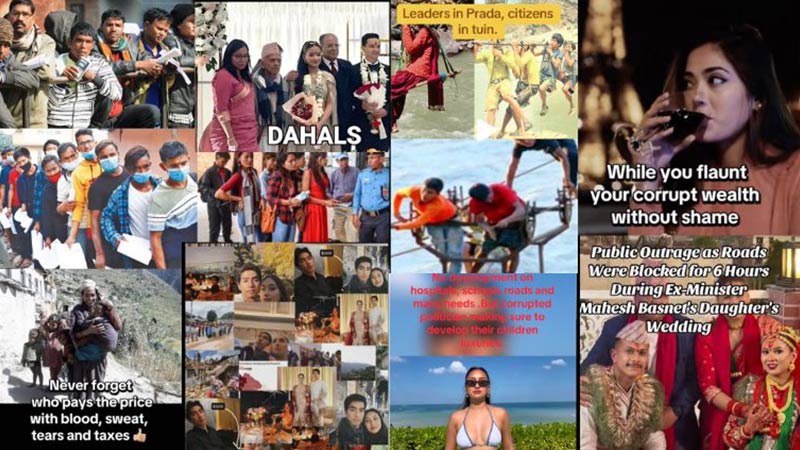
The government reacted to this uproar, by creating a simple request.
After forcing social media companies to register in Nepal, the government also blocked access to Facebook, Instagram, YouTube, WhatsApp, and more. The goal was to contain the flow of communication, in order to stop misinformation, malinformation and disinformation to grew.
This sparked something far greater than they expected.
These were not just apps for fun. These apps are part of the internet itself, which means that they are lifelines.
Without then, students lost access to classes, small businesses lost their customers, and migrant workers were cut off from their families.
For a people already suffocated by corruption and broken promises, this silencing became the last straw.
The reaction was fast, powerful, and impossible to stop.
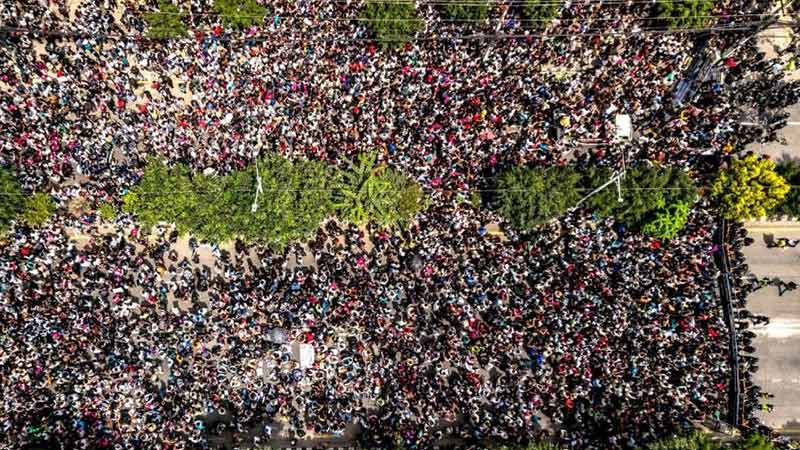
Kathmandu and other cities erupted in protest, led primarily by the youth.
Gen Z, a generation raised with global awareness and armed with smartphones, poured into the streets with anger and determination. They carried placards, shouted chants, and demanded accountability from leaders they view as corrupt and out of touch.
The state’s response was brutal.
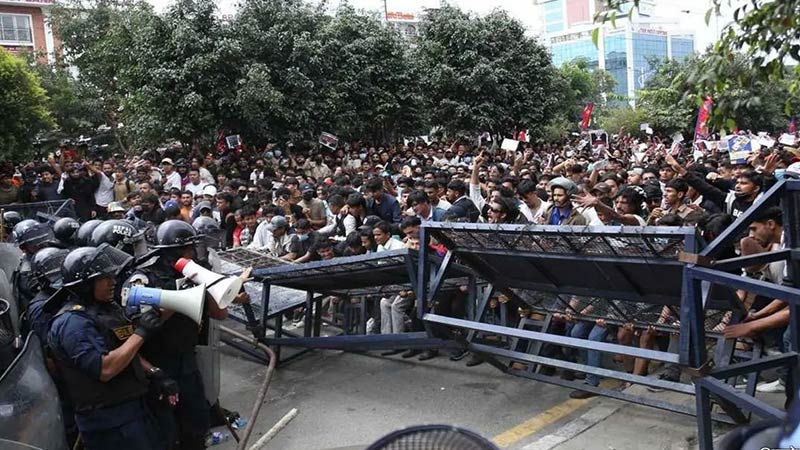
Water cannons, tear gas, batons, and even live rounds were unleashed against crowds, leaving scores dead and hundreds injured. Instead of calming the situation, every drop of blood spilled only deepened the fury. Young people, already disillusioned, now saw themselves as warriors in a fight for their future.
Chaos throughout the cities, where protesters express the anger they can no longer contain.
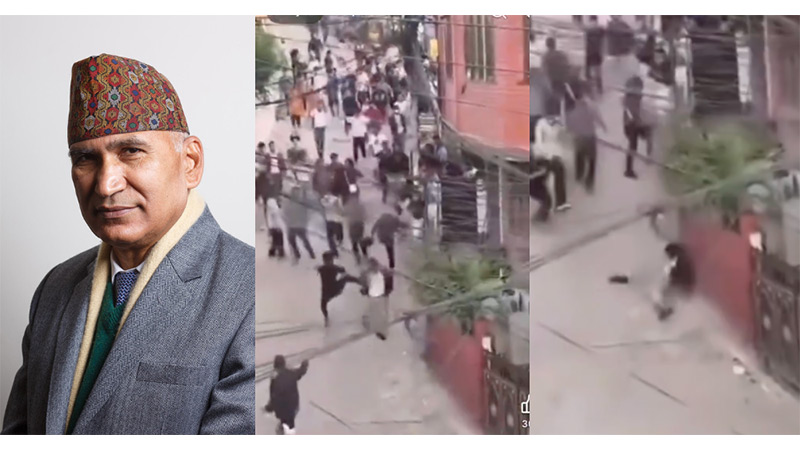
Things have escalated to new levels, when the parliament building was set on fire, and when Bishnu Prasad Paudel, Finance Minister (also Deputy PM), was attacked, stripped of some clothing, chased, kicked, and beaten by protesters during the upheaval.
One of the most most striking, came when Finance Minister Bishnu Prasad Paudel, also serving as Deputy Prime Minister, was confronted by protesters in the capital.
He was dragged, partially stripped of his clothing, beaten, and chased through the streets. Videos of him being kicked and humiliated spread rapidly, becoming a symbol of just how much anger had overtaken the country.
During the Nepal protests, security forces, including the army, evacuated politicians from affected areas to Tribhuvan International Airport (TIA) while trying to contain widespread arson and destruction. Several ministers and MPs resigned, and political party members abandoned their posts amid mounting pressure.
Protesters even attempted to block leaders from fleeing at the airport, which was temporarily closed, leaving hundreds of travelers stranded.
Buildings across Kathmandu and other districts were set on fire, including media houses, hotels, government offices, and the Ministry of Health building. Residences of several high-profile political figures, like former prime ministers, a former president, and local politicians, were attacked, with some occupants injured.
In some cases, deaths occurred.
Prisons in multiple districts were also breached, allowing hundreds of inmates to escape, including the high-profile release of Rabi Lamichhane from Nakhu Jail.
Other government facilities, police stations, and infrastructure buildings were vandalized or burned. Overall, the protests resulted in widespread destruction, chaos, and a temporary collapse of law and order in affected areas.
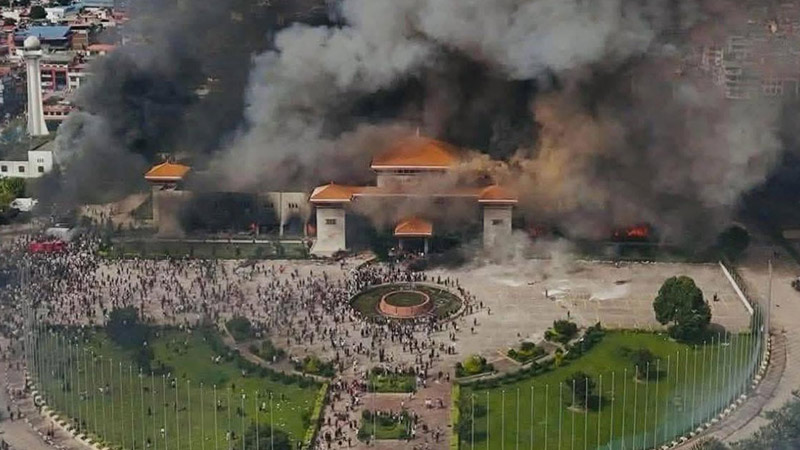
And not just that, because on 9 September 2025, anti-government demonstrators also stormed the convention center.
The building was vandalized and subsequently set on fire. The protesters also stormed the nearby Singha Durbar government complex and razed the main building, which houses the offices of the prime minister and other government ministers.
Many of them cheering, self-proclaiming themselves as liberators and heroes.
The protests have become more than a reaction to social media restrictions.
They are now a fight over dignity, fairness, and truth. The censorship of platforms exposed how dependent the people are on digital spaces, not only for connection but for resistance. Ironically, in trying to silence their voices, the government only amplified them.
The question that hangs heavy in the air is what comes next. Will this wave of anger translate into real change, into accountability and reform? Or will the entrenched powers retreat behind their walls, wait for the fire to cool, and continue business as usual?
What is clear is that the Nepali people, especially its youth, have crossed a threshold.
They will not be silenced again so easily. They have tasted the power of solidarity, they have exposed the privileges of the elite, and they have shown that even the most powerful can be brought down to the streets.
Nepal is burning, but in that fire there is both destruction and possibility.
Only time can tell whether this flame would consume the fragile trust left between people and their state, or whether they clear the way for something new, something just, something long overdue.
One notable mention, is a young man who goes by the name Ora.
Identified as the head boy of his school, Ora can be seen standing tall on a stage in his school uniform, delivering a passionate but powerful speech at a school event.
Ora faced a packed audience and spoke with a voice far beyond his years. He began by sharing his vision for the nation: Today, I stand here with a dream of building a new Nepal. The fire of hope and passion burns within me…"
His fiery words, his commanding presence, and his sheer charisma struck many online viewers as remarkable, and controversial. Some even compared his delivery and authority to that of Adolf Hitler, the infamous German dictator.
As protests led by Gen Z erupted across Nepal, images allegedly showed Ora among the crowds, marching shoulder to shoulder with fellow citizens.
His original video, along with other recordings of his speeches, has resurfaced and spread widely, giving him an unexpected role as a symbolic voice of his generation.
Read: A Young Online Driver Killed And Chaos In Jakarta: Lawmakers’ Homes Looted, The Internet’s Amused






















































































































































































































































































