Traditionally, computers work using "bits," which are either 0 or 1. While modern computers can calculate equations at astonishing speeds, there are limitations to the technology that are imposed by those bits.
To break the barrier, researchers have tried developing quantum computers.
These computers work in "qubits". Unlike bits that can only have only one state at a time, qubits can have a superposition of both states at the same time. What this means, it could create exponentially more paths than classical computers, making researchers to believe that quantum computers could operate millions of times faster than even the most powerful traditional bit-powered supercomputers.
Qubits' property is so fundamental that in theory, it makes quantum computers far superior than traditional computers, no matter how capable they are.
And this time, quantum computer software firm Cambridge Quantum said that it has launched a platform that can generate super secure cryptographic keys and sell them as a commercial product.
The UK-based startup that has become a wholly-owned subsidiary of Quantinuum, a quantum computer hardware and software company in which Honeywell International Inc has a 54% stake.
With the advancement, the company is opening the doors to what it sees as a $1 trillion potential long-term market for quantum services.

While random number generators are supposed to generate "random" numbers, they tend to follow a certain pattern. And that pattern can be predicted and calculated with powerful computers.
And if the computer being used to crack the algorithm is a quantum computer, the time it takes to crack it can be brief.
This is because the pattern is generated by an algorithm. If ever an attacker knows how the algorithm works, the person can reverse-engineer it to predict what number will come next, making the random number generator useless.
Because of this, no totally-random number exists.
To tackle this issue, Quantinuum created a way to use a quantum computer to generate that random number. And that number is meant to create encryption keys.
Because the number is generated by a quantum computer, that number should be way more "random."
Quantinuum said that its system can create uniquely random that cannot be predicted, at least by normal means. According to its head of cybersecurity Duncan Jones, the system can generate a more random encryption key than classical computers which makes them more secure and less vulnerable to cyber attacks.
And according to Tony Uttley, the company’s president, this is a milestone in using cutting-edge computing for a practical business problem.
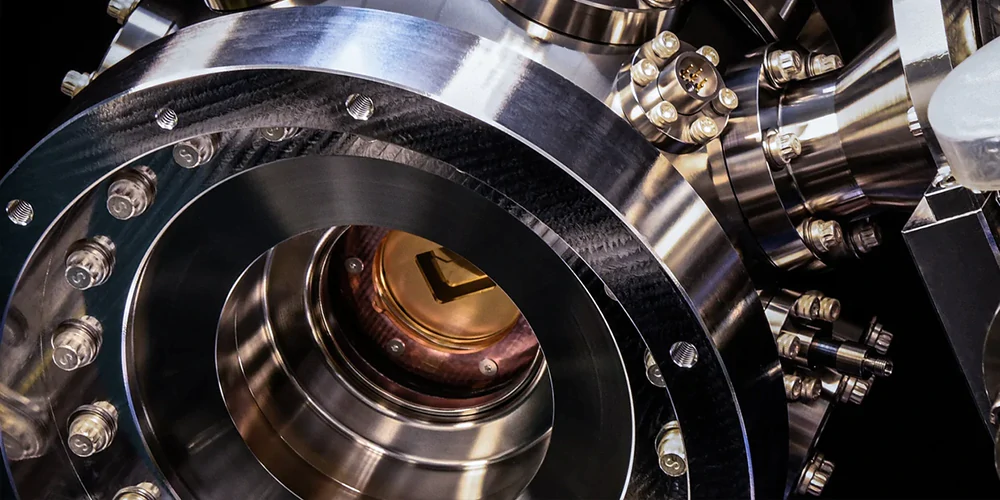
The technology uses Quantinuum’s System H1 quantum computer, originally developed by Honeywell, to trap ions to create its qubits.
The system only has 10 qubits. But because it uses a method to trap generated ions inside a chamber, the technology can make the ions to keep their quantum state for far longer. This way, they can perform some calculations more accurately than quantum computers from rivals, such as from IBM, Google and some others, that have more qubits but use superconducting materials to form their qubits.
At this time, Quantinuum is not the only company that uses the principles from quantum physics to generate random numbers for encryption.
Others that are also in the business, include Quintessence Labs, ID Quantique, and Quside Technologies.
But Quantinuum is considered the first because it is the first that commercializes a general purpose quantum computer to generate its random numbers.
Ilyas Khan, CEO of Quantinuum and founder of Cambridge Quantum, said that the key generator was tested on Oxford Quantum's and IBM's quantum computers.
Cambridge Quantum said it would sell this "Quantum Origin" service to financial services firms and cybersecurity firms, before expanding the technology to other high priority sectors, such as telecommunications, energy, manufacturing, defense and government.
"We have been working for a number of years now on a method to efficiently and effectively use the unique features of quantum computers in order to provide our customers with a defense against adversaries and criminals now and in the future once quantum computers are prevalent," Ilyas Khan.
"Quantum Origin gives us the ability to be safe from the most sophisticated and powerful threats today as well threats from quantum computers in the future."
The idea of creating encryption keys using quantum computer is that, researchers fear the time when quantum computers are capable enough, and generally available for the public to break digital encryptions.
Before people can properly use quantum computers to decrypt encryption, Quantinuum wants to use quantum computers to leap ahead by creating quantum-generated encryption.
These quantum-generated encryptions can be used to enhance other encryption services, such as RSA and AES, as well as in future cryptographic schemes.
Quantinuum uses the technology as a cloud-based method to generate the keys before encrypting them with a transport key and relaying them back to a customer.
In the past, other than using quantum computers, researchers have tried using natural phenomena from classic physics, such as fluid dynamics, that are difficult to predict to create random numbers.
But these processes aren’t actually random either. An attacker who knows which natural phenomenon is being used and understands some of the underlying patterns can predict the way to crack the encryption.
Read: The First Time Researchers Found Something That Only Quantum Computers Can Solve




















































































































































































































































































