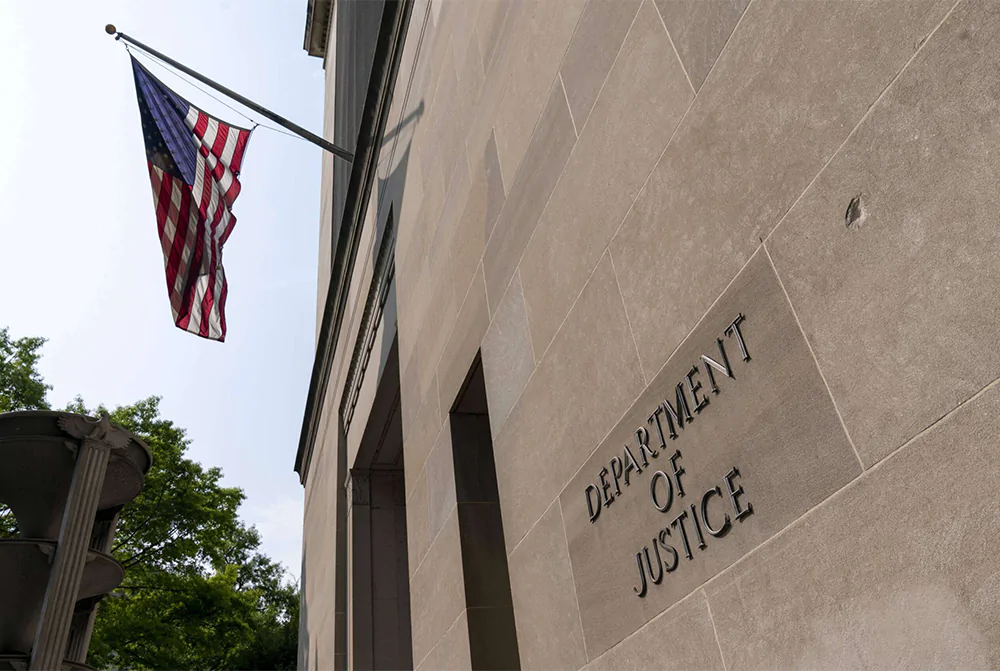
Google is embroiled in an antitrust case, where the company began squaring up against the U.S. Department of Justice.
It's argued that Google is the primary search engine amongst the public, in part, because its parent company Alphabet is paying big tech companies like Apple, Samsung, and Mozilla to place the product as the main and default search engine in their devices and browsers.
These payouts, the U.S. Department of Justice argues, are anticompetitive as they discourage other tech companies from developing their own search engine in a marketplace where a multibillion-dollar cash reserve is necessary to play the game.
As the tech giant Alphabet faces a massive antitrust lawsuit, it's the U.S. versus Google.
Soon after another, revelations surround the case have presented how the company operates, and how it's using its massive resources to do what it pleases. And this time, it's its case with Samsung.
Samsung is already a conglomerate company, powerful and feared.
The company is one of the biggest companies in South Korea in terms of revenue, net profit, and total assets. For more than several years, Samsung Electronics, has seen revenue that goes upward, well beyond $200 billion, per year.
Samsung, which ranks amongst the world's largest publicly traded companies, its Samsung Electronics is also the largest South Korean company in terms of revenue, net profit, total assets, and market value.
And Google sees this as an opportunity.
Regarding its mobile phone business, instead of competing with it, or trying to rival it, Google is partnering with it.
And that partnership is worth $8 billion, for four years.
Google that spends that much on a the partnership, earns Samsung's loyalty.
This hefty sum aimed to secure Google’s services as the default option on Samsung’s Galaxy smartphones. Consequently, Google Search, Google Assistant, and Play Store took precedence over Samsung’s native options such as the Bixby voice assistant and Galaxy Store.
In an antitrust case, it's revealed that Google’s strategic moves to solidify its dominance in the Android smartphone realm. Not only that, because the lucrative deal also allows Google to effectively deter the integration of third-party services.
And the multi-billion dollar partnership uncovers how far Google would do to remain the powerhouse in the mobile world.
James Kolotouros, Google’s vice president of partnerships, emphasized the importance of this alliance during his testimony in the antitrust case.
Kolotouros emphasized Samsung’s crucial role, revealing that Samsung’s contribution accounted for over half of Google’s Play Store revenue.
The antitrust case also revealed Google’s commitment aims to ensuring its services remained a priority.
For example, it's said that Google offered incentives to smartphone brands to prioritize its services on their devices’ home screens.
Previously, it was found that Google transfers 36% of the revenue generated by searches made on Safari on the iPhone, iPad, and Mac to Apple. This means that Apple receives about $20 billion dollars annually from this deal.
This allegation was first revealed in a testimony presented by Epic Games Inc..
Epic Games, the creator of the popular video game Fortnite, initiated the lawsuit against Google back in 2020, asserting that Google’s practices were anticompetitive. The gaming company's goal is to show the world how the executives at Google discouraged the presence of third-party app stores on Samsung devices to safeguard Google Play’s profits.
Epic contends that Google has established an illegal monopoly on Android apps, aiming to boost profits through commissions.
Google, however, argues that it is striving to compete with Apple and its app store, countering Epic’s accusations.
During the trial, Google’s attorney asserted that the company cannot be considered a monopoly.
It's worth noting that Google initially offered to pay Samsung $200 million over four years, so Samsung’s Galaxy app store would become available within the Google Play Store rather than preinstalled on the device. However, this idea was later abandoned, and Google signed a new deal with Samsung that totals $8 billion over four years.






















































































































































































































































































