Wikipedia has evolved dramatically over its 25 years, transforming from a bold, experimental crowdsourced encyclopedia launched on January 15, 2001, into the internet's most trusted, volunteer-driven knowledge hub.
Celebrating its 25th birthday on January 15, 2026, the online crowd-sourced encyclopedia boats 65 million articles in over 300 languages, viewed nearly 15 billion times monthly by more than 1.5 billion devices, and remains the only nonprofit in the global top-10 websites.
Early on, Wikipedia excelled in niche areas like pop culture and tech, but it matured into a reliable first-stop reference for vast topics, from science and history to detailed guides on everything from microorganisms in space to the anatomy of the human body. Its credibility grew through rigorous community policies, citations, edit histories, and transparent discussions, often forged in debates over controversial subjects like evolution, climate change, and health. Dedicated editors and many other volunteers have contributed for decades, finding satisfaction in sharing knowledge that reaches millions.
In other words, Wikipedia is far beyond a school essay, or a thesis. The encylopedia is literally a collective of all human knowledge, updated to the most recent.
Then comes the downside of technology.
Wikipedia has made a lot of local communities thrive, with many enthusiasts organize events to celebrate and recruit.
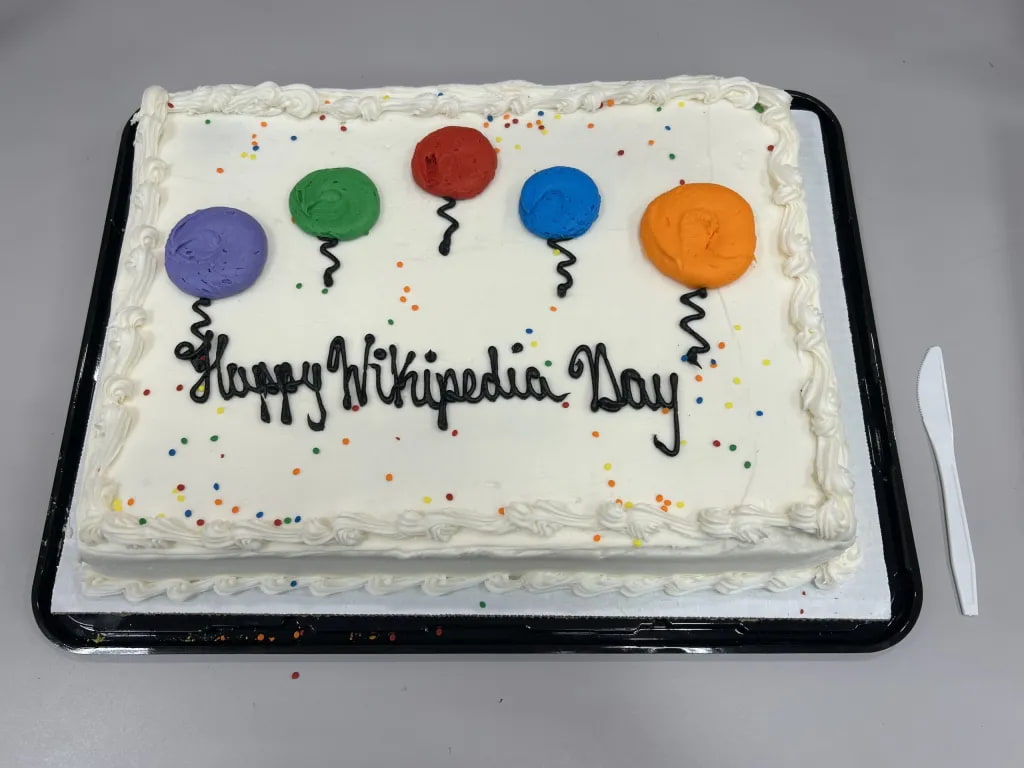
For instance, the Wikipedia Day Chicago meetup at the Hairpin Arts Center brought together editors, photographers, and newcomers to mark the 25th anniversary, complete with cake and plans for ongoing bimonthly events. These gatherings highlight Wikipedia's volunteer spirit, where anyone can contribute writing, photos (using tools like Wiki Shoot Me for missing images), or fact-checking, often on personal passions like mythology or local parks.
But these people are facing a threat, which comes from the fact that the encyclopedia is no longer unique to just human writers.
With a lot of people, whatever their intentions are, use AI bots to generate content on Wikipedia, the encyclopedia is also facing an existential challenge: declining human traffic.
Wikipedia is a free encyclopedia written and maintained by a community of nearly 260,000 volunteers.
It is the largest and most-read reference work in history, and is consistently ranked among the ten most visited websites.
Wikipedia is available in more than 300 languages,… pic.twitter.com/qe6pNfTKMY— Wikipedia (@Wikipedia) February 10, 2025
The Wikimedia Foundation reported an 8% drop in human page views in certain months of 2025 compared to 2024, with external analyses showing over 1 billion fewer monthly visits between 2022 and 2025.
This stems largely from generative AI-powered searches (e.g., Google AI Overviews, Perplexity, chatbots) that summarize information directly, often drawing from Wikipedia, without users clicking through to the site. Social media and video platforms also pull younger users away from the open web.
This creates a paradox: Wikipedia's high-quality, human-curated content powers many AI models (it's one of the best datasets for training LLMs), yet fewer direct visits could discourage volunteers, reduce edits/citations, and strain sustainability.
Veteran editors worry about a "graying" community and fewer newcomers amid economic pressures.
In response, Wikipedia is adapting cleverly.
On its 25th anniversary (January 15, 2026), the Wikimedia Foundation announced expanded partnerships via Wikimedia Enterprise, which is a premium API for commercial use, with major AI players like Microsoft, Meta, Amazon, Perplexity, and Mistral AI (joining Google and others). These deals provide paid access, helping fund the nonprofit and recognize Wikipedia's role in the AI ecosystem.
The foundation emphasizes putting humans first in its AI strategy, while celebrating volunteers through global events, docuseries, and calls for more contributors.
In short, Wikipedia has grown from a quirky experiment into an irreplaceable pillar of human knowledge.
But in the AI era, its future depends on sustaining the volunteer community while ensuring those who rely on its content (including AI companies) support it.