
Facebook and Messenger are two product of a kind. Since the two went separate ways, both are building their own brand under their own names, but still, both are Facebook's. With that fact, users can expect some features to cross in one way or another.
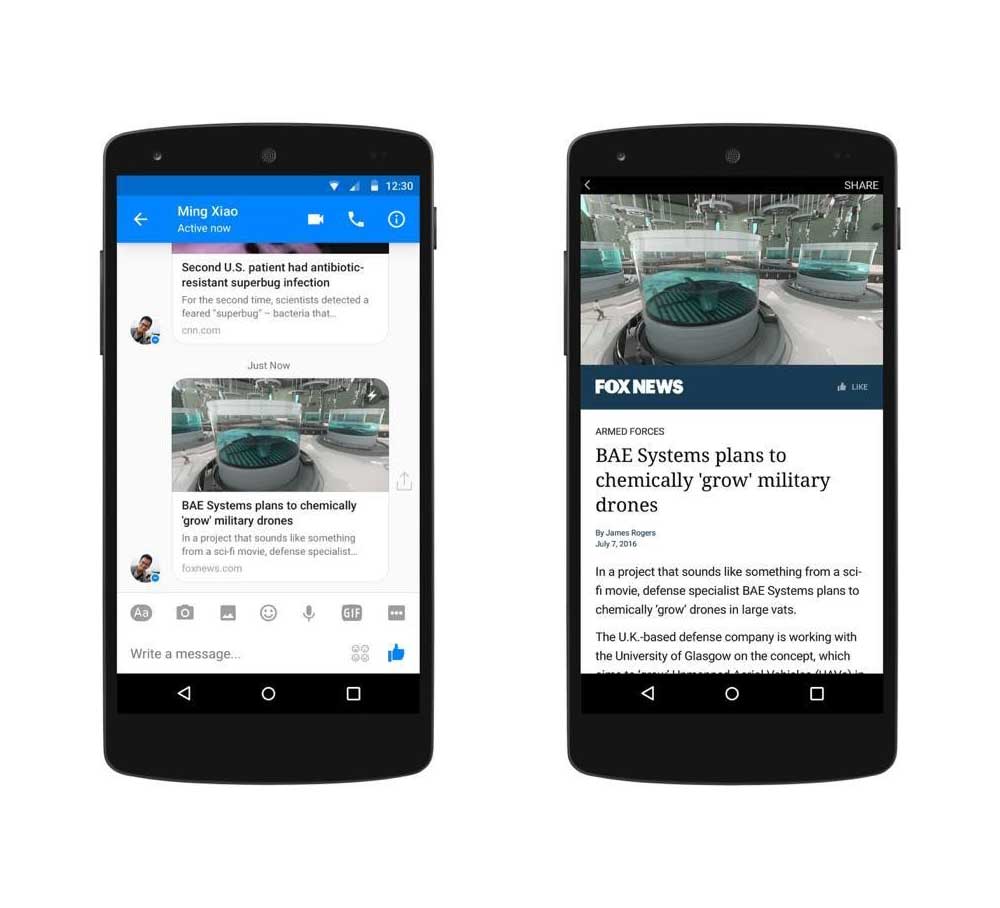
On July 14th, 2017, a Facebook feature that could be one of the widely used and popular among publishers, the Instant Articles, is arriving on Messenger.
Baked straight inside Messenger, initially for Android, users don't have to open a browser to read a link sent by a friend on Messenger. Unlike typical links that load in an in-app browser, Instant Articles load within the app itself. To do this, the company host the articles that are Instant Articles enabled, and strip some of their elements out in order to make them very quick to load.
Without eliminating experience, Facebook said, they load 10x faster than traditional links.
And because Instant Articles are hosted and stripped, they also use less amount of data to load. This is essentially useful for mobile users on the go.
The addition of Instant Articles to Messenger marks the first time the company has expanded the feature beyond its main Facebook app. So now we can expect to see more of that little lightning bolt icon at the top right of embedded links.
Instant Articles is useful, but its usage is still far from global.
While there are many publishers that have opt into creating their posts Instant Articles enabled, the feature has not reached many other publishers in the wild. This will occasionally create some odd feelings to some users that have clicked Instant Articles, and then to see some links sent by their friends to load a lot slower.
Bad for user-experience, Facebook that has motivated many publishers in adopting the feature, can now reach more of those publishers with Instant Articles on Messenger.
By using Instant Articles, not only that Messenger will get a lot more engagement, publishers also will.
For publishers, beside faster loading articles, Facebook won't strip necessary codes and scripts from a publishers' site that aim for tracking and delivering ads.
So both users and publishers can expect to have ads shown on Instant Articles, and have them travel to Messenger as well.
With this attempt, everyone involved should be benefited. Users will have a better user-experience using Messenger, publishers will get more engagement, and most of all, Facebook (through Messenger) will rake up more opportunities to get more money to its platform.






















































































































































































































































































