
Google AdWords notified its advertisers in their accounts and on Twitter, saying that it had changed the way budgets get handled on a daily basis.
The company announced that advertisers can "now spend up to twice your average daily budget." It's mandatory for advertisers, so this change isn't optional.
Here Google wants advertisers' campaign to be better equipped in spikes in daily activities. Google has been doing this for a long time, but on a much lower increment. Previously, campaigns could only spend 20 percent more than their daily budget, but overall wouldn't exceed the calculated monthly budget.
At the end of the month, advertisers want to have the opportunity to get as many qualified clicks and conversions as possible within their given budget.
However, daily budget is really just a limitation advertisers are forced into by having to allocate a monthly budget evenly throughout the 30-day period. And Google's change here in AdWords is that advertisers' daily spend could exceed the budget by "up to 2 times" is also arbitrary.
So it's really up to Google.
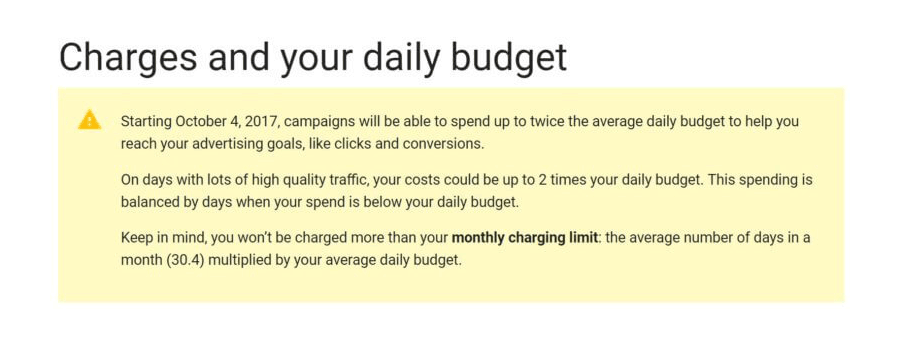
The concept behind the change makes sense, but the problem is the lost of control in yet another area of campaign management. With the change, Google is forcing on advertisers, and there isn't an option to set a monthly budget or a budget for a duration of the campaign if it has a fixed run time.
Usually, weekends are particularly slow days, Many websites have less visitors and drive less traffic to advertisers. To adjust the system automatically to roll over the unspent money to Monday, for example, AdWords has overdelivery credits
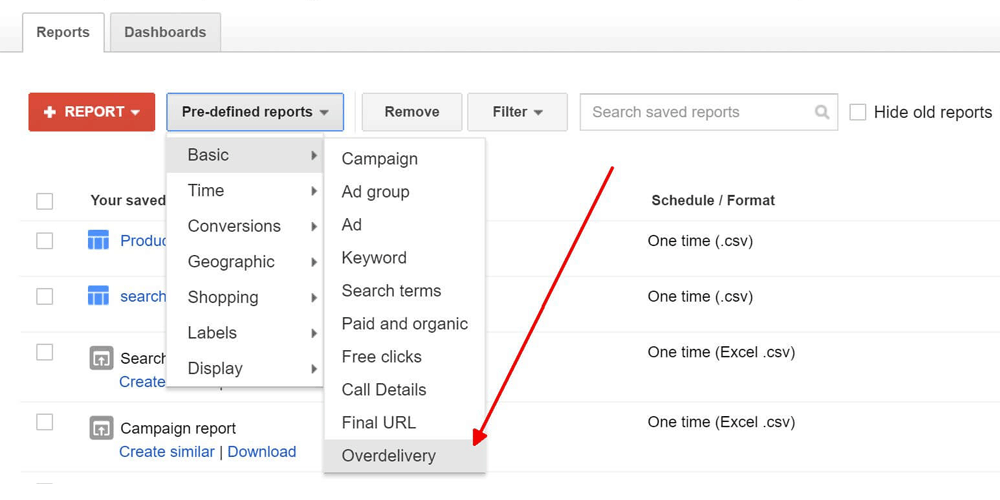
"Sometimes we deliver over your monthly budget. In those cases, we'll credit the overdelivery cost back,” said Google. This is the measure that should help advertisers feel a bit better about the change. Advertisers can see overdelivery from the Reports section in AdWords.
Google considers monthly budgets to be calendar month budgets and not a rolling 30.4 day period. The over delivery credits will show up in an advertiser's transaction history once they are processed and show up on the invoice once every month.
And when advertisers adjust their daily budget or pause their campaigns at any point during the month, the calculation resets like usual.
However, advertisers need to pay attention to how Google will interpret the new monthly budget based on any daily budget changes.
In some cases, advertisers could end up paying for overages because the monthly limits don't apply. They also need to see how the change will impact impacts impressions, clicks and conversions.




















































































































































































































































































