

Google is terminating its controversial "First Click Free" (FCF) policy that angers publishers.
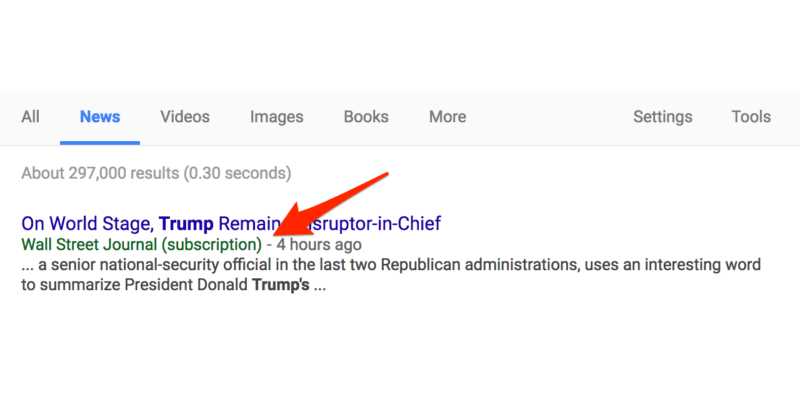
FCF allowed Google search results to access news articles hidden behind a paywall. What this means, with FCF, users could access an article for free but would be prompted to log-in or subscribe if they clicked anywhere else on the page.
At first, the strategy was to encourage more people to subscribe.
Publishers were required to allow three free articles per day to be indexed by Google's FCF so they can appear on searches for a particular keywords.
But this method angers publishers as opting out of the FCF feature would demote a publisher's ranking on Google Search and Google News. Google said articles from those publishers were demoted because its search engine didn't index stories that were locked behind paywalls.
One notable case was The Wall Street Journal. When it disabled free access to its articles via Google Search earlier in 2017, its stories were heavily demoted in search rankings. The WSJ said that it experienced a 38 percent reduction in traffic from Google Search, and a loss of 89 percent from Google News in August compared to a year earlier.
Newspapers and magazines have also shut down, or shrunk their operations drastically worldwide because of the influx of stories, images and video across the internet, largely at no charge.
Because of its controversies, Google is replacing the decade-old FCF with "Flexible Sampling" which allows publishers to decide how many articles they want to allow potential subscribers to access. Google is recommending publishers to allow 10 free articles per month as "a good starting point."
Another thing is that publishers can also opt out of Flexible Sampling without having their web pages demoted from Google search rankings.
As part of the change, Google is also working to make subscribing easier. Like having single-click sign-ups through Android and Google services. The company is also working to allow seamless to subscribers content across publisher websites, Google Newsstand, Google Search, and Google News.
Google is looking into provide publishers its user data to target potential subscribers, and working on tools to help publishers reach new people and grow their revenues.
As one the largest source of information, Google drives at least 10 billion clicks to publishers' websites each month. The change is to bolster Google's position as a company that sells ads online. And with the change, Google is also eliminating the rule that allowed news sites to have higher search results
"We really recognize the transition to digital for publishers hasn’t been easy," said Google chief business officer Philipp Schindler. "The economics are pretty clear: If publishers aren't successful, we can't be successful."